Central Banks Risk Recession with Misguided September Rate Hikes
Analysts warn that September rate hikes by the Fed and ECB could deepen recession risks amid weak growth, imported energy inflation, and misplaced monetary tightening policies.
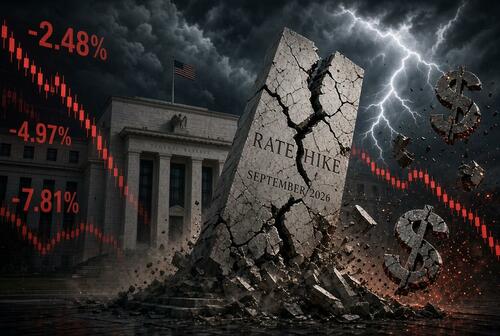
Financial analysts and economic experts are warning that prospective interest rate hikes by the Federal Reserve and the European Central Bank in September could prove to be a monumental policy error. According to an analysis by economist Daniel Lacalle, major financial institutions including Bank of America, Deutsche Bank, and J.P. Morgan anticipate rate increases despite underlying economic data showing that inflation is driven by temporary energy supply shocks and fiscal deficits rather than private sector overheating.
During its July meeting, the Federal Open Market Committee voted 9-3 to maintain the federal funds target rate between 3.5% and 3.75%, with three committee members voting for a rate increase. Across the Atlantic, the European Central Bank raised its key benchmark interest rate by 25 basis points in June and is widely expected to implement another rate hike in September.
Economic indicators in the United States signal cooling activity rather than an overextended economy. U.S. gross domestic product expanded at an annualized rate of 1.5% in the second quarter, slowing from 2.1% in the first quarter. Nonfarm payrolls declined by 23,000 jobs in July, while annual employment growth remains below economic potential. Furthermore, Federal Reserve data shows commercial and industrial loan growth slowed dramatically before contracting by 1.1% in July. U.S. headline consumer price index inflation stood at 3.4% in July, but core inflation fell to 2.5% as volatile energy costs accounted for much of the upward pressure.
The economic picture in Europe shows even greater weakness. Eurozone gross domestic product grew by 0.4% in the second quarter, but the figure was heavily distorted by a 3.9% expansion in Ireland. Excluding Ireland, real euro area domestic growth was estimated at just 0.1%. Eurostat data shows unemployment at 6.3%, with overall Eurozone growth projected at a modest 0.8%. Euro area inflation hit 2.9% in July, driven by a 10.0% spike in energy costs, while non-energy industrial goods inflation registered at just 0.9%.
Critics of further monetary tightening contend that interest rate hikes cannot solve energy market disruptions or generate new fuel supplies. Instead, higher borrowing costs penalize mortgage holders, consumers, and small businesses while leaving government spending unaffected. Mechanisms like the ECB Transmission Protection Instrument and the Fed policy of maintaining ample bank reserves allow public sector debt to avoid strict market discipline.
To effectively address persistent inflation, monetary experts argue central banks must reduce their balance sheets faster, drain excess banking liquidity, and stop subsidizing government borrowing, rather than shifting the burden of economic adjustment onto the private sector.
#InterestRates #Inflation #FederalReserve #ECB #Economy #US #Europe #DanielLacalle
Comments (0)
No comments yet — be the first to weigh in.

Free School Uniform Swap Shop Saves Welsh Families £50m Annually
A Cardiff father's school uniform swap shop initiative has grown to 200 schools, helping Welsh families save £50m yearly while promoting sustainability and reducing clothing waste.

Poland, US Explore Permanent Military Bases: Defense Talks Underway
Poland and the US are discussing permanent American military bases in Poland, focusing on defense capabilities rather than troop numbers. Nuclear warheads are not part of the plans.

Taxpayers Lost $65B to Obamacare Fraud in 2024; Feds Crack Down
A Paragon Health Institute report reveals $65 billion in taxpayer losses due to Obamacare and Medicaid fraud in 2024, with improper enrollments rising in 2025.
El Niño Delaying 2026 Atlantic Hurricane Season as Dolly Nears Florida
El Niño's wind shear suppresses 2026 Atlantic hurricane activity, delaying first hurricane as Tropical Storm Dolly's remnants approach Florida and the Caribbean.

Mumbai’s Vile Parle Cypher is giving unheard rappers a voice

Enrich and Ultimo impress

Karnataka CM Signals Review of 5% Park Land Amendment Bill in Assembly

