Deadly Himalayan Glacier Collapse: Death Toll Nears 800, Thousands Missing
Rescuers battle severe Himalayan floods and debris after a glacier collapse kills nearly 800, with over 3,000 missing. International aid and climate change concerns escalate.
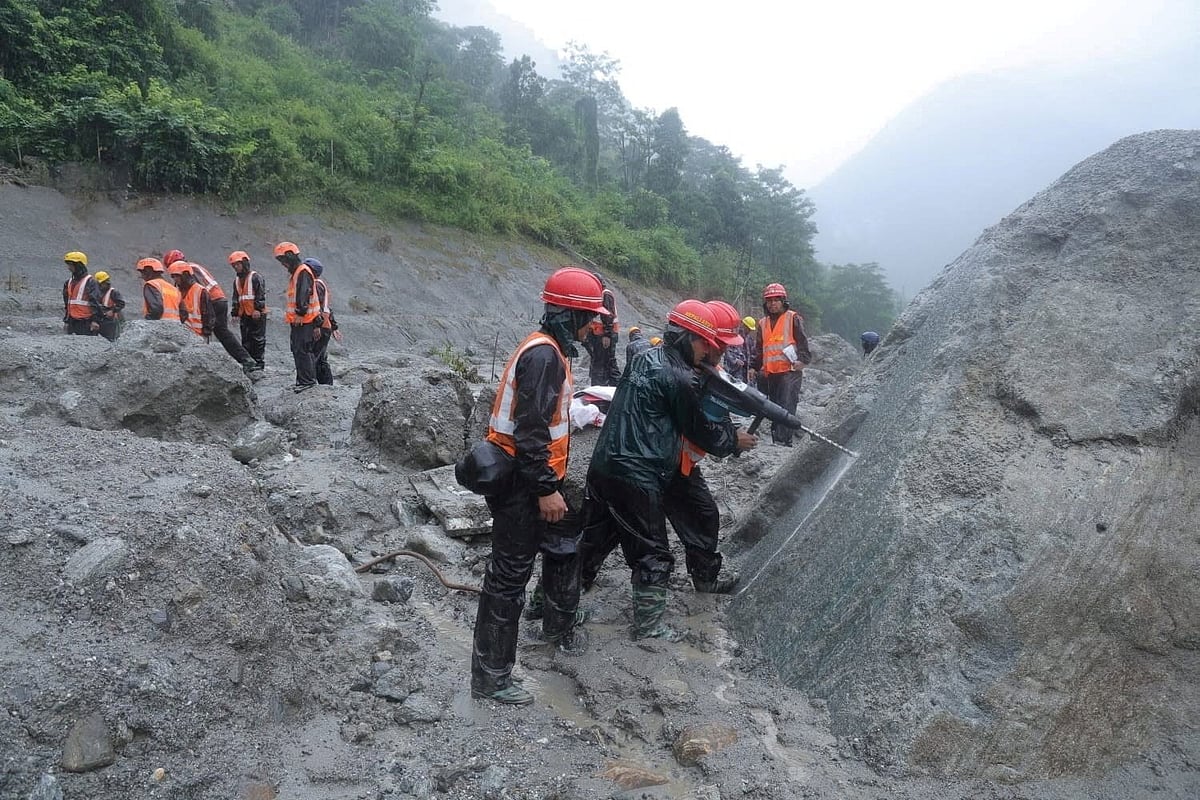
Rescue teams in Nepal and China intensified efforts on Sunday to locate thousands missing after a catastrophic mudslide triggered by a glacier collapse tore through Himalayan valleys, pushing the death toll to nearly 800. Authorities reported 781 fatalities in Nepal and 16 in China’s Gyirong County, with over 3,000 people still unaccounted for across both sides of the Nepal-China border. The disaster, which has affected more than 90,000 people, has been linked by Chinese officials to climate change, deepening concerns over the region’s vulnerability to glacial instability.
The mudslide, which struck on Wednesday, sent a torrent of ice, rock, and debris crashing through mountain valleys and rivers, causing widespread destruction. Chinese Foreign Minister Wang Yi described it during a Saturday call with his Nepalese counterpart as the "most severe cross-border disaster" in recent years, citing the unprecedented complexity of rescue operations. The situation is further aggravated by severe weather conditions, rising water levels, and the threat of additional flooding from a glacial lake that formed at the Nepal-China border.
Nepal’s disaster authority reported 2,502 missing on its side, while China’s Tibet region has 546 missing, including 261 foreign nationals from 23 countries. Rescue operations have been repeatedly suspended due to heavy rainfall, landslides, and the risk of a glacial lake outburst flood. Although Chinese state broadcaster CCTV reported that the threatening lake had been largely drained by Saturday evening, a new landslide detected downstream on Saturday formed another dam, creating fresh concerns about further flooding.
In Nepal, rescue efforts have increasingly focused on five hydropower projects inundated by the floods, including the Upper Trishuli complex, where about 350 people may be trapped inside a tunnel. Approximately 10,000 Nepalese troops, alongside specialist teams from China and India, are working to clear debris and access the site. Heavy machinery was airlifted to the remote area on Sunday, and rescuers began clearing the tunnel entrance. However, officials warned that debris removal is extremely challenging due to the volume of material blocking access.
Nepal has requested international assistance for specialized operations, including tunnel rescues, DNA testing, refrigerated storage for recovered bodies, and forensic identification of decomposed remains. With hundreds of unidentified victims beginning to decompose, authorities in Chitwan district, about 200 km from the disaster zone, conducted mass burials to prevent public health risks. On Saturday, 96 bodies were buried, with plans to inter more than 100 additional victims on Sunday. DNA samples were collected, and burial sites documented in case families seek to identify loved ones later.
Recovery teams continue retrieving victims from rivers and debris, though officials estimate that over half of the bodies recovered so far are unrecognizable. Police officer Anil Thapa noted that many victims have no visible faces, with only fragments of bodies—such as hands, legs, or parts of limbs—recovered in some cases. The disaster has been attributed to glacier instability driven by long-term global warming, described by CCTV as a "new and prominent feature of cryosphere disasters" on the Tibetan Plateau.
Footage from surveillance cameras captured the terrifying speed of the mudslide, which Chinese scientists estimated traveled from Nepal to the Gyirong border crossing in just six to seven minutes. The disaster has mobilized over 2,100 rescue workers in China, which has also allocated at least 220 million yuan ($32.7 million) for relief efforts. Chinese soldiers are using life-detection equipment to search for survivors, while supplies and equipment are being airdropped to frontline rescuers.
#HimalayanDisaster #GlacierCollapse #NepalChinaBorder #ClimateChange #FloodRescue #TibetanPlateau #DisasterResponse #MissingPersons
Comments (0)
No comments yet — be the first to weigh in.

Mumbai’s Vile Parle Cypher is giving unheard rappers a voice
A new documentary streaming on YouTube sheds light on the Vile Parle Cypher, a grassroots hip-hop collective giving a platform to unheard street artists and gig...

Enrich and Ultimo impress
Racehorses Enrich and Ultimo Impress in Tuesday Morning Workouts at Bengaluru Turf Club BENGALURU, Sept 1 – Two rising stars in India’s horse racing circuit, En...

Karnataka CM Signals Review of 5% Park Land Amendment Bill in Assembly
Karnataka Chief Minister D.K. Shivakumar says the controversial 5% park land amendment bill can be re‑examined in the Assembly after protests over Lalbagh land use.

When an organisation deviates from its values, faith of those associated with its ideology is shattered: Kaushal Kishore
Former Union Minister and senior Bharatiya Janata Party (BJP) leader Kaushal Kishore suggested on September 1, 2026, that organizations risk losing public trust...
Mumbai’s Vile Parle Cypher is giving unheard rappers a voice
Enrich and Ultimo impress
Karnataka CM Signals Review of 5% Park Land Amendment Bill in Assembly
