Excluding Gov’t Transfer Payments, Real Personal Income Declines from a Year Ago

Real personal income excluding government transfer payments declined by 0.38 percent over the past year, according to the latest data from the National Bureau of Economic Research (NBER).
Transfer payments, which include Social Security, Medicare, Medicaid, and food stamps, are excluded from this measure because they represent government funds disbursed without an immediate economic return. The NBER monitors this figure as a key indicator of economic health, and the latest decline suggests a weakening in underlying income growth.
In contrast, real personal consumption expenditures have increased, indicating that consumers are spending more despite the drop in real income. This divergence between income and spending may reflect the impact of past stimulus measures and low borrowing costs that have supported consumer activity.
Economists attribute the current inflationary pressures to multiple rounds of fiscal stimulus issued during the COVID-19 pandemic, two under the Trump administration and one under President Biden. Combined with the Federal Reserve’s decision to cut interest rates to near zero, these policies fueled demand while supply chain disruptions persisted, contributing to sustained inflation.
The Fed’s actions, particularly its rate cuts and monetary expansion, have drawn criticism for exacerbating inflation. Historically low mortgage rates, falling below 3 percent, allowed many homeowners to refinance, freeing up additional disposable income. However, the central bank has not explicitly acknowledged its role in fueling this inflationary environment.
Recent inflation data from the Personal Consumption Expenditures (PCE) index shows a mixed trend. The overall PCE inflation rate stands at 3.7 percent year-over-year, having bottomed at 2.3 percent in September 2024. Core PCE inflation, which excludes volatile food and energy prices, is at 3.3 percent, down from a peak of 2.6 percent in April 2025. Services inflation remains elevated at 3.7 percent, while goods inflation has softened slightly to 3.7 percent from a low of -1.2 percent in September 2024.
Despite some signs of moderation in inflation, particularly in goods prices, the persistence of service-sector inflation continues to pose challenges for policymakers. The Fed has maintained a restrictive monetary stance in response, but the lagged effects of past stimulus and low interest rates continue to influence economic conditions.
Analysts warn that without further adjustments in fiscal and monetary policy, inflation may remain stubbornly high, eroding real income gains and putting pressure on household budgets. The recent divergence between real income and spending underscores the fragility of the economic recovery and highlights the need for balanced policy measures to ensure sustainable growth.
Comments (0)
No comments yet — be the first to weigh in.

Free School Uniform Swap Shop Saves Welsh Families £50m Annually
A Cardiff father's school uniform swap shop initiative has grown to 200 schools, helping Welsh families save £50m yearly while promoting sustainability and reducing clothing waste.

Poland, US Explore Permanent Military Bases: Defense Talks Underway
Poland and the US are discussing permanent American military bases in Poland, focusing on defense capabilities rather than troop numbers. Nuclear warheads are not part of the plans.

Taxpayers Lost $65B to Obamacare Fraud in 2024; Feds Crack Down
A Paragon Health Institute report reveals $65 billion in taxpayer losses due to Obamacare and Medicaid fraud in 2024, with improper enrollments rising in 2025.
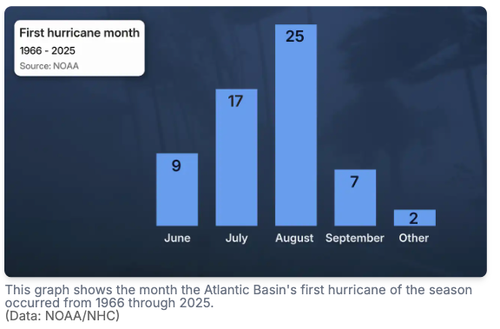
El Niño Delaying 2026 Atlantic Hurricane Season as Dolly Nears Florida
El Niño's wind shear suppresses 2026 Atlantic hurricane activity, delaying first hurricane as Tropical Storm Dolly's remnants approach Florida and the Caribbean.

Mumbai’s Vile Parle Cypher is giving unheard rappers a voice

Enrich and Ultimo impress

Karnataka CM Signals Review of 5% Park Land Amendment Bill in Assembly

