Fed chair says delivering ‘stable prices’ is central bank’s job as inflation persists
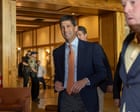
U.S. Federal Reserve Chair Kevin Warsh signaled Friday that the central bank is not finished combating persistent inflation, emphasizing in his first major address in the role that delivering stable prices remains the institution's primary job.
Speaking at the Fed's annual economic symposium in Jackson Hole, Wyoming, Warsh declined to explicitly state whether interest rates would change in the coming months. However, financial markets interpreted his remarks as a signal that borrowing costs could rise, a direction that places him at potential odds with President Donald Trump, who has aggressively called for rate cuts.
In a departure from previous leadership, Warsh announced an end to the Fed's practice of providing explicit "forward guidance" on future rate decisions. He characterized the communication strategy, which was introduced during the 2008 financial crisis, as a legacy policy that has overstayed its welcome. Jackson Hole addresses have traditionally served as a platform for Fed chairs to outline clear policy trajectories, such as former chair Jerome Powell foreshadowing rate cuts during his keynote speech last year.
Warsh noted that while summer price readings came in better than expected, progress on inflation over the past several years has been modest and does not suggest that underlying trends have meaningfully improved. U.S. inflation remains above the central bank's 2% annual target, standing at 3.4% in July after reaching a three-year peak of 4.2% in May.
At the Fed's last board meeting in July, a majority of members voted to hold the benchmark interest rate steady at a range of 3.5% to 3.75%. However, three out of 12 voting members favored a quarter-percentage-point increase, marking the highest level of policy dissent on the board in a decade.
Since taking office in May, Warsh has navigated economic challenges stemming from elevated oil prices caused by the war in Iran. Despite these pressures, Warsh offered an optimistic assessment of domestic economic strength, stating that the economy appears to have strengthened in response to recent shocks and that both Main Street and Wall Street have been resilient.
The central bank's fight against inflation occurs against a backdrop of rising national debt, which topped $40 trillion for the first time last week. Persistently high inflation has also driven the yield on 10-year U.S. Treasury notes to its highest level since 2007, exerting upward pressure on international bond yields in Britain, Germany, France, and Japan.
Financial markets reacted moderately to the speech. Following Warsh's opening remarks, yields on two-year and 10-year U.S. Treasuries ticked up slightly, while 30-year yields remained stable. U.S. equities saw minimal movement, with the S&P 500 remaining largely flat and the Dow Jones Industrial Average dropping slightly.
Comments (0)
No comments yet — be the first to weigh in.

Iran-US Tensions Escalate Amid Hormuz Strait Crisis – Live Updates
Iranian President Pezeshkian seeks diplomatic solutions with global leaders at SCO summit in Kyrgyzstan amid rising US tensions over Hormuz Strait.

Search continues for 18 passengers after ferry capsized in northern Cyprus
Search and rescue operations are continuing off the coast of Kyrenia in northern Cyprus after a passenger ferry capsized and sank on Sunday, leaving at least ei...

Swiss Man Arrested After Deadly Rave Shooting Kills Italian Woman
A 43-year-old Swiss suspect has been arrested after a shooting at a techno rave in Aarau left one woman dead and several others injured. Authorities continue their investigation.

England attack's 2005 comparisons fair - Trescothick
England’s new pace attack is drawing comparisons to the legendary Ashes-winning quartet of 2005, according to interim head coach Marcus Trescothick. The current...

Mumbai’s Vile Parle Cypher is giving unheard rappers a voice

Enrich and Ultimo impress

Karnataka CM Signals Review of 5% Park Land Amendment Bill in Assembly

