Firms scramble for battery power in Spain and Portugal
The 2025 power cut across Spain and Portugal highlighted vulnerability of industrial sites, driving firms to invest in battery storage backed by EU funds.

Businesses across Spain and Portugal are investing heavily in industrial battery storage systems following a massive blackout in April 2025 that caused widespread operational chaos and substantial financial losses. The push to secure reliable backup power is being driven by corporate risk management, supported by European Union subsidies, and heightened by recent severe weather events.
According to Spain's grid operator Red Eléctrica, the nation's battery storage capacity grew nearly sevenfold between April 2025 and April 2026, rising from 28 megawatts to 193 megawatts. Further rapid expansion is expected after Spain's Institute for the Diversification and Saving of Energy awarded 827 million euros in EU funds last December to 133 energy storage projects, representing an additional 2,400 megawatts of planned capacity.
While European incentives have encouraged industrial firms to shift away from fossil fuels toward electricity to cut carbon emissions, the transition has made manufacturing operations increasingly vulnerable to grid instability. Miguel Matias, founder of the energy services firm Self Energy, noted that the industrial sector has been among the fastest to adopt storage systems, as even a short backup window can prevent equipment damage and sudden production drops.
The financial impact of power grid failures was starkly demonstrated at Fribin, a Spanish meat processing firm in Aragon. The sudden April outage halted refrigeration lines, forcing the company to discard tonnes of meat and incur hundreds of thousands of euros in losses. In response, technology director Andrés Altabás confirmed the business allocated approximately 1.5 million euros, partially funded by the EU Next Generation fund, to acquire two five-megawatt-hour battery modules.
In Portugal, major manufacturers faced similar threats. Porcelain maker Vista Alegre accelerated the installation of two-megawatt-hour battery units at its Ílhavo plant following blackout-related losses. Emília Encarnação of Vista Alegre noted that continuous production processes are particularly susceptible to sudden cuts. Beyond emergency protection, energy storage allows companies to generate revenue by feeding excess electricity back into the main grid.
Similarly, Portuguese tile maker Primus Ceramics managed to avert major damage during the blackout using a backup diesel generator for its continuous roller kilns. CEO Paulo Almeida stated the company now plans to more than double its existing battery capacity by the end of the year to store output from its solar panels.
The surging demand has reshaped the market for energy suppliers. Alberto Bodegas of storage company Sungrow noted that commercial clients increasingly require advanced seamless backup technology that switches instantly from the grid to battery power without interruption, a capability vital for sensitive sectors such as hospitals and data centers. Further urgency was added in January when Storm Kristin severed power to hundreds of thousands of residents in central Portugal, underscoring ongoing grid vulnerabilities across the region.
Comments (0)
No comments yet — be the first to weigh in.

Free School Uniform Swap Shop Saves Welsh Families £50m Annually
A Cardiff father's school uniform swap shop initiative has grown to 200 schools, helping Welsh families save £50m yearly while promoting sustainability and reducing clothing waste.

Poland, US Explore Permanent Military Bases: Defense Talks Underway
Poland and the US are discussing permanent American military bases in Poland, focusing on defense capabilities rather than troop numbers. Nuclear warheads are not part of the plans.

Taxpayers Lost $65B to Obamacare Fraud in 2024; Feds Crack Down
A Paragon Health Institute report reveals $65 billion in taxpayer losses due to Obamacare and Medicaid fraud in 2024, with improper enrollments rising in 2025.
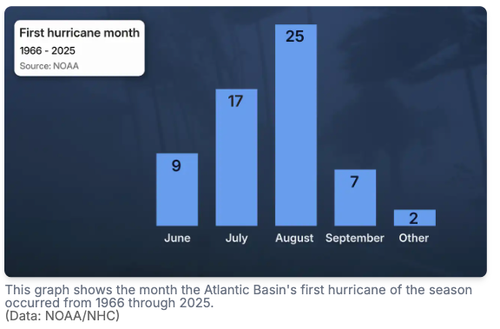
El Niño Delaying 2026 Atlantic Hurricane Season as Dolly Nears Florida
El Niño's wind shear suppresses 2026 Atlantic hurricane activity, delaying first hurricane as Tropical Storm Dolly's remnants approach Florida and the Caribbean.

Mumbai’s Vile Parle Cypher is giving unheard rappers a voice

Enrich and Ultimo impress

Karnataka CM Signals Review of 5% Park Land Amendment Bill in Assembly

