French Presidential Candidates Urged by Medef to Prioritize Economic Savings in First Debate
Medef calls on presidential hopefuls to focus on cost-cutting measures during their first debate, emphasizing economic prudence amid electoral campaigning.
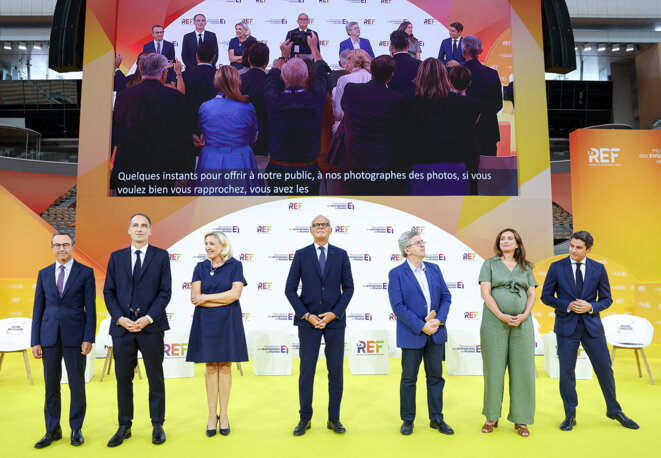
French Business Leaders Urge Presidential Candidates to Focus on Economic Efficiency in First Debate
Paris, June 27, 2025 – The French Business Movement (Medef) has called on presidential candidates to prioritize fiscal responsibility and economic efficiency during their first televised debate scheduled for June 29. In an open letter addressed to the contenders, the country’s largest employers’ federation urged them to propose concrete measures to reduce public spending and improve competitiveness without compromising long-term growth.
The Medef’s intervention comes amid rising concerns over France’s public deficit, which reached 5.1% of GDP in 2024, well above European Union limits. The organization emphasized the need for structural reforms to curb rising debt levels, which now exceed €3 trillion. In its statement, the Medef highlighted that France’s tax burden remains among the highest in the developed world, weighing heavily on corporate investment and household purchasing power.
“Candidates must move beyond ideological posturing and present realistic, sustainable solutions,” said Geoffroy Roux de Bézieux, President of the Medef. “France cannot continue borrowing at this pace. We need a clear roadmap to restore fiscal health while fostering innovation and job creation.”
The employers’ federation specifically called for a freeze on non-essential public spending, a review of tax exemptions costing €80 billion annually, and a gradual reduction in social contributions to enhance labor market flexibility. It also advocated for deeper collaboration with European partners to align France’s economic policies with EU fiscal rules.
Political reactions to the Medef’s appeal have been mixed. The centrist candidate, Édouard Philippe, welcomed the call for realism, stating that “economic pragmatism must guide public policy.” Meanwhile, far-left contender Jean-Luc Mélenchon dismissed the proposals as “austerity disguised as common sense,” insisting that increased public investment was the only path to recovery.
The debate on Sunday, moderated by France Télévisions and broadcast nationally, will focus on economic policy, with candidates expected to outline their visions for France’s fiscal future. Analysts suggest that public expectations for concrete, measurable proposals are high, particularly given the country’s sluggish growth rate of 1.2% in the first quarter of 2025.
The Medef’s letter concludes with a warning: “Postponing difficult choices will only exacerbate the crisis. The next president must act decisively.” As the campaign intensifies, voters will be watching closely to see which candidates can offer viable alternatives to France’s enduring economic challenges.
Comments (0)
No comments yet — be the first to weigh in.

Iran-US Tensions Escalate Amid Hormuz Strait Crisis – Live Updates
Iranian President Pezeshkian seeks diplomatic solutions with global leaders at SCO summit in Kyrgyzstan amid rising US tensions over Hormuz Strait.

Search continues for 18 passengers after ferry capsized in northern Cyprus
Search and rescue operations are continuing off the coast of Kyrenia in northern Cyprus after a passenger ferry capsized and sank on Sunday, leaving at least ei...

Swiss Man Arrested After Deadly Rave Shooting Kills Italian Woman
A 43-year-old Swiss suspect has been arrested after a shooting at a techno rave in Aarau left one woman dead and several others injured. Authorities continue their investigation.

England attack's 2005 comparisons fair - Trescothick
England’s new pace attack is drawing comparisons to the legendary Ashes-winning quartet of 2005, according to interim head coach Marcus Trescothick. The current...

Mumbai’s Vile Parle Cypher is giving unheard rappers a voice

Enrich and Ultimo impress

Karnataka CM Signals Review of 5% Park Land Amendment Bill in Assembly

