Have We Really Learnt The Lessons Of The GFC?
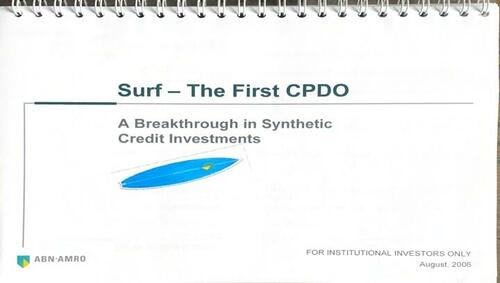
Two decades after the 2006 launch of the Constant Proportion Debt Obligation (CPDO), a financial product that promised AAA-rated returns while leveraging bets on stable credit spreads, investors are again facing a market that echoes pre-Global Financial Crisis (GFC) conditions. The same ingredients that fueled the CPDO’s allure—plentiful liquidity, tight credit spreads, compressed expected returns, rising leverage, and a wave of financial innovation—are present today. The lesson from 2006, when a AAA-rated structured product collapsed within months of issuance, remains unresolved: markets often underestimate risk when confidence is high, and the tools designed to manage it can amplify crises instead.
The CPDO, introduced by investment banks as a financial innovation that appeared to deliver high returns with minimal perceived risk, was structured to increase leverage as credit conditions deteriorated. It relied on the assumption that historical stability in credit spreads would continue indefinitely. Yet when spreads widened sharply in 2007, the product failed catastrophically. One CPDO focused on the financial sector, rated AAA at launch in March 2007, defaulted by November of the same year. The episode demonstrated how models calibrated on benign conditions could misprice extreme and improbable—though not impossible—events. The failure wasn’t due to investors ignoring risk entirely, but rather to a collective narrowing of the risk horizon based on recent experience.
Today’s market environment shares striking parallels. Credit spreads remain historically tight, liquidity is abundant, and the search for yield has driven investors toward increasingly complex and leveraged products. The rise of leveraged ETFs, single-stock ETFs, and leveraged single-stock ETFs reflects a familiar pattern: innovation used to manufacture returns in a low-yield world. As in 2006, the temptation is to invert the risk-return question. Instead of asking whether a return compensates for risk, many ask how to boost returns to acceptable levels—often by increasing leverage.
This approach can be commercially seductive but structurally dangerous. Risks that are nonlinear and hidden—such as liquidity evaporation or forced selling chains—are easily overlooked until a shock occurs. When markets turn, the transmission of risk doesn’t rely solely on direct linkages between assets. It spreads through the behavior of investors who, facing margin calls or redemptions, sell what they can rather than what they must. This dynamic was evident in the GFC and has been repeated in subsequent cycles, from the high-yield covenant stripping of the mid-2010s to the violent unwinds of the yen carry trade.
While regulators and banks have strengthened balance sheets since 2008—boosting capital ratios and cleaning up balance sheets—some vulnerabilities persist. The GFC exposed structural flaws in risk transmission, particularly through highly leveraged and interconnected positions. Today, the system may be more resilient at its core, but the behavior of investors—particularly in less-regulated or innovative sectors—remains a key transmission channel for systemic risk.
The CPDO crisis underscores a timeless market truth: confidence can mask risk, and financial innovation often flourishes in periods of stability. As former UK Prime Minister Gordon Brown once declared the end of boom-and-bust cycles, only to see reality contradict his claim, today’s investors should be wary of declaring the credit cycle defeated. From today’s historically tight valuations, the real question may not be what could cause spreads to widen, but whether they will—and when.
#GFC #CPDO #CreditMarkets #FinancialCrisis #Leverage #InvestmentRisk #MarketStability #Banking
Comments (0)
No comments yet — be the first to weigh in.

Free School Uniform Swap Shop Saves Welsh Families £50m Annually
A Cardiff father's school uniform swap shop initiative has grown to 200 schools, helping Welsh families save £50m yearly while promoting sustainability and reducing clothing waste.

Poland, US Explore Permanent Military Bases: Defense Talks Underway
Poland and the US are discussing permanent American military bases in Poland, focusing on defense capabilities rather than troop numbers. Nuclear warheads are not part of the plans.
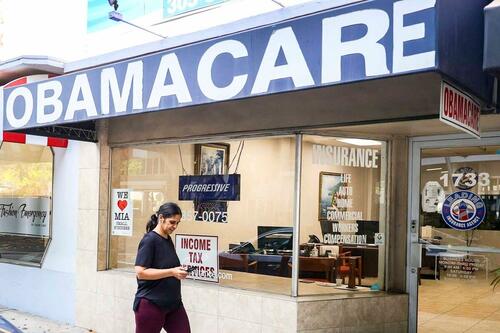
Taxpayers Lost $65B to Obamacare Fraud in 2024; Feds Crack Down
A Paragon Health Institute report reveals $65 billion in taxpayer losses due to Obamacare and Medicaid fraud in 2024, with improper enrollments rising in 2025.
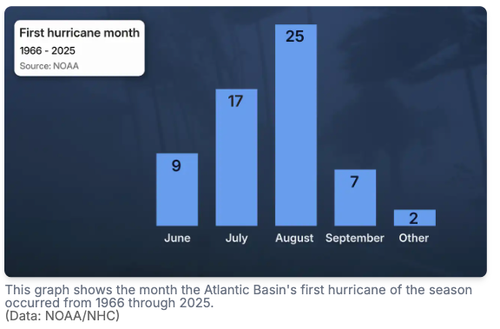
El Niño Delaying 2026 Atlantic Hurricane Season as Dolly Nears Florida
El Niño's wind shear suppresses 2026 Atlantic hurricane activity, delaying first hurricane as Tropical Storm Dolly's remnants approach Florida and the Caribbean.

Mumbai’s Vile Parle Cypher is giving unheard rappers a voice

Enrich and Ultimo impress

Karnataka CM Signals Review of 5% Park Land Amendment Bill in Assembly

