How Much Gas Prices Have Risen Since The Iran War
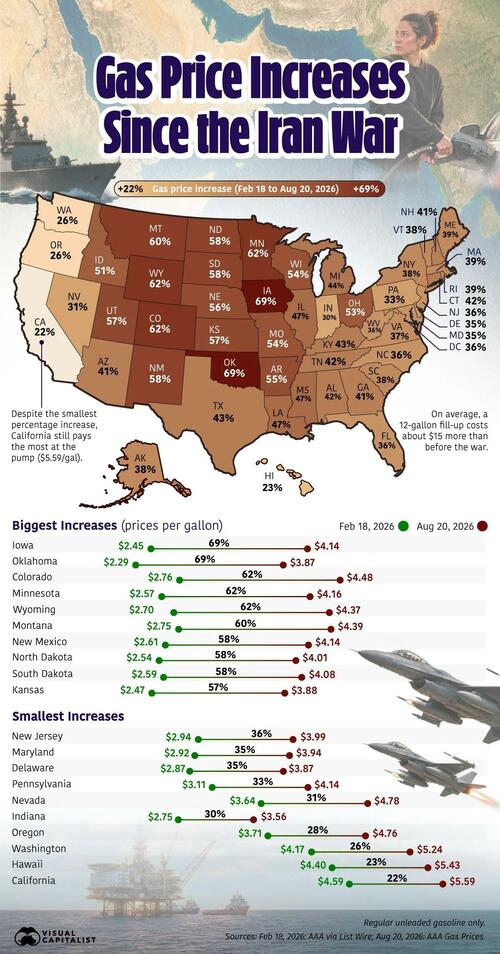
Gasoline prices surged across the United States following the outbreak of the Iran War, with the national average rising 44 percent in just six months. Using AAA fuel price data from February 18, 2026 as the pre-war baseline and comparing it against August 20, 2026 readings, a nationwide analysis shows that every state experienced significant increases, though the magnitude varied widely. The war’s closure of the Strait of Hormuz removed roughly ten million barrels of oil from daily global supply, causing crude prices to spike and driving up pump prices nationwide.
Iowa led all states with a 69.1 percent increase, lifting its average price from $2.45 to $4.14 per gallon. Oklahoma followed closely at 68.8 percent, while Colorado, Minnesota, and Wyoming each saw gains exceeding 60 percent. Rounding out the top ten were Montana, New Mexico, North Dakota, South Dakota, and Kansas, each with increases above 57 percent. Many of these states began from relatively low pre-war prices, which amplified the percentage rise even though the dollar increase was similar to other regions.
Nationally, the average price climbed $1.25 per gallon, equating to an extra $15 for a typical 12-gallon fill-up. Based on Federal Highway Administration estimates of 450 gallons consumed per vehicle annually, the sustained increase adds about $560 to yearly fuel costs for the average driver. The supply shock cut deeply into the global oil market because the Strait of Hormuz carries a substantial share of seaborne crude, and its closure disrupted a major artery in worldwide energy trade.
Conversely, the smallest percentage increases were recorded in states that already paid the highest prices at the pump. California saw the lowest percentage rise at 21.8 percent, yet its average price still reached $5.59 per gallon. Hawaii followed at 23.4 percent, reaching $5.43, while Washington state posted a 25.7 percent increase to $5.24. These states rely on higher fuel taxes, carbon pricing programs, and specialized fuel blends that keep baseline prices elevated and limit flexibility to import cheaper alternatives.
California’s unique fuel blend, mandated by state law, cannot be easily supplemented with gasoline from outside sources, while Hawaii’s island geography necessitates costly marine shipments, creating a built-in logistical premium. Washington’s carbon pricing system adds another layer of cost that cushions the percentage impact of global price swings but leaves retail prices among the highest in the nation.
Beyond the direct impact at the pump, the war’s oil supply disruption has broader economic implications because a single barrel of crude underpins thousands of everyday products, from plastics to pharmaceuticals. As geopolitical tensions in the Middle East continue to influence global energy markets, U.S. consumers and businesses face prolonged pressure on fuel costs and related expenses.
#GasPrices #IranWar #OilPrices #FuelCosts #AAAFuelData #EnergyMarkets #USAStates
Comments (0)
No comments yet — be the first to weigh in.

Free School Uniform Swap Shop Saves Welsh Families £50m Annually
A Cardiff father's school uniform swap shop initiative has grown to 200 schools, helping Welsh families save £50m yearly while promoting sustainability and reducing clothing waste.

Poland, US Explore Permanent Military Bases: Defense Talks Underway
Poland and the US are discussing permanent American military bases in Poland, focusing on defense capabilities rather than troop numbers. Nuclear warheads are not part of the plans.
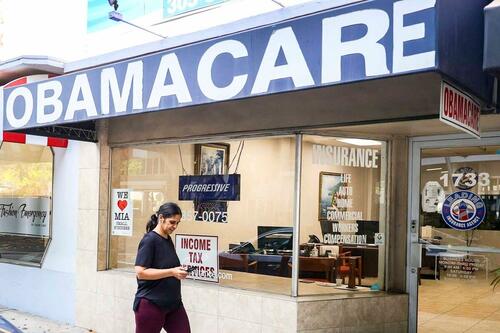
Taxpayers Lost $65B to Obamacare Fraud in 2024; Feds Crack Down
A Paragon Health Institute report reveals $65 billion in taxpayer losses due to Obamacare and Medicaid fraud in 2024, with improper enrollments rising in 2025.
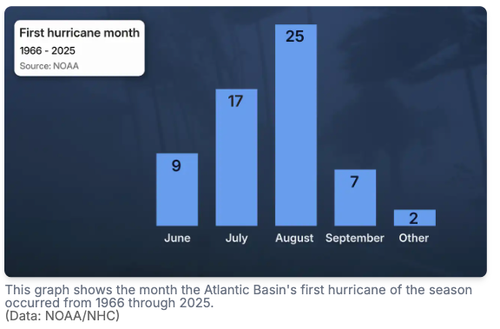
El Niño Delaying 2026 Atlantic Hurricane Season as Dolly Nears Florida
El Niño's wind shear suppresses 2026 Atlantic hurricane activity, delaying first hurricane as Tropical Storm Dolly's remnants approach Florida and the Caribbean.

Mumbai’s Vile Parle Cypher is giving unheard rappers a voice

Enrich and Ultimo impress

Karnataka CM Signals Review of 5% Park Land Amendment Bill in Assembly

