Justice Thurgood Marshall Sworn In: A Historic Moment in Supreme Court History
On August 30, 1967, Thurgood Marshall became the first African American justice on the U.S. Supreme Court, marking a pivotal milestone in judicial history.
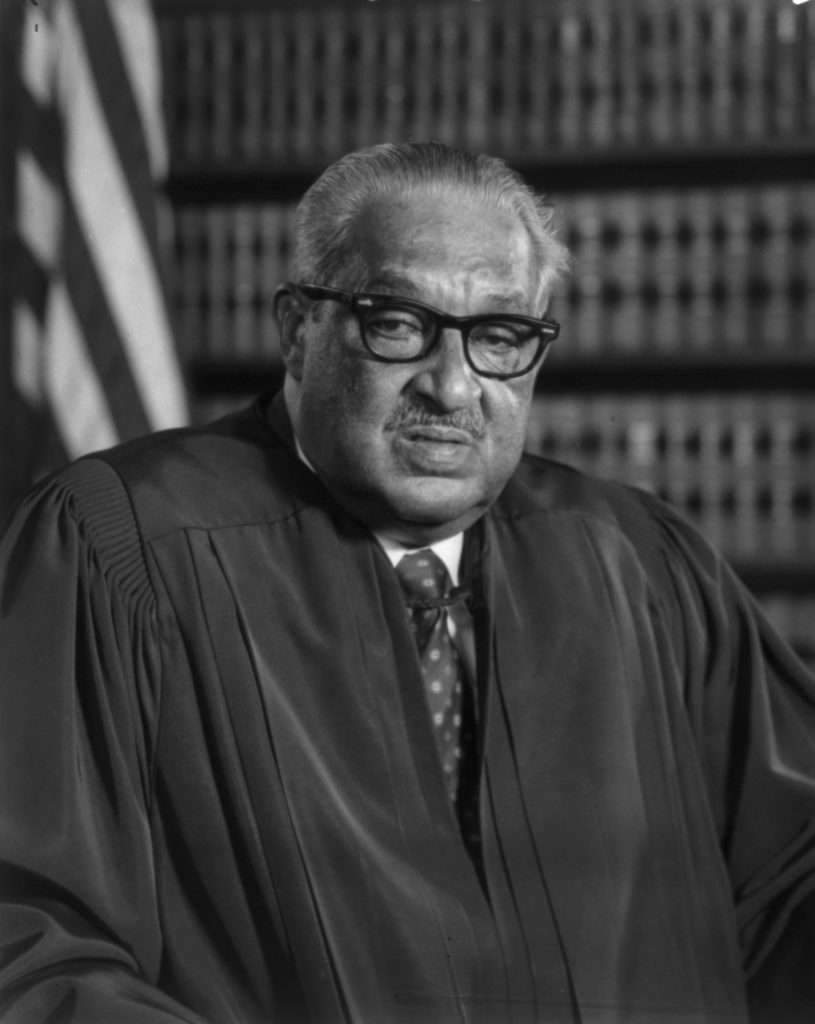
On August 30, 1967, Justice Thurgood Marshall took the oath of office, becoming the first African American to serve on the United States Supreme Court. Marshall, a prominent civil rights lawyer and former solicitor general, was nominated by President Lyndon B. Johnson in June of that year and confirmed by the Senate in a 69-11 vote. His appointment marked a significant milestone in the history of the Supreme Court and the broader struggle for racial equality in America.
Born in Baltimore, Maryland, in 1908, Marshall had already made a name for himself as a tireless advocate for civil rights long before his appointment to the high court. As the chief counsel for the National Association for the Advancement of Colored People (NAACP), he successfully argued several landmark cases before the Supreme Court, including *Brown v. Board of Education* (1954), which declared racial segregation in public schools unconstitutional. His legal prowess and commitment to justice earned him widespread recognition and paved the way for his historic appointment to the Supreme Court.
Marshall’s confirmation came at a time of profound social and political change in the United States. The Civil Rights Movement was in full swing, and the nation was grappling with issues of racial inequality, segregation, and voting rights. His presence on the Supreme Court was seen as a symbol of progress and a step toward a more inclusive legal system. Marshall served on the Court for 24 years, until his retirement in 1991, leaving an indelible mark on American jurisprudence. He was known for his strong advocacy of individual rights, his opposition to the death penalty, and his belief in a living Constitution that could adapt to the needs of a changing society.
Marshall’s swearing-in ceremony was a moment of historic significance, attended by members of the legal community, civil rights leaders, and dignitaries. Chief Justice Earl Warren administered the oath, and Marshall was sworn in as an associate justice. His appointment was celebrated by many as a long-overdue recognition of the contributions of African Americans to the nation’s legal and social fabric. It also served as an inspiration for future generations of lawyers and judges from underrepresented backgrounds.
In the decades since Marshall’s appointment, his legacy has continued to resonate in American law and society. His rulings and dissents have shaped key areas of constitutional law, including criminal justice, voting rights, and equality. Marshall’s life and career are often cited as examples of perseverance, dedication, and the power of the law to drive social change.
#SupremeCourtHistory #ThurgoodMarshall #CivilRights #NAACP #SupremeCourt #USHistory #LegalMilestone
Comments (0)
No comments yet — be the first to weigh in.

Middlesbrough's Crime Crisis: Decades of Failed Policies Unleash Chaos
Former Middlesbrough mayor Andy Preston blames decades of lenient crime policies for the town's recent surge in gang violence and lawlessness.

Google Maps Renames Lake Ontario to 'Lake America' Following Trump Order
Google Maps now displays 'Lake America' in the US, replacing 'Lake Ontario' after Trump's executive order amid trade tensions with Canada. Canadians still see the original name.

Pentagon Warns Pentagon Chiefs: Iran War Unsustainable, Threatens U.S. Readiness
Classified assessment reveals Pentagon chiefs warn Defense Secretary Pete Hegseth that the Iran war is unsustainable and drains U.S. military resources and readiness.

Mike Rogers Proposes $50 Copays for Routine Health Screenings, Critics Warn of Risks
Former Congressman Mike Rogers suggests $50 copays for routine screenings, sparking debate over healthcare costs and access. Critics highlight potential risks.

Mumbai’s Vile Parle Cypher is giving unheard rappers a voice

Enrich and Ultimo impress

Karnataka CM Signals Review of 5% Park Land Amendment Bill in Assembly

