Overcooked? Why robotic pizza makers are failing

The automated pizza industry is struggling to achieve financial viability, as several high-profile robotics startups have collapsed despite widespread interest in fast-food automation. While proponents argue that automated food preparation offers speed and consistency, technical hurdles and high costs have led to repeated business failures across the sector.
The volatility of the market was recently highlighted in Seattle, where Lee Kindell, founder and chief executive of Moto Pizza, was left with $160,000 worth of inoperable machinery after his supplier, Picnic, abruptly shut down in May. The closure cut off all technical support, rendering the restaurant's two assembly robots unusable. Picnic joins a growing list of defunct pizza automation companies, including Zume, Pazzi, and vending machine maker Basil Street.
Industry analysts attribute these failures to the complex nature of food assembly and the existing high efficiency of human workers. Sara Senatore, a senior restaurant analyst at Bank of America, noted that food preparation robots frequently drop ingredients incorrectly, whereas human workers remain remarkably efficient at making pizza. Senatore also warned that removing human staff creates operational risks if machinery malfunctions without employees nearby to step in.
Despite these setbacks, technology developers and some restaurant owners remain committed to automating pizza production. Canadian firm Appetronix recently installed a 24-hour robotic unit for the Donatos pizza chain at John Glenn Columbus International Airport in Ohio. Nipun Sharma, co-founder and chief executive of Appetronix, said the company aims to produce a pizza every minute by developing high-speed sauce dispensers, as well as testing laser and ultrasound technology for slicing. Sharma emphasized that automation targets chain markets where product consistency is paramount.
Other companies are building on the intellectual property of failed pioneers. Miso Robotics, creator of the fry-cooking robot Flippy, acquired more than 300 patents from defunct startup Zume. Miso Robotics Chief Executive Rich Hull stated that Zume was simply ahead of its time, adding that his firm plans to leverage Zume's technology to expand its own robotic capabilities.
Kindell is also continuing his pursuit of automation by developing a custom, pan-style pizza robot inspired by 3D printing technology, which he hopes to complete by summer 2027. Addressing concerns about labor displacement, Kindell said using robots during a trial at Seattle's T-Mobile Park allowed him to reduce assembly staff from ten to two, while reallocating the remaining eight employees to customer service and promotional roles.
However, traditional restaurateurs remain skeptical of the trend. Paul Giannone, owner of Paulie Gee's pizza restaurants, said he will never adopt robotic technology, maintaining that personal customer service and dining experiences remain his top priorities. As developers refine their systems, the divide between automated efficiency and traditional human service continues to shape the food industry.
Comments (0)
No comments yet — be the first to weigh in.

Free School Uniform Swap Shop Saves Welsh Families £50m Annually
A Cardiff father's school uniform swap shop initiative has grown to 200 schools, helping Welsh families save £50m yearly while promoting sustainability and reducing clothing waste.

Poland, US Explore Permanent Military Bases: Defense Talks Underway
Poland and the US are discussing permanent American military bases in Poland, focusing on defense capabilities rather than troop numbers. Nuclear warheads are not part of the plans.

Taxpayers Lost $65B to Obamacare Fraud in 2024; Feds Crack Down
A Paragon Health Institute report reveals $65 billion in taxpayer losses due to Obamacare and Medicaid fraud in 2024, with improper enrollments rising in 2025.
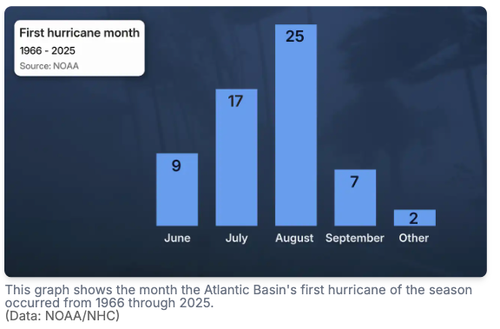
El Niño Delaying 2026 Atlantic Hurricane Season as Dolly Nears Florida
El Niño's wind shear suppresses 2026 Atlantic hurricane activity, delaying first hurricane as Tropical Storm Dolly's remnants approach Florida and the Caribbean.

Mumbai’s Vile Parle Cypher is giving unheard rappers a voice

Enrich and Ultimo impress

Karnataka CM Signals Review of 5% Park Land Amendment Bill in Assembly

