Warsh Speaks, Treasury Yields Jump, 6-Month to 3-Year Treasury Yields Spike
Federal Reserve Governor Christopher J. Waller delivered a blunt assessment of current financial conditions and inflation during a speech at the Jackson Hole Economic Symposium on Friday, signaling a significant shift in the central bank’s approach to monetary policy.
In his remarks, Waller emphasized that financial conditions are not as restrictive as the Federal Reserve has suggested, despite elevated inflation levels. He warned that relying too heavily on forward guidance—where the Fed signals its intentions to markets—creates a "hall-of-mirrors problem." This phenomenon occurs when markets depend on the Fed’s guidance while the Fed itself relies on market signals, potentially leading to policy missteps. Waller cited the Fed’s delayed response to surging inflation in 2021 as an example of the consequences of this dynamic.
"Perversely, market participants are unlikely to bear the biggest costs of the hall-of-mirrors problem," Waller stated. "The most serious harm is likely to befall those without financial assets. If the Fed gets inflation wrong and judges the economy wrong, who gets the worst of it? Not the financial high-fliers. Hard-working Americans are the ones left to deal with inflation that is too high or jobs that suddenly appear less secure."
Waller’s comments effectively killed any remaining forward guidance from the Fed, leaving markets to interpret policy directions independently. Following his speech, Treasury yields surged, with the six-month yield rising by 9 basis points and the one-year and two-year yields increasing by over 11 basis points. This reaction suggests that investors now perceive a higher likelihood that the Fed will take inflation more seriously in its policy decisions.
Waller also provided an assessment of the U.S. economy, highlighting strong corporate investment in fixed assets and software, much of which is tied to artificial intelligence infrastructure. He noted that credit spreads on corporate bonds and leveraged loans remain near historical lows, while issuance volumes for these instruments have been robust this year. Profit margins for S&P 500 companies are elevated, and expectations for capital expenditure and corporate profits remain high.
"Banks tell us that standards for commercial and industrial loans are on the easier end of their historical range," Waller said. "That helps explain the growth we’ve seen this year in those loans. Credit and loan markets are showing few signs of policy restraint."
However, Waller acknowledged challenges in sectors such as housing and agriculture, concluding that, overall, financial conditions are not restrictive enough. He pointed to the Chicago Fed’s National Financial Conditions Index (NFCI), which has remained deep in negative territory—indicating loose financial conditions—despite the Fed’s efforts to tighten monetary policy.
On inflation, Waller expressed concern, citing the personal consumption expenditures (PCE) price index, which rose 3.7% year-over-year and 4.1% over the past six months. He noted that the consumer price index (CPI) was also elevated and that recent improvements in inflation data do not yet indicate a meaningful shift in underlying trends.
"The numbers are more concerning," Waller said. "Inflation is running above our 2% target. So the Fed’s predominant focus right now should be on prices."
He emphasized that the Fed must be confident that inflation is sustainably moving toward its 2% objective before considering any policy changes. "We must be confident that underlying inflation is moving to our objective, clearly and at sufficient speed. Otherwise, we have work to do."
Waller also underscored the Fed’s responsibility for sustained inflation over the past 65 months. "There is one signal nobody can miss: The responsibility for 65 months of sustained, elevated inflation sits squarely with the central bank."
The Federal Open Market Committee (FOMC), which sets monetary policy, consists of 12 voting members. Waller’s role will be to build a majority for his perspective, though achieving consensus may prove challenging. If he fails to sway his colleagues, his remarks may remain just that—words without immediate policy impact.
The next steps for the Fed will depend on upcoming economic data and the committee’s assessment of whether additional tightening is necessary to bring inflation under control.
Comments (0)
No comments yet — be the first to weigh in.

Free School Uniform Swap Shop Saves Welsh Families £50m Annually
A Cardiff father's school uniform swap shop initiative has grown to 200 schools, helping Welsh families save £50m yearly while promoting sustainability and reducing clothing waste.

Poland, US Explore Permanent Military Bases: Defense Talks Underway
Poland and the US are discussing permanent American military bases in Poland, focusing on defense capabilities rather than troop numbers. Nuclear warheads are not part of the plans.

Taxpayers Lost $65B to Obamacare Fraud in 2024; Feds Crack Down
A Paragon Health Institute report reveals $65 billion in taxpayer losses due to Obamacare and Medicaid fraud in 2024, with improper enrollments rising in 2025.
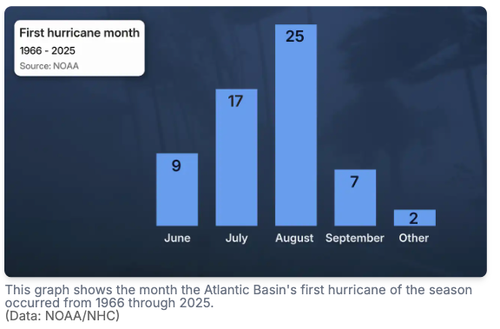
El Niño Delaying 2026 Atlantic Hurricane Season as Dolly Nears Florida
El Niño's wind shear suppresses 2026 Atlantic hurricane activity, delaying first hurricane as Tropical Storm Dolly's remnants approach Florida and the Caribbean.

Mumbai’s Vile Parle Cypher is giving unheard rappers a voice

Enrich and Ultimo impress

Karnataka CM Signals Review of 5% Park Land Amendment Bill in Assembly

