













































EU Announces Emergency 500 Billion Euro Defense Fund as NATO Spending Debate Escalates
The European Union announced a 500 billion euro emergency defense investment fund on February 26 2026 as European leaders vowed to dramatically increase military spending in response to the ongoing war in Ukraine and growing uncertainty over U.S. security commitments.
- The European Union announced a 500 billion euro emergency defense investment fund on February 26 2026 as European leaders vowed to dramatically increase military spending in response to the ongoing war in Ukraine and growing uncertainty over U.S. security commitments.
- Category: Europe
- Published: Feb 25, 2026

Europe Goes All-In on Defense With Landmark 500 Billion Euro Fund
The number alone signals how radically Europe's security calculus has shifted. European Commission President Ursula von der Leyen announced Wednesday that EU member states have agreed in principle to establish a 500 billion euro emergency defense investment fund — the largest collective security spending commitment in the bloc's history. The fund, to be deployed over five years, will finance everything from ammunition stockpiles and air defense systems to domestic defense industry expansion across member states.
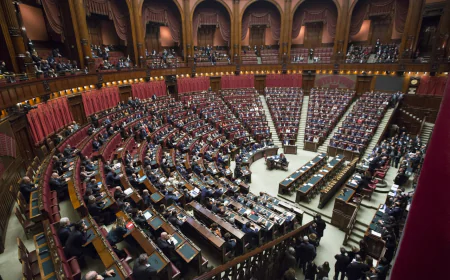
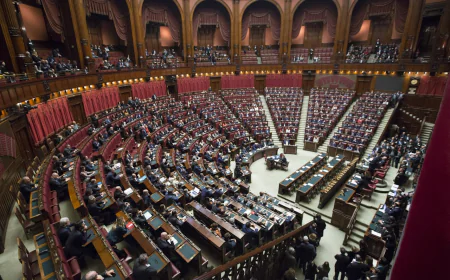
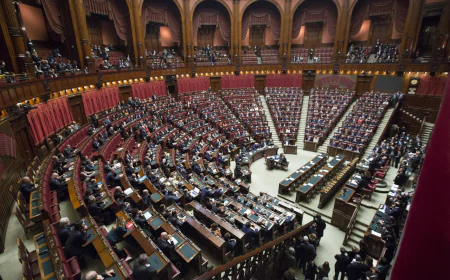
The announcement came at an emergency session of the European Council in Brussels, convened specifically to address the accelerating security crisis facing the continent. Representatives of all 27 member states were present. The vote to proceed with the framework passed with no dissent.
Why Europe Is Moving So Fast and So Big
The driving forces behind the decision are two: the ongoing war in Ukraine, now entering its fourth year with no diplomatic resolution in sight, and mounting anxiety among European capitals about the reliability of U.S. security guarantees under the Trump administration. President Trump has repeatedly questioned the value of NATO and suggested earlier this year that he might not defend alliance members who fail to meet the 2 percent GDP spending target.
Nineteen of 32 NATO members currently meet that threshold. Only two years ago, fewer than ten did. Europe has been spending more on defense year over year since Russia's 2022 invasion, but Wednesday's announcement marks a decisive shift from gradual increase to emergency mobilization.
According to Dr. Claudia Major, senior fellow at the German Institute for International and Security Affairs, this is the moment European strategic autonomy stops being a slogan and becomes policy. The fund is not symbolic. It is intended to produce actual combat capacity within 24 to 36 months.
How the Fund Will Work and Which Countries Benefit Most
The 500 billion euro total will be raised through a combination of joint EU borrowing — a mechanism first used during COVID-19 recovery — and direct national contributions. Countries with the most urgent defense infrastructure gaps, including Poland, the Baltic states, Romania, and Bulgaria, are expected to receive priority allocations.
A significant portion of the fund is earmarked specifically for European defense industry production capacity. Artillery shells, air defense interceptors, and armored vehicles are at the top of the list. The EU has been embarrassed by its inability to produce ammunition at the scale needed to support Ukraine's defense, and Wednesday's decision is partly a direct response to that failure.
Reaction from Washington was measured. The State Department issued a brief statement calling the EU commitment a positive development. Some Republican senators went further, saying it was long past time for Europe to pay for its own security.
With the fund now moving to parliamentary ratification in multiple member states, the real test will be whether pledges translate into actual production, procurement, and deployment — a challenge that has historically proved harder than writing the check.