


















































NASA Artemis II Moon Mission Faces Delay After Helium Flow Disruption Halts Countdown
NASA is considering rolling back the Artemis II rocket after a helium flow disruption forced engineers to halt pre-launch preparations, potentially pushing the historic crewed lunar flyby mission from its March target to April or later.
- NASA is considering rolling back the Artemis II rocket after a helium flow disruption forced engineers to halt pre-launch preparations, potentially pushing the historic crewed lunar flyby mission from its March target to April or later.
- Category: China
- Published: Feb 24, 2026
NASA's Crewed Moon Mission Is in Jeopardy — A Helium Problem Could Push Artemis II to April
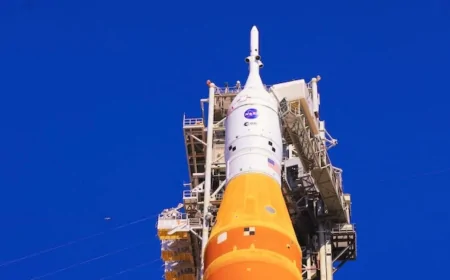
The Space Launch System rocket was standing on Pad 39B at Kennedy Space Center, fully fueled and within 11 days of its target launch date, when engineers noticed the anomaly. Helium flow to a critical purge system was running outside of acceptable parameters. Ground controllers halted pre-launch operations. Mission managers convened an emergency review.
As of Tuesday morning, NASA had not made a final decision on whether to roll the rocket back to the Vehicle Assembly Building for additional inspections. But sources within the agency told journalists the probability of a rollback had risen sharply overnight, and with it, the probability that Artemis II — the first crewed mission to the vicinity of the Moon in more than 50 years — will not fly in March.
What the Helium Issue Means for the Mission
Helium plays several roles in the Space Launch System's pre-launch and launch sequence. Most critically, it is used in purge systems that keep propellant lines and engine components free of moisture and contaminants before ignition. The specific flow disruption involved a component in the core stage purge system — an area that engineers cannot easily access without returning the vehicle to the VAB.
The issue is not believed to be related to the rocket's propulsion system or the Orion spacecraft itself. The four astronauts assigned to Artemis II — Reid Wiseman, Victor Glover, Christina Koch, and Canadian astronaut Jeremy Hansen — were briefed Monday evening and remain in training and flight readiness status. Their health and preparation are not at issue.
According to Dr. Howard Hu, NASA's Orion program manager, we are proceeding with appropriate caution. Safety is always our first priority, and we will not launch until we have full confidence in every system. We have not yet made a rollback determination, but we are working through our options as quickly and thoroughly as possible.
The Political and Budgetary Context
Artemis II carries weight that goes well beyond its engineering challenges. It is the first human mission to lunar distance since Apollo 17 in December 1972. It is the first crewed lunar mission to include an astronaut from a country other than the United States. And it is the first major milestone in NASA's broader Artemis program, which aims to return American astronauts to the lunar surface no earlier than 2027.
Any significant delay is also politically sensitive. The Trump administration has expressed interest in accelerating the American return to the Moon, partly as a counter to China's stated goal of landing astronauts on the lunar surface by 2030. A multi-month Artemis II delay would invite questions about whether the program's pace is sufficient to stay ahead of Beijing's ambitions in cislunar space.
NASA officials emphasized that a one-to-two-month delay, if it materializes, would not fundamentally alter the Artemis program schedule. The agency has built in some margin between Artemis II's crewed flyby and Artemis III's planned lunar landing. Whether the helium issue requires days of evaluation or weeks of repair work will determine how much of that margin gets consumed — and whether the dream of boots on the Moon by 2027 remains intact.