2026 Nepal Flood: Ice‑Rock Avalanche, Glacial Lake Outburst and Climate‑Change Risks
A massive ice‑rock avalanche triggered a catastrophic flood in Nepal on Aug. 26 2026, followed by a glacial lake outburst that devastated towns and hydropower plants. Climate‑change‑driven thawing increased the risk.
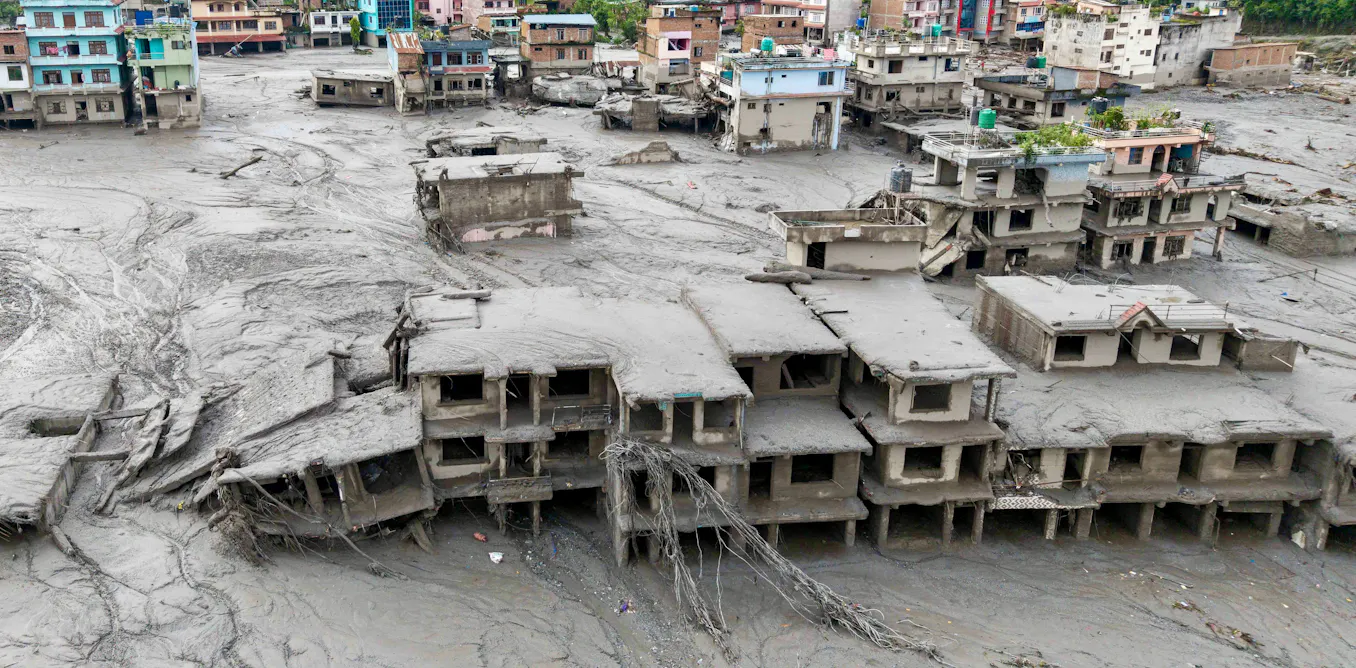
A massive landslide in Nepal on August 26, 2026, triggered a deadly flood that killed hundreds and left many missing, according to an international team of geologists analyzing the disaster. The catastrophe began when a massive block of bedrock and glacier ice broke loose from a slope near Langtang Lirung, a 7,227-meter peak in the Himalayas, and crashed 1,200 meters into the valley below. The impact registered as a magnitude 5.2 earthquake on seismometers, according to the U.S. Geological Survey. The resulting debris flow—a mix of ice, rock, and water—barraged downstream, destroying infrastructure and claiming lives. Within days, a second threat emerged as a debris-dammed lake formed behind the flood debris, only to burst, sending more water cascading through the valley.
This two-stage disaster highlights the growing risks in the Himalayas, where rising temperatures and melting ice are increasing the frequency of catastrophic floods. The region, often called the “third pole” for its vast ice reserves, has seen glacier loss rates roughly double since 2000, according to the Kathmandu-based International Center for Integrated Mountain Development (ICIMOD). Thawing permafrost—ground that remains frozen year-round—further destabilizes mountain slopes, weakening the natural “cement” that holds rocks together. As temperatures climb, more meltwater seeps into fractures, acting as a lubricant that can trigger sudden collapses.
The Nepal flood followed a similar pattern seen in past disasters. In 2021, a rock and ice avalanche from Ronti Peak in Uttarakhand, India, destroyed hydropower plants and killed or left hundreds missing. In 2025, a collapse from the Birch Glacier in the Swiss Alps buried part of the village of Blatten, though evacuations limited casualties. The 2023 collapse of a slope into South Lhonak Lake in Sikkim, India, sent a glacial lake outburst flood downstream, damaging infrastructure and bridges.
Experts warn that climate change is amplifying these risks. The last decade has been the warmest on record, accelerating snow and glacier melt. As populations grow and infrastructure expands, more people and development sit in flood-prone valleys. In Nepal, the recent disaster knocked offline a dozen hydropower plants and destroyed the Gyirong Port border crossing between Nepal and China.
Early warning systems could save lives, but current methods have limitations. Nepal’s systems rely on river gauges, which may not detect sudden, high-velocity floods. Adding seismic sensors, sirens, and redundant communication systems could provide faster alerts. Improved land-use planning is also critical, as construction in high-hazard zones increases vulnerability.
While not every thaw leads to disaster, the odds of collapse are rising as temperatures climb. The Nepal flood underscores the urgent need for better monitoring and adaptation in the world’s most fragile mountain regions.
#NepalFlood2026 #Himalayas #ClimateChange #GlacialLakeOutburst #LangtangLirung #ICIMOD #PermafrostThaw #NaturalDisasters
Comments (0)
No comments yet — be the first to weigh in.

NASA Launches Nancy Grace Roman Telescope to Unlock Universe's Mysteries
NASA's new Nancy Grace Roman Space Telescope lifts off from Florida to study dark energy, exoplanets, and cosmic mysteries with unprecedented precision and scope.

Nature reserves spot rare species during heatwaves
Nature reserves in Hertfordshire and Middlesex have documented rare species this summer, with volunteers spotting wildlife not seen in decades and some even for...

Inmates at HMP La Moye craft boxes to save Jersey's hedgehogs
Prisoners at HMP La Moye have crafted nesting and feeding boxes to support Jersey's hedgehog population, boosting rehabilitation and community engagement.

DSM-6 to Integrate Biology in Mental Health Diagnosis for First Time
The DSM-6 will incorporate biological factors for the first time, marking a shift towards evidence-based psychiatry. Explore the challenges and advancements in neurobiology shaping the next edition.

Mumbai’s Vile Parle Cypher is giving unheard rappers a voice

Enrich and Ultimo impress

Karnataka CM Signals Review of 5% Park Land Amendment Bill in Assembly

