Americans Revolt Against Flock License Plate Readers Over Privacy Fears
Grassroots opposition grows against Flock Safety's nationwide license plate reader network, with over 50 jurisdictions cutting ties amid privacy and misuse concerns.
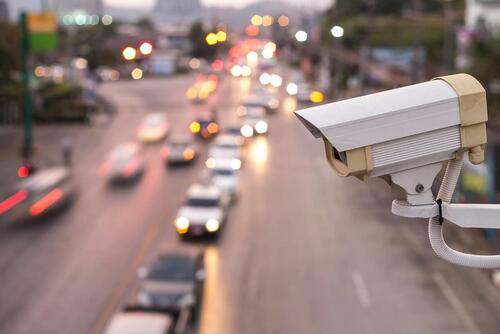
Flock cameras, a network of automated license‑plate readers produced by Flock Safety, has sparked a nationwide backlash as communities and local lawmakers push to terminate contracts and remove the devices from streets and parking lots. The system, which records vehicle make, model, and license plate and stores the data in a searchable database, is now installed in roughly 120,000 locations across 49 states and is expanding daily. In more than 50 jurisdictions, local officials have ended their relationships with the company after residents organized protests, social‑media campaigns, and even direct removal efforts.
The cameras operate on the premise that a police officer’s observation of a vehicle is not a privacy violation, while the automated system logs every passing car. The result is a database that rivals the data a hypothetical GPS tracking system would generate for all vehicles in the country. Critics argue that the data could be accessed by law‑enforcement agencies for purposes beyond crime prevention, including monitoring personal relationships and political activity.
Public opposition has taken a grassroots form, largely coordinated through local Facebook groups and small‑scale media outlets. Citizens have pressured city councils to cancel contracts, urged state legislatures to impose stricter regulations, and in some cases physically removed cameras. The movement has gained traction by highlighting documented instances where the database was used to track romantic partners, ex‑partners, and other private individuals without a warrant, as well as cases where mistaken identification led to dangerous confrontations between police and civilians.
In response to mounting pressure, Flock Safety announced a series of policy changes last week. The company will reduce the default retention period for stored data from 30 days to 7 days, require all searches to be linked to a specific case code, and mandate an internal review for any searches that fall outside standard parameters. Flock also removed all federal agencies from its nationwide search database and pledged to implement additional safeguards for state and local law‑enforcement use.
Despite these concessions, many observers note that the core concerns remain. The possibility of future misuse—such as enforcing pandemic restrictions, targeting political opponents, or expanding immigration enforcement—has become a central fear among residents. The debate is increasingly framed not just as a technical issue but as a broader question of governmental power and civil liberties.
The controversy is expected to influence the upcoming midterm elections, as voters weigh the balance between public safety and privacy. Several state legislatures have introduced bills that would restrict the use of automated license‑plate readers or require explicit warrants for data access. The debate also intersects with other surveillance discussions, including the use of facial‑recognition technology and the expansion of the Patriot Act’s data‑collection provisions.
Law‑enforcement officials defend the cameras as tools that reduce crime and improve traffic enforcement. They point to statistics showing a decline in vehicle thefts and an increase in the capture of stolen vehicles in areas with camera coverage. However, critics argue that the data can be exploited for investigative purposes beyond the original scope, citing incidents where police used the system to pursue individuals based on personal relationships rather than criminal activity.
The public’s skepticism reflects a broader distrust of government agencies that has grown over the past decade. High‑profile incidents involving surveillance, such as the use of drones for crowd monitoring and the expansion of data‑collection under the National Security Agency, have eroded confidence in the promise that increased surveillance equals increased safety. This sentiment has fueled a broader push for transparency, oversight, and the protection of individual privacy rights.
As the debate continues, stakeholders on both sides are calling for clearer regulations and stronger accountability measures. Whether the new policy changes from Flock Safety will satisfy the public remains to be seen, but the conversation underscores the need for a national dialogue about the limits of surveillance technology and the rights of citizens in a digital age.
#FlockCameras #AutomatedLicensePlateReaders #PrivacyRights #SurveillanceTechnology #MidtermElections #LawEnforcement #U.S.Politics
Comments (0)
No comments yet — be the first to weigh in.

Free School Uniform Swap Shop Saves Welsh Families £50m Annually
A Cardiff father's school uniform swap shop initiative has grown to 200 schools, helping Welsh families save £50m yearly while promoting sustainability and reducing clothing waste.

Poland, US Explore Permanent Military Bases: Defense Talks Underway
Poland and the US are discussing permanent American military bases in Poland, focusing on defense capabilities rather than troop numbers. Nuclear warheads are not part of the plans.
Taxpayers Lost $65B to Obamacare Fraud in 2024; Feds Crack Down
A Paragon Health Institute report reveals $65 billion in taxpayer losses due to Obamacare and Medicaid fraud in 2024, with improper enrollments rising in 2025.
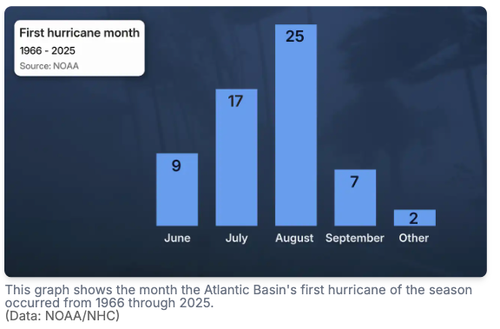
El Niño Delaying 2026 Atlantic Hurricane Season as Dolly Nears Florida
El Niño's wind shear suppresses 2026 Atlantic hurricane activity, delaying first hurricane as Tropical Storm Dolly's remnants approach Florida and the Caribbean.

Mumbai’s Vile Parle Cypher is giving unheard rappers a voice

Enrich and Ultimo impress

Karnataka CM Signals Review of 5% Park Land Amendment Bill in Assembly

