Artist Karyn Olivier Transforms Everyday Materials into Powerful Art
Trinidad-born artist Karyn Olivier turns common objects into striking installations, critiquing housing, climate and refugee crises in her MOCA Detroit show.
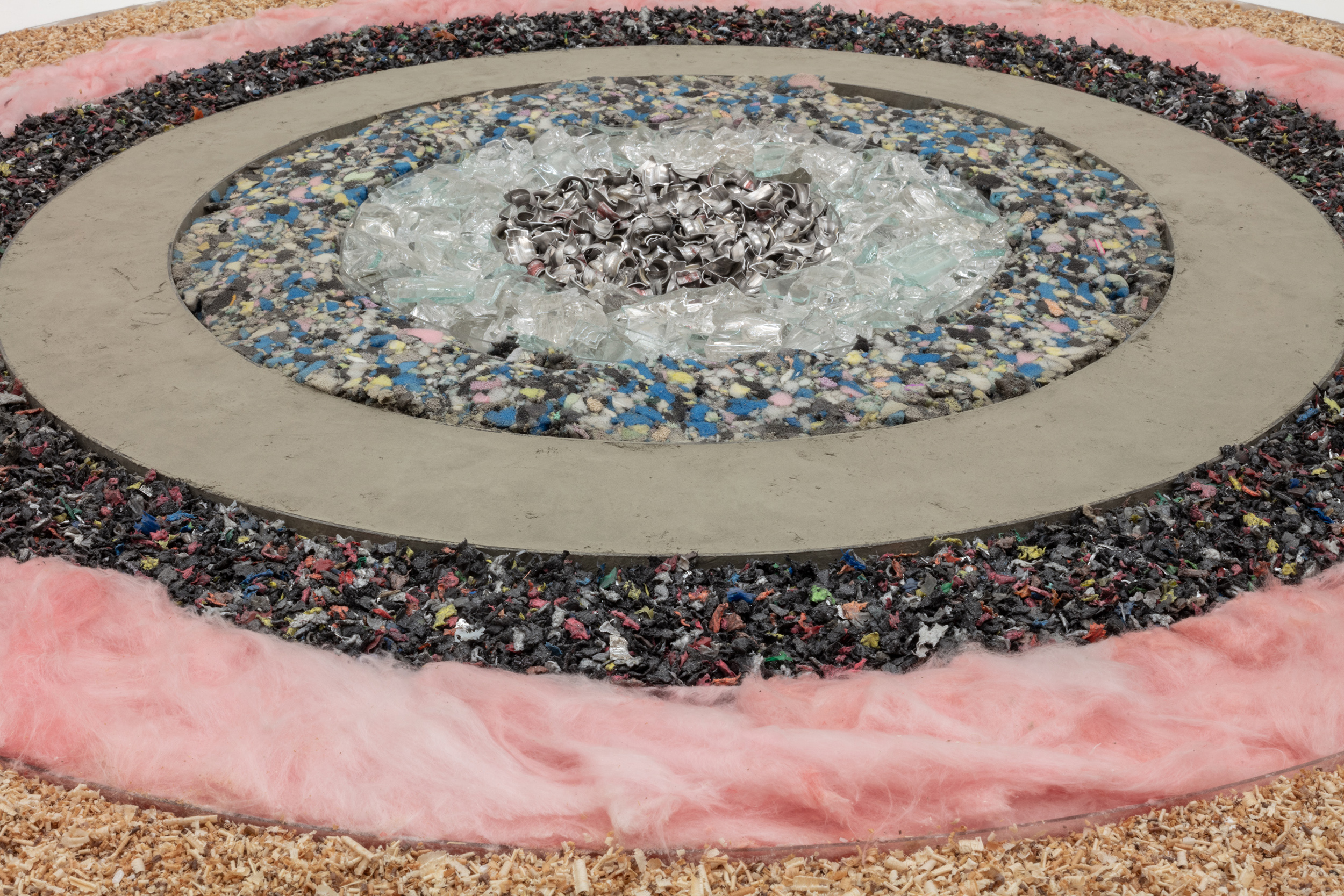
Karyn Olivier, a multimedia artist known for transforming everyday materials into profound art, is the focus of a solo exhibition at the Museum of Contemporary Art Detroit. Titled Bend, Break, Mend, the exhibition showcases Olivier's ability to repurpose common goods into incisive pieces that address pressing social and environmental issues.
Born in Trinidad and Tobago and raised in New York, Olivier grew up in an immigrant family. Initially, she pursued a degree in psychology at Dartmouth College, despite her inclination towards art and art history. After working in retail management, she enrolled at Cranbrook Academy of Art in Detroit, where she studied ceramics. However, she found herself "restricted by the limitation of clay" and took a break from the medium. This hiatus led her to the hardware store, where she found new inspiration.
Olivier's work spans a wide range of subjects, from environmentally destructive housing practices to global humanitarian crises. In one piece, Powers of 10 (Home Kit), she creates a commentary on modern building practices. The work consists of concentric rings of gypsum, fiberglass insulation, cement, and other materials, referencing the Charles and Ray Eames documentary of the same name. Olivier critiques the rapid construction of temporary housing in cities like Philadelphia, where she now resides. "I’m reading about a beautiful historic building that’s being taken down to put up one of those ‘showing houses’ that go up in a second and are not going to withstand the test of time," she observes.
Another piece, Shelter, is a simple enclosure formed by an emergency aluminum heating blanket. Olivier was struck by the dual use of these blankets, which are used by marathon runners to warm up after a race and also serve as shelter in refugee camps from Gaza to Sudan. "This material is so thin, so light, it’s like air. And it becomes someone’s shelter, comfort, and architecture," she explains. "What I’m using is so basic, there’s not much to the work. But how they’re arranged maybe makes you realize the simplest, most familiar material or object can be the most profound."
Olivier's work challenges viewers to reconsider the value and potential of everyday materials. By repurposing these items, she highlights the interconnectedness of global issues and the power of art to provoke thought and dialogue. Her exhibition at the Museum of Contemporary Art Detroit invites visitors to engage with these themes and appreciate the profound impact of simple, familiar objects.
Comments (0)
No comments yet — be the first to weigh in.
Yayoi Kusama’s Death Signals a Kind Fall for Art and Humanity
Hyperallergic reflects on the passing of Yayoi Kusama, Dolly Parton, and Sliman Mansour, while exploring loneliness, AI, and art's role in a changing world.
Tessa Hulls on Her Graphic Memoir 'Feeding Ghosts' on Longform Podcast #571
Writer and artist Tessa Hulls discusses her graphic memoir Feeding Ghosts and the project she spent her life avoiding, on Longform Podcast #571.

Derek Thompson on Longform Podcast: Solving Life's Mysteries Through Writing
Derek Thompson, Atlantic staff writer and Plain English host, discusses his career as a 'dilettante' and love for uncovering mysteries in his Longform Podcast interview.
Rozina Ali on Longform Podcast #573 Discussing Her Career and Reporting
Rozina Ali, a New York Times Magazine writer and National Magazine Award winner, joins the Longform Podcast to discuss her career and latest reporting.

Mumbai’s Vile Parle Cypher is giving unheard rappers a voice

Enrich and Ultimo impress

Karnataka CM Signals Review of 5% Park Land Amendment Bill in Assembly

