China Wins U.S.-Canada Trade War: How Trump Tariffs Fuel Chinese Advantage
Trump’s tariffs on Canadian auto parts backfire, pushing China to dominate supply chains. As Canada limits imports, Chinese EVs surge, threatening U.S. auto industry.

The escalating trade dispute between the United States and Canada risks benefiting China at the expense of both North American economies, according to economic analysts.
Trade experts warn that China is poised to emerge as the primary beneficiary if Washington and Ottawa fail to resolve their tariff conflicts. The ongoing tensions—marked by import restrictions on Canadian steel, aluminum, and automobiles—threaten to weaken North American supply chains while increasing reliance on Chinese manufacturing.
Analysts point to China's growing influence in critical industries, including automotive production. Recent export controls imposed by Beijing on rare earth elements have already disrupted manufacturing in both countries. In April 2025, restrictions on rare earth magnets forced Ford to temporarily halt production of its Explorer SUV in Chicago. Months later, Honda reduced operations at its Canadian plants after China restricted access to semiconductor components.
Economic observers argue that these vulnerabilities should encourage closer cooperation between the U.S. and Canada to counter Chinese economic pressure. However, the current trade war—fueled by U.S. tariffs on Canadian goods—risks undermining that alliance.
U.S. tariffs on Canadian vehicles, steel, and aluminum have drawn a firm response from Ottawa. Canadian officials recently rejected a U.S. proposal that maintained high import duties, warning that sustained tariffs would eventually price Canadian-made cars and auto parts out of the American market. Over time, Detroit automakers could restructure supply chains to exclude Canadian suppliers, mirroring trends seen along the U.S.-Mexico border.
The consequences for Canada’s auto sector could be severe. Unlike Mexico, Canada lacks proximity to major Asian or European manufacturing hubs, leaving it isolated if U.S. demand declines. A similar decline in Australia’s automotive industry provides a cautionary example. After Toyota, General Motors, and Ford closed their Australian plants in 2017, imports shifted sharply toward China. By early 2026, nearly one-third of new cars sold in Australia were manufactured in China, compared to less than one percent in 2017.
Canada appears to be heading down a comparable path. In January, Canadian officials announced a quota allowing 49,000 Chinese-made electric vehicles to enter the market annually—less than 3 percent of total sales—with plans to gradually expand access. Analysts predict that further liberalization would lead to a surge in Chinese imports, particularly as domestic manufacturing becomes less competitive.
The shift would carry significant economic costs for both countries. For Canada, the loss of U.S. buyers could dismantle integrated supply chains and eliminate thousands of manufacturing jobs. For the U.S., reduced Canadian demand would shrink the market for American-made vehicles, increasing per-unit production costs and ceding further market share to Chinese automakers.
Analysts also warn of broader economic ripple effects. The U.S. relies heavily on Canadian raw materials, including pulp and lumber, which are essential to industries ranging from construction to consumer goods. Rising trade barriers could disrupt these supply chains, leading to higher costs for American manufacturers and consumers.
Without a resolution, the trade war risks accelerating China’s dominance in key sectors while inflicting long-term damage on North American industries. Rather than strengthening U.S. manufacturing, current tariff policies may ultimately weaken North American competitiveness and reinforce China’s economic leverage.
Comments (0)
No comments yet — be the first to weigh in.

Free School Uniform Swap Shop Saves Welsh Families £50m Annually
A Cardiff father's school uniform swap shop initiative has grown to 200 schools, helping Welsh families save £50m yearly while promoting sustainability and reducing clothing waste.

Poland, US Explore Permanent Military Bases: Defense Talks Underway
Poland and the US are discussing permanent American military bases in Poland, focusing on defense capabilities rather than troop numbers. Nuclear warheads are not part of the plans.

Taxpayers Lost $65B to Obamacare Fraud in 2024; Feds Crack Down
A Paragon Health Institute report reveals $65 billion in taxpayer losses due to Obamacare and Medicaid fraud in 2024, with improper enrollments rising in 2025.
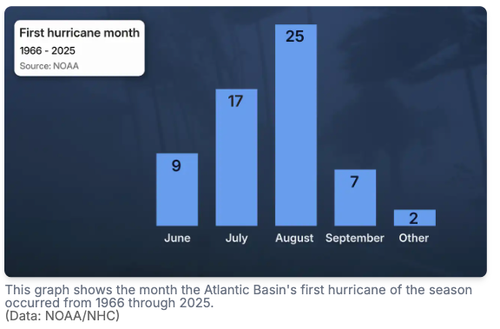
El Niño Delaying 2026 Atlantic Hurricane Season as Dolly Nears Florida
El Niño's wind shear suppresses 2026 Atlantic hurricane activity, delaying first hurricane as Tropical Storm Dolly's remnants approach Florida and the Caribbean.

Mumbai’s Vile Parle Cypher is giving unheard rappers a voice

Enrich and Ultimo impress

Karnataka CM Signals Review of 5% Park Land Amendment Bill in Assembly

