Climate crisis destabilizes Himalayan glaciers, triggers deadly Nepal-Tibet flood
Experts warn rising temperatures weaken glaciers and permafrost, causing catastrophic floods. Nepal-Tibet disaster kills 360, with climate change increasing risks globally.
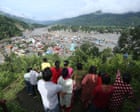
A deadly flash flood that swept through border communities in Nepal and Tibet on Wednesday killed at least 360 people and left 1,400 missing, prompting scientists to warn that climate change is destabilising the geology of mountain and polar regions. Satellite imagery shows the torrent was triggered by the collapse of a glacier high in the Himalayas, which released a wall of ice and debris that plunged into the Bhotekoshi River.
The flood was first blamed on a magnitude‑4.4 earthquake, but the United States Geological Survey now says the seismic energy was produced by a glacial collapse and debris flow. The ice‑rock avalanche struck the north slope of Langtang Lirung, a 7,000‑metre peak, and the impact registered a magnitude‑5.2 event. The debris was carried into the Lhende Khola, a tributary of the Bhotekoshi, and water levels in downstream rivers rose 7 to 9 metres within half an hour, according to the International Centre for Integrated Mountain Development.
Scientists are still analysing the mechanics of the disaster, but many point to global warming as the underlying cause. The glacier wall that fell had been weakened by a period of unusual heat that melted the ice binding the bedrock together. Dr Hamish Pritchard, a glaciologist with the British Antarctic Survey, said that two days before the collapse the ground temperature reached its highest point in the last two years. The heat would have weakened the snowpack, filled crevasses with water and thinned the bonds between ice and rock that hold glaciers in place.
The region has also been hit by a series of intense heatwaves since early this year, and the monsoon season saturated soils and swollen rivers, adding to the danger. The United Nations’ Intergovernmental Panel on Climate Change (IPCC) warned in its sixth synthesis report that every increment of warming would multiply and intensify future hazards from cryosphere regions, including floods, landslides and freshwater shortages. The IPCC noted that average global temperatures are approaching 1.5 °C above pre‑industrial levels, and warming is occurring faster in alpine and polar regions because the loss of snow and ice removes the land’s thermal insulation.
Dr Richard Waller, a senior lecturer in physical geography at Keele University, explained that the progressive loss of snow and glacier ice reduces surface reflectivity, allowing more solar energy to be absorbed. Combined with atmospheric warming, this accelerates the melting of mountain permafrost. “Think of the high mountains like shattered bedrock glued together by ice‑filled joints,” Waller said. “As the permafrost and the ice‑filled joints melt, there’s potential for catastrophic failure.”
The thaw is changing the shape, colour and solidity of the landscape, creating or expanding glacial meltwater lakes and threatening the origins of many rivers that supply drinking water to millions downstream. In Asia, rivers such as the Ganges and the Brahmaputra depend on meltwater from glaciers. Scientists have high confidence that glacier retreat is caused by human‑driven global heating, and this has led to collapses from the Alps to the Andes.
In the Langtang catchment area of Nepal, glacier loss rates have increased more than fourfold since 1964, a study has shown. The area has experienced multiple disasters: a smaller flood hit the Bhotekoshi River in July 2025, and an earthquake‑induced avalanche in 2015 destroyed Langtang village. As emergency services search for bodies and humanitarian groups mobilise, experts are asking where next.
Waller warned that any high‑mountain area with glaciers and permafrost could be vulnerable, including the European Alps, Caucasus, Himalayas, Andes and beyond. Pritchard called for greater disaster preparedness, stating that more avalanches and floods are inevitable as lakes grow in front of retreating glaciers. He urged the urgent establishment of early warning systems to protect valley residents. The tragedy in Nepal and Tibet underscores the urgent need for climate mitigation and adaptation measures in fragile mountain regions worldwide.
Comments (0)
No comments yet — be the first to weigh in.

Iran-US Tensions Escalate Amid Hormuz Strait Crisis – Live Updates
Iranian President Pezeshkian seeks diplomatic solutions with global leaders at SCO summit in Kyrgyzstan amid rising US tensions over Hormuz Strait.

Search continues for 18 passengers after ferry capsized in northern Cyprus
Search and rescue operations are continuing off the coast of Kyrenia in northern Cyprus after a passenger ferry capsized and sank on Sunday, leaving at least ei...

Swiss Man Arrested After Deadly Rave Shooting Kills Italian Woman
A 43-year-old Swiss suspect has been arrested after a shooting at a techno rave in Aarau left one woman dead and several others injured. Authorities continue their investigation.

England attack's 2005 comparisons fair - Trescothick
England’s new pace attack is drawing comparisons to the legendary Ashes-winning quartet of 2005, according to interim head coach Marcus Trescothick. The current...

Mumbai’s Vile Parle Cypher is giving unheard rappers a voice

Enrich and Ultimo impress

Karnataka CM Signals Review of 5% Park Land Amendment Bill in Assembly

