Darse con un Canto en los Dientes
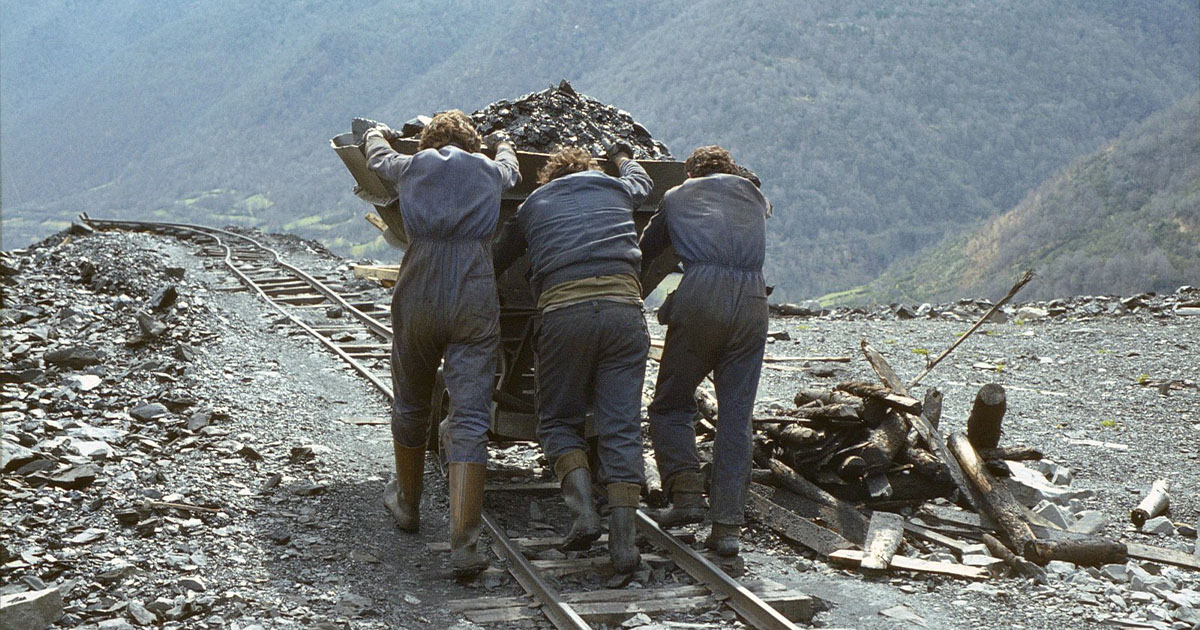
Víctor Manuel, the legendary singer-songwriter from Mieres in Spain’s Asturias region, remains a defining voice of the country’s mining heritage and working-class struggles. His music, spanning from the 1960s to today, reflects the lives and hardships of miners, a theme deeply tied to the cultural and social fabric of Asturias. Recently, the legacy of figures like Víctor Manuel has intersected with modern concerns in the region, particularly in La Calzada, a neighborhood near Gijón where former miners and their families now reside.
A recent conversation with a student highlighted shifting generational perspectives on politics and culture. While she admired Víctor Manuel’s music, she sharply criticized his left-wing political affiliations, referencing a recent scandal involving former Spanish President José Luis Rodríguez Zapatero and alleged financial misconduct by leftist politicians. The discussion underscored the enduring influence of Asturias’ mining history, even as its physical and economic landscape has transformed.
The Laboral Ciudad de la Cultura, a historic complex in Gijón originally built in the 1940s and 1950s as a vocational school for miners’ children, serves as a symbol of this evolution. Constructed from stone quarried in Asturias’ mountains, the Laboral features a grand courtyard, a monumental bell tower, and an oval chapel. After decades of decline, it was revitalized in the 2000s as a cultural hub, housing a conservatory, performance venues, and exhibition spaces. The complex has hosted iconic figures like Joan Baez and Víctor Manuel, whose performances there in the mid-2000s left lasting impressions on audiences.
Yet the Laboral’s past is shadowed by tragedy. In the late 1960s, Víctor Manuel’s song “La Planta 14” depicted the harrowing aftermath of a mining accident, capturing the fear and grief of families and rescue workers. The lyrics—inspired by real conditions—remain a stark reminder of the dangers miners faced daily. While safety standards have improved, the song endures as a cultural touchstone for Asturias’ mining communities.
Today, La Calzada, once home to mining families, faces new challenges. Residents, many of whom relocated from the mining valleys of La Cuenca after the industry’s collapse in the 1980s and 1990s, now protest the environmental and noise pollution caused by trucks traveling through their neighborhood to reach El Musel, Gijón’s industrial port. The contrast between past and present struggles is striking: where once miners battled black lung and deadly accidents, today’s residents endure the rumble of semis shaking their homes.
The Spanish saying “darse con un canto en los dientes”—literally “hitting yourself in the teeth with a stone”—reflects a fatalistic acceptance of hardship. For miners and their descendants, it encapsulates the idea that things could always be worse. Yet the phrase also carries a bitter irony, as the region’s transition from mining to modern industries has not always brought equitable relief. While the Laboral’s revival symbolizes cultural progress, the struggles of La Calzada’s residents reveal the lingering scars of economic and social upheaval.
As Asturias continues to navigate its post-industrial identity, the interplay between past and present remains evident. Víctor Manuel’s music, the Laboral’s revival, and the protests in La Calzada all reflect a region grappling with its heritage while adapting to new realities.
#Asturias #VíctorManuel #LaboralCiudadDeLaCultura #MiningHeritage #Gijón #LaCalzada #SpanishMusic #PostIndustrialSpain
Comments (0)
No comments yet — be the first to weigh in.

Yayoi Kusama’s Death Signals a Kind Fall for Art and Humanity
Hyperallergic reflects on the passing of Yayoi Kusama, Dolly Parton, and Sliman Mansour, while exploring loneliness, AI, and art's role in a changing world.

Tessa Hulls on Her Graphic Memoir 'Feeding Ghosts' on Longform Podcast #571
Writer and artist Tessa Hulls discusses her graphic memoir Feeding Ghosts and the project she spent her life avoiding, on Longform Podcast #571.

Derek Thompson on Longform Podcast: Solving Life's Mysteries Through Writing
Derek Thompson, Atlantic staff writer and Plain English host, discusses his career as a 'dilettante' and love for uncovering mysteries in his Longform Podcast interview.

Rozina Ali on Longform Podcast #573 Discussing Her Career and Reporting
Rozina Ali, a New York Times Magazine writer and National Magazine Award winner, joins the Longform Podcast to discuss her career and latest reporting.

Mumbai’s Vile Parle Cypher is giving unheard rappers a voice

Enrich and Ultimo impress

Karnataka CM Signals Review of 5% Park Land Amendment Bill in Assembly

