Flock Safety's Surveillance Reforms Deemed Inadequate by Privacy Advocates
Privacy advocates criticize Flock Safety's new surveillance reforms as insufficient, highlighting ongoing concerns over mass data collection and retention by law enforcement.

Flock Safety, a provider of automated license plate reader (ALPR) technology, has announced a series of reforms in response to widespread criticism and contract cancellations from municipalities across the country. The reforms, which include changes to data retention policies and access controls, have been described by privacy advocates as insufficient to address the fundamental privacy concerns raised by the technology.
The most significant reform announced by Flock is a reduction in the default data retention period for ALPR data from 30 days to seven days. Under the new policy, law enforcement agencies wishing to retain data beyond this period must enable "Evidence Mode," which requires the data to be associated with an active investigation. Previously, Flock charged customers to extend retention periods, raising concerns that municipalities might face financial barriers to implementing the new default setting.
Other reforms include offense filtering, which restricts access to ALPR data to specific departments investigating certain crimes, such as murder or robbery, and enhanced audit features designed to flag suspicious data requests. However, critics argue that these measures are easily circumvented and fail to address the core issue of mass surveillance.
Flock Safety CEO Garrett Langley has also shifted his tone regarding the company's surveillance technology. Previously, Langley referred to opponents of Flock's technology as "terrorists" and suggested that criticism of the company was politically motivated. In recent statements, however, Langley has acknowledged concerns raised by privacy advocates, including the need for law enforcement to obtain an active case number to search ALPR data.
Despite these concessions, privacy advocates maintain that the reforms do not go far enough. They argue that law enforcement agencies should be required to obtain a warrant to search historical ALPR data, rather than relying on Flock to set its own policies. Additionally, critics question the long-term viability of the reforms, noting that Flock could reverse course if law enforcement customers demand changes.
The broader issue, according to privacy advocates, is the need for legislation to regulate the use of surveillance technology by law enforcement. They argue that decisions about privacy and surveillance should not be left to private companies like Flock Safety. Instead, they contend that lawmakers must pass laws to restrict police use of surveillance technology and protect the privacy of innocent people.
As Flock Safety rolls out its reforms, the debate over the use of ALPR technology and the broader implications of mass surveillance continues. Privacy advocates maintain that without stronger protections and legislative action, the privacy of millions of people could be at risk.
Comments (0)
No comments yet — be the first to weigh in.

Energy biz SSE smacked around in court by a guy and AI
An Oxford doctoral student has defeated British energy provider SSE Energy Supply in court after utilizing artificial intelligence models to build his legal def...

Berkeley Humanoid Lite: Affordable Open-Source Robot with DIY Actuators
Explore the Berkeley Humanoid Lite, a budget-friendly open-source robot featuring 3D-printed actuators under $5,000 USD. Learn how its modular design benefits DIY projects.

Woodstove Safety Monitor: Oru System Alerts Users to Temperature Fluctuations
Discover how the Oru woodstove assistant helps prevent dangerous chimney fires by monitoring exhaust gas temperatures and alerting users to temperature changes.
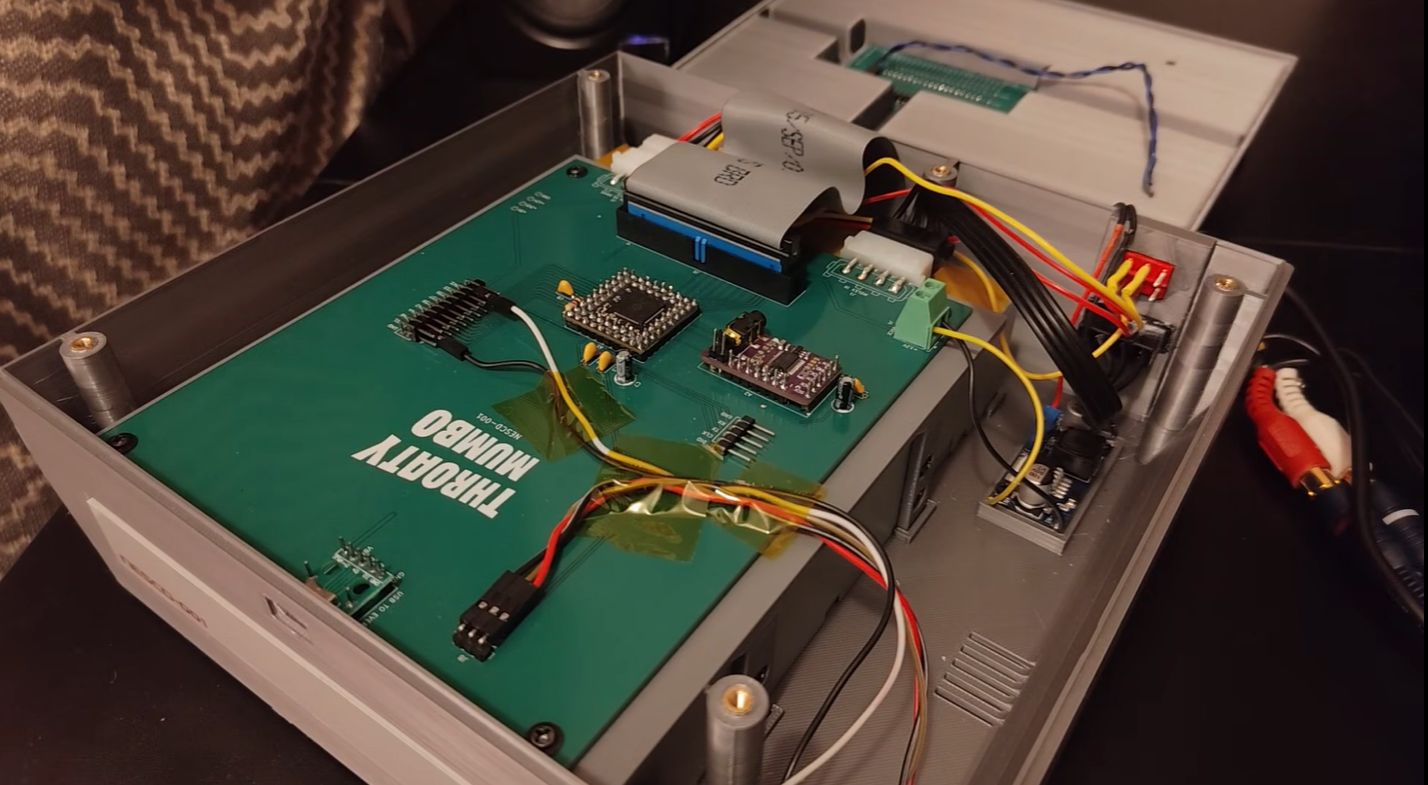
NES CD Add-On Revives 1980s Gaming with Optical Storage
Explore how a DIY project integrates a CD drive with the NES using an RP2350B microcontroller and Everdrive N8 Pro for expanded storage and audio playback.

Mumbai’s Vile Parle Cypher is giving unheard rappers a voice

Enrich and Ultimo impress

Karnataka CM Signals Review of 5% Park Land Amendment Bill in Assembly

