Here are all the Apple devices with full Wi-Fi 7 support

Apple has added full Wi‑Fi 7 support to its Mac mini and Mac Studio lines, marking the first time the company’s desktop computers have been equipped with the newest wireless standard. The update was announced today as part of a broader effort to bring the latest networking technology to Apple’s product portfolio.
Apple’s support documentation, released this week, lists every device that can take advantage of the complete set of Wi‑Fi 7 features. The list differs from the broader set of Apple products that can simply connect to a Wi‑Fi 7 network, because Wi‑Fi 7 is backward‑compatible with earlier standards. Devices that only support Wi‑Fi 6E can still join a Wi‑Fi 7 network and use the 6 GHz band where available, but they do not support the full suite of Wi‑Fi 7 capabilities.
Wi‑Fi 7, formally known as 802.11be, introduces several key improvements over Wi‑Fi 6E. Among the most notable are 320 MHz channels, which double the bandwidth of the 160 MHz channels used in Wi‑Fi 6; 4096‑quadrature amplitude modulation (QAM), which increases the amount of data that can be transmitted in each symbol; and Multi‑Link Operation (MLO), which allows devices to transmit and receive simultaneously across multiple frequency bands. Together, these features can raise maximum throughput, enhance spectral efficiency, and reduce latency for demanding applications such as virtual reality, high‑definition streaming, and large‑file transfers.
Apple’s updated Mac mini and Mac Studio models now include the new Wi‑Fi 7 hardware, giving users faster, more reliable wireless performance on compatible networks. The Mac mini, which has been offered in both Intel‑based and Apple‑silicon (M2) variants, now ships with a Wi‑Fi 7 radio on all new silicon configurations. The Mac Studio, available with the M1 Ultra, M2 Ultra, and M3 Ultra chips, also receives the same upgrade. Both desktop computers now support the full 320 MHz channel width, 4096‑QAM modulation, and MLO, allowing them to exploit the maximum bandwidth and low latency that Wi‑Fi 7 offers.
In addition to the desktops, Apple’s support document lists other products that now support the full Wi‑Fi 7 feature set. While the exact product lineup is not reproduced here, the documentation confirms that several newer MacBook and iPad models, as well as the latest iPhone series, have been updated to include the same Wi‑Fi 7 radio. Devices that previously shipped with Wi‑Fi 6E hardware have received firmware and hardware revisions that enable the full range of Wi‑Fi 7 capabilities.
Apple notes that Wi‑Fi 6E and Wi‑Fi 7 features that operate on the 6 GHz band are available only in regions that allow unlicensed use of that spectrum. In markets where regulatory approval for the 6 GHz band is not yet in place, devices will fall back to using the 2.4 GHz and 5 GHz bands. The company’s support page explains that users can check the status of Wi‑Fi 7 availability in their region and see which bands their device will use.
The company’s official support documentation can be accessed through Apple’s website, where it lists every device that fully supports Wi‑Fi 7 and provides detailed technical specifications. The documentation also explains how to verify that a particular model is equipped with the new radio and how to enable the feature in macOS and iOS.
Apple’s move to adopt Wi‑Fi 7 across its desktop and mobile lineup is part of a broader industry push to bring the next generation of wireless networking to consumers. While Wi‑Fi 7 is still in the early stages of deployment, the new standard promises significant performance gains for bandwidth‑intensive and latency‑sensitive applications. By adding full support to its most popular products, Apple is positioning itself to deliver these benefits to its users as soon as compatible networks become available.
Comments (0)
No comments yet — be the first to weigh in.

Energy biz SSE smacked around in court by a guy and AI
An Oxford doctoral student has defeated British energy provider SSE Energy Supply in court after utilizing artificial intelligence models to build his legal def...
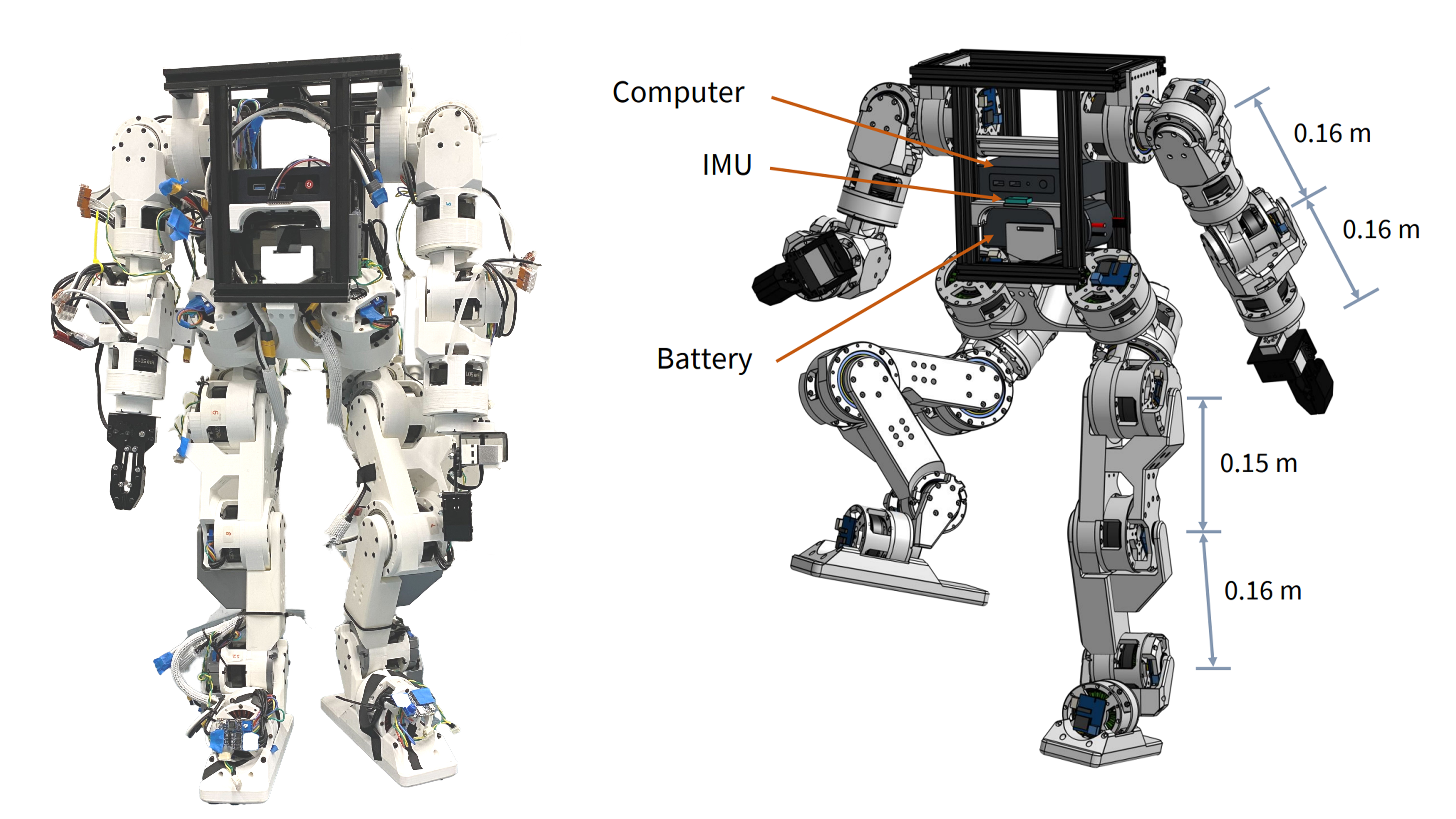
Berkeley Humanoid Lite: Affordable Open-Source Robot with DIY Actuators
Explore the Berkeley Humanoid Lite, a budget-friendly open-source robot featuring 3D-printed actuators under $5,000 USD. Learn how its modular design benefits DIY projects.

Woodstove Safety Monitor: Oru System Alerts Users to Temperature Fluctuations
Discover how the Oru woodstove assistant helps prevent dangerous chimney fires by monitoring exhaust gas temperatures and alerting users to temperature changes.

NES CD Add-On Revives 1980s Gaming with Optical Storage
Explore how a DIY project integrates a CD drive with the NES using an RP2350B microcontroller and Everdrive N8 Pro for expanded storage and audio playback.

Mumbai’s Vile Parle Cypher is giving unheard rappers a voice

Enrich and Ultimo impress

Karnataka CM Signals Review of 5% Park Land Amendment Bill in Assembly

