India’s growth to stay at 7% despite global uncertainties: Nirmala Sitharaman
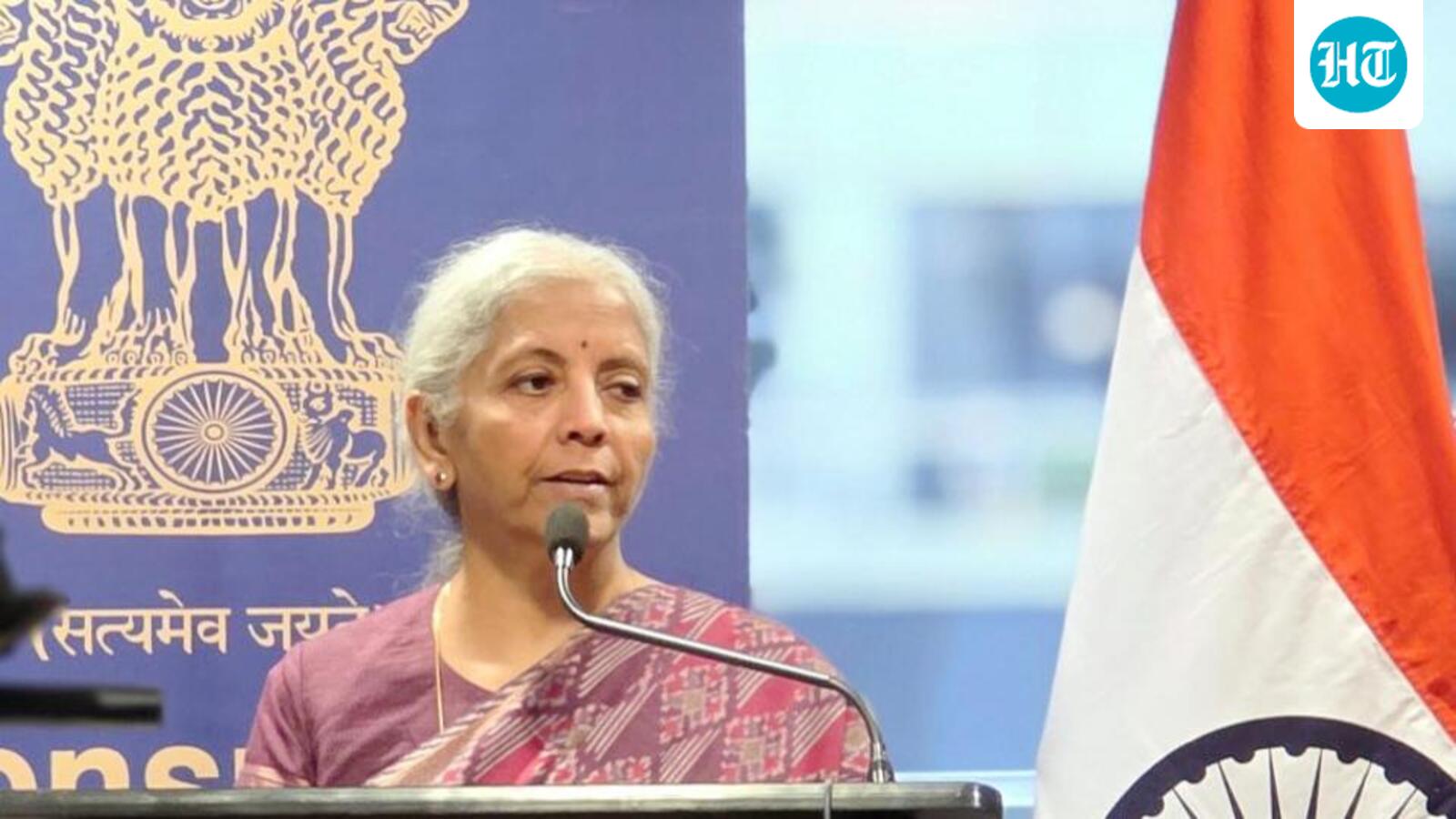
India’s economy is projected to maintain robust growth of around seven percent in the current fiscal year despite ongoing global uncertainties, according to Union Finance Minister Nirmala Sitharaman. Speaking to the Indian diaspora in Chicago, Sitharaman emphasized that India has sustained growth of seven percent or higher since the COVID-19 pandemic, even as geopolitical tensions and supply chain disruptions threaten the global outlook.
The finance minister highlighted that India has navigated multiple challenges, including two ongoing wars, tariff disputes, and disruptions in the Strait of Hormuz— a critical chokepoint for global energy and fertilizer shipments. “We thought we saw the worst during COVID,” she said, underscoring the resilience of India’s economy. Despite these external pressures, Sitharaman reaffirmed that India’s GDP growth for the year will remain within the seven percent range.
The Reserve Bank of India (RBI) had earlier projected real GDP growth for 2026-27 at 6.7 percent in its August 5 monetary policy review. This revised estimate reflects a slight upward revision of 10 basis points from the June projection, as the central bank noted India’s ability to withstand global headwinds, including geopolitical volatility, trade uncertainties, and an erratic monsoon during the first quarter of the fiscal year.
Addressing concerns over energy and fertilizer supply disruptions through the Strait of Hormuz, Sitharaman acknowledged the “big challenge” posed by the situation. India imports nearly 80 percent of its fertilizers, including urea, diammonium phosphate (DAP), and potash, through this maritime route. She stressed that despite the risks, the government has ensured sufficient fertilizer stocks for farmers without imposing additional costs.
“The government shielded its citizens,” she said, noting that India procured fertilizers through alternative routes to prevent shortages. While the fiscal burden of subsidies remains high—with urea sold to farmers at ₹300 per bag despite a procurement cost of ₹3,000 per bag—Sitharaman clarified that no extra financial burden is being placed on farmers. The government continues to absorb the ₹2,700 subsidy per bag to ensure affordability.
Sitharaman also outlined India’s commitment to economic reforms, emphasizing the importance of bilateral trade agreements and investment cooperation to bolster domestic growth. “Reforms continue,” she stated, adding that discussions are underway for bilateral investment treaties and trade pacts, as multilateral institutions have proven slow to deliver results.
On fiscal management, the finance minister reiterated India’s adherence to fiscal discipline, with a target to reduce public debt to 50 percent of GDP by 2030. She cited improving credit ratings as a testament to the government’s prudent economic policies under Prime Minister Narendra Modi, achieved without compromising social welfare spending. “Our credit ratings are improving, but not by cutting corners,” she said.
Looking ahead, Sitharaman underscored the importance of achieving “Viksit Bharat” (Developed India) by 2047, a vision set by the government. She called for greater support from skilled professionals, innovative ideas, and capital infusion to accelerate reforms and meet national aspirations within the next two decades.
#IndiaEconomy #NirmalaSitharaman #GDPGrowth #StraitOfHormuz #RBI #ViksitBharat #FiscalPolicy #TradeReforms
Comments (0)
No comments yet — be the first to weigh in.

Mumbai’s Vile Parle Cypher is giving unheard rappers a voice
A new documentary streaming on YouTube sheds light on the Vile Parle Cypher, a grassroots hip-hop collective giving a platform to unheard street artists and gig...

Enrich and Ultimo impress
Racehorses Enrich and Ultimo Impress in Tuesday Morning Workouts at Bengaluru Turf Club BENGALURU, Sept 1 – Two rising stars in India’s horse racing circuit, En...

Karnataka CM Signals Review of 5% Park Land Amendment Bill in Assembly
Karnataka Chief Minister D.K. Shivakumar says the controversial 5% park land amendment bill can be re‑examined in the Assembly after protests over Lalbagh land use.

When an organisation deviates from its values, faith of those associated with its ideology is shattered: Kaushal Kishore
Former Union Minister and senior Bharatiya Janata Party (BJP) leader Kaushal Kishore suggested on September 1, 2026, that organizations risk losing public trust...
Mumbai’s Vile Parle Cypher is giving unheard rappers a voice
Enrich and Ultimo impress
Karnataka CM Signals Review of 5% Park Land Amendment Bill in Assembly
