NASA Launches Nancy Grace Roman Telescope on Falcon Heavy to Probe Dark Matter
NASA's Nancy Grace Roman Space Telescope, launched atop a SpaceX Falcon Heavy, is on a million‑mile journey to L2 to study dark matter, dark energy, and exoplanets.
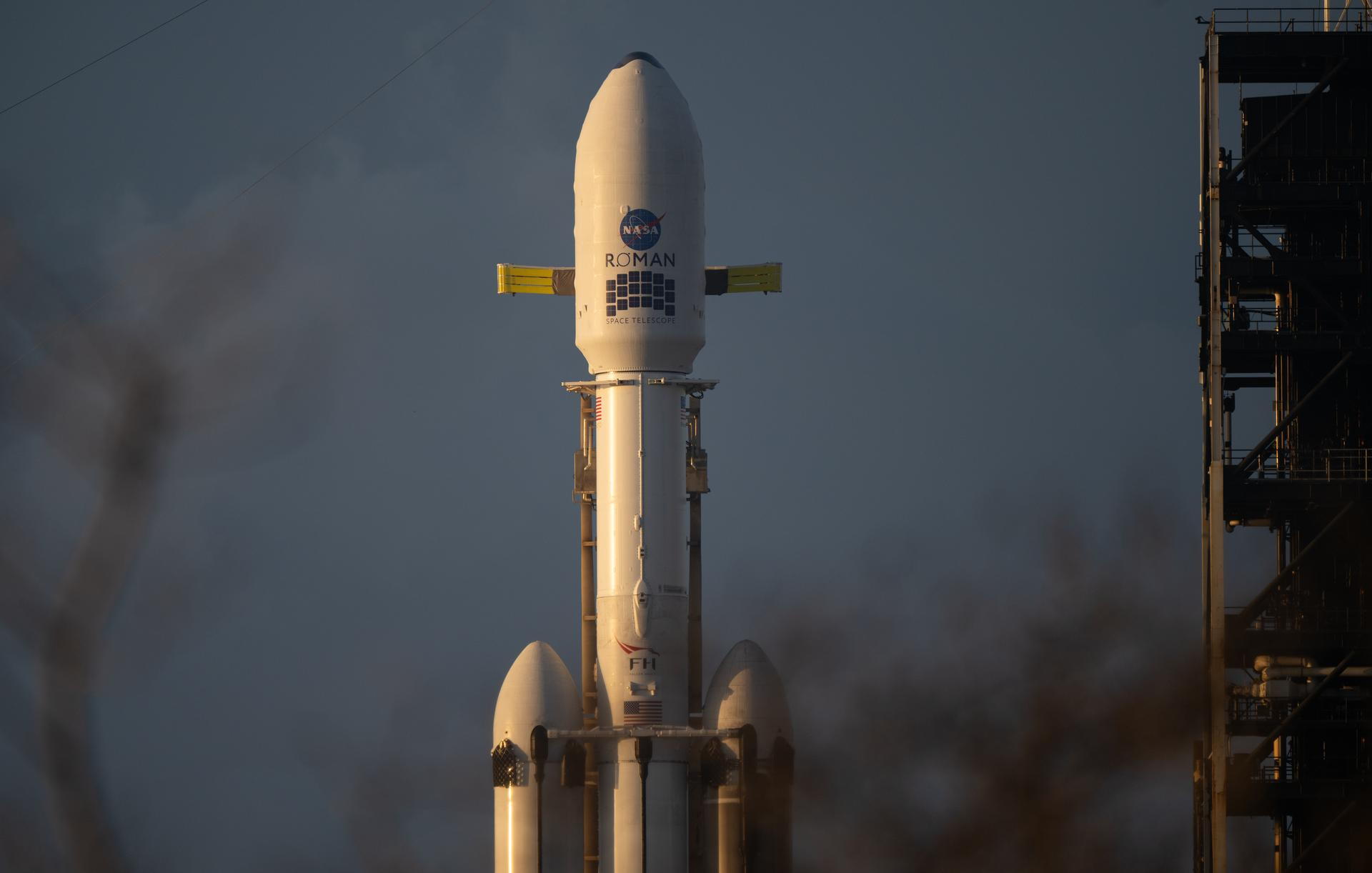
NASA's Nancy Grace Roman Space Telescope, the agency's latest astronomical observatory, successfully launched Sunday from Kennedy Space Center in Florida aboard a SpaceX Falcon Heavy rocket, beginning a mission to explore dark matter, dark energy, and exoplanets.
The 18,000-pound spacecraft lifted off at 7:26 a.m. ET, embarking on a journey to a stable orbit around the second Sun-Earth Lagrange point, roughly a million miles from Earth. This location, shared with the James Webb Space Telescope, provides an unobstructed view of the cosmos while minimizing fuel consumption. The Roman Space Telescope is named in honor of Nancy Grace Roman, NASA's first chief astronomer and a pioneering figure in space astronomy who earned the nickname "Mother of Hubble" for her role in developing the iconic Hubble Space Telescope.
Originally designed as a spy satellite for the National Reconnaissance Office, the telescope was later repurposed for scientific research. Once operational, Roman will combine the precision imaging of Hubble with a field of view at least 100 times wider. The journey to its final orbit will take approximately three months, during which engineers will conduct calibrations and system checks.
Roman's primary scientific objectives include investigating dark matter and dark energy, the invisible components that shape the universe's structure and expansion. By mapping the distribution of matter—both visible and dark—the telescope will help scientists unravel the nature of these mysterious forces. Astronomers will also use Roman to study Type Ia supernovae, known as "standard candles" due to their consistent brightness, to refine their understanding of dark energy.
In addition to cosmic mysteries, Roman will join NASA's exoplanet-hunting efforts. The telescope is expected to discover over 100,000 new exoplanets by detecting the dimming of starlight as planets pass in front of their stars, a method known as the transit technique. It will also use microlensing to identify distant worlds by observing subtle distortions in starlight caused by their gravitational fields. Roman may even capture direct images of some exoplanets by blocking out starlight with advanced technology.
The mission will generate an unprecedented 1.4 terabytes of raw science data daily, which will be immediately accessible to researchers and the public through a cloud-based system called Roman Nexus. NASA anticipates that the telescope's five-year primary mission will produce a dataset larger than most music streaming platforms, enabling scientists worldwide to make unexpected discoveries.
Jeremy Perkins, an integration and test scientist on the Roman team, emphasized the mission's collaborative potential: "It's all the things that we are not expecting to see... It's all these one-in-a-million things that we're going to be able to see with Roman that really excites me."
#NASA #RomanSpaceTelescope #SpaceX #KennedySpaceCenter #DarkMatter #Exoplanets #Astronomy #JamesWebbSpaceTelescope
Comments (0)
No comments yet — be the first to weigh in.

Iran-US Tensions Escalate Amid Hormuz Strait Crisis – Live Updates
Iranian President Pezeshkian seeks diplomatic solutions with global leaders at SCO summit in Kyrgyzstan amid rising US tensions over Hormuz Strait.

Search continues for 18 passengers after ferry capsized in northern Cyprus
Search and rescue operations are continuing off the coast of Kyrenia in northern Cyprus after a passenger ferry capsized and sank on Sunday, leaving at least ei...

Swiss Man Arrested After Deadly Rave Shooting Kills Italian Woman
A 43-year-old Swiss suspect has been arrested after a shooting at a techno rave in Aarau left one woman dead and several others injured. Authorities continue their investigation.

England attack's 2005 comparisons fair - Trescothick
England’s new pace attack is drawing comparisons to the legendary Ashes-winning quartet of 2005, according to interim head coach Marcus Trescothick. The current...

Mumbai’s Vile Parle Cypher is giving unheard rappers a voice

Enrich and Ultimo impress

Karnataka CM Signals Review of 5% Park Land Amendment Bill in Assembly

