New Biography Explores Hannah Arendt's Life, Mind, and Legacy in Detail
A new biography by Thomas Meyer delves into Hannah Arendt's life, drawing on recently discovered archives to reveal fresh insights about her early years, Zionist activism, and intellectual development.
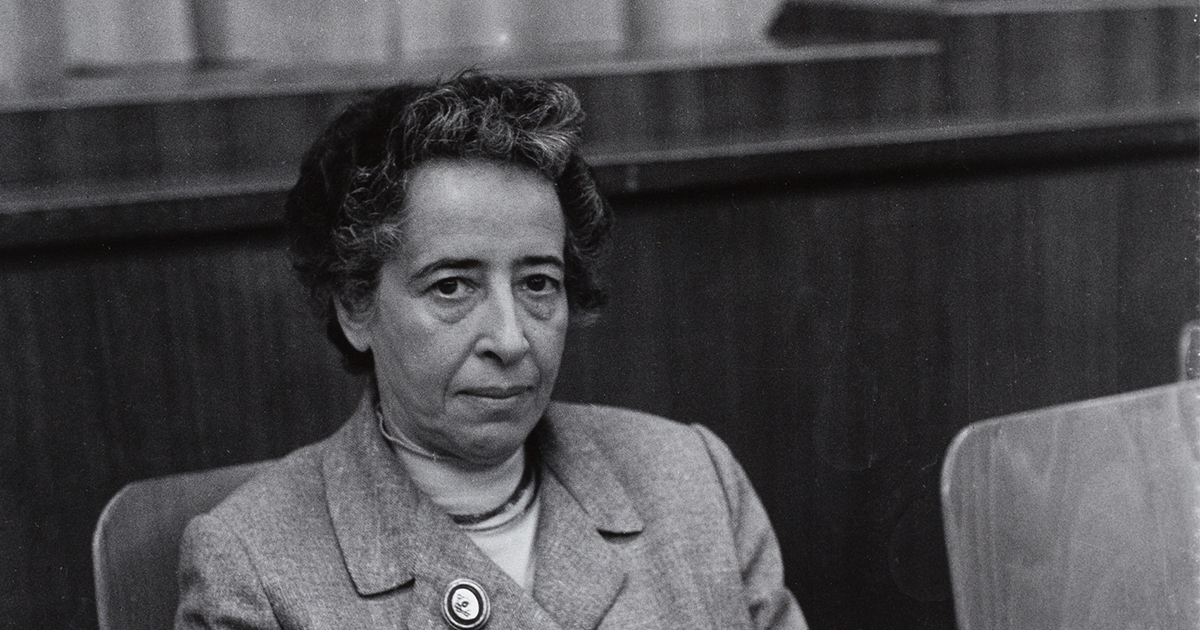
Hannah Arendt’s enduring relevance as a political thinker has surged in recent years, with renewed interest in her work following global shifts in truth and authority. A new biography by German philosopher Thomas Meyer, Hannah Arendt: A Life of the Mind, draws on newly uncovered archival material to present a fresh perspective on the intellectual’s life and thought. Published by Penguin Press, the 560-page volume arrives amid a cultural moment where Arendt’s warnings about totalitarianism and the erosion of factual truth resonate more strongly than ever.
Pope Leo XIV referenced Arendt in a 2023 address to journalists at the Vatican, highlighting her analysis of how totalitarian regimes thrive when citizens lose the ability to distinguish fact from fiction. The biography arrives at a time when misinformation and disinformation are reshaping public discourse, making Arendt’s insights—particularly her concept of “the banality of evil”—increasingly cited in political commentary. Following the 2016 U.S. presidential election, demand for Arendt’s 1951 work *The Origins of Totalitarianism* surged so dramatically that Amazon temporarily sold out of copies. Academic conferences, research centers, and documentaries continue to explore her ideas, reinforcing her status as a defining voice in modern political theory.
Meyer, a professor of philosophy at Ludwig Maximilian University in Munich and editor of a 12-volume edition of Arendt’s collected writings, positions his biography as a corrective to earlier interpretations. Rather than challenging existing scholarship, he aims to illuminate connections previously obscured by limited access to primary sources. The book draws on hundreds of unpublished manuscripts, letters, and transcripts that have only recently come to light, offering a more nuanced account of Arendt’s intellectual formation and political awakening.
Arendt’s early life in Germany played a pivotal role in shaping her thought. As a student in Marburg, she fell under the influence of Martin Heidegger, with whom she developed a deep intellectual and romantic attachment. Later, she studied under Edmund Husserl in Freiburg and Karl Jaspers in Heidelberg, the latter relationship evolving into a lifelong friendship described by Jaspers as “loving strife.” Meyer reveals new details about these formative years, including an unpublished sketch in which Arendt expressed her “unbending devotion” to Heidegger—a bond later strained by his 1933 embrace of Nazism. Her 1929 dissertation on Saint Augustine, heavily influenced by Heideggerian terminology, also reflected Jaspers’s disapproval, underscoring the intellectual tensions that defined her early career.
By the mid-1930s, Arendt’s focus shifted from abstract philosophy to the urgent realities of Jewish persecution. Meyer documents her growing engagement with Zionist organizations and her work with Agriculture et Artisanat in Paris, where she taught vocational skills to Jewish refugees. Newly examined correspondence reveals her hands-on efforts to relocate young German Jews to Palestine, a mission she undertook with unrelenting urgency. In a 1935 report, she warned presciently of a future in which Nazis might attempt “solving the Jewish question by slaying all the Jews,” and she personally escorted a group of teenagers to Palestine that same year to organize their resettlement.
The biography also revisits Arendt’s lesser-known youth in Königsberg, where she spent hours immersed in Das Haus der Bücher, a historic bookstore she later described as a place of intellectual refuge. In a 1964 interview with Günter Gaus, she recalled her teenage conviction that she must either “study philosophy or drown herself.” By the 1960s, Arendt had become a transatlantic media intellectual, her writings and public appearances—most notably her coverage of the Adolf Eichmann trial for *The New Yorker*—sparking both admiration and controversy.
Meyer’s biography arrives at a moment when Arendt’s warnings about truth, power, and totalitarianism feel more urgent than ever. Through meticulous archival research, he uncovers the personal and political forces that shaped one of the 20th century’s most influential thinkers.
#HannahArendt #PoliticalTheory #MartinHeidegger #KarlJaspers #Zionism #Totalitarianism #Biography #Philosophy
Comments (0)
No comments yet — be the first to weigh in.

Yayoi Kusama’s Death Signals a Kind Fall for Art and Humanity
Hyperallergic reflects on the passing of Yayoi Kusama, Dolly Parton, and Sliman Mansour, while exploring loneliness, AI, and art's role in a changing world.

Tessa Hulls on Her Graphic Memoir 'Feeding Ghosts' on Longform Podcast #571
Writer and artist Tessa Hulls discusses her graphic memoir Feeding Ghosts and the project she spent her life avoiding, on Longform Podcast #571.

Derek Thompson on Longform Podcast: Solving Life's Mysteries Through Writing
Derek Thompson, Atlantic staff writer and Plain English host, discusses his career as a 'dilettante' and love for uncovering mysteries in his Longform Podcast interview.
Rozina Ali on Longform Podcast #573 Discussing Her Career and Reporting
Rozina Ali, a New York Times Magazine writer and National Magazine Award winner, joins the Longform Podcast to discuss her career and latest reporting.

Mumbai’s Vile Parle Cypher is giving unheard rappers a voice

Enrich and Ultimo impress

Karnataka CM Signals Review of 5% Park Land Amendment Bill in Assembly

