Rate-Hike Odds Spike As Chair Warsh Tilts Hawkish, Questions AI Productivity Timing, Prefers "Quieter" Fed
Federal Reserve Chair Kevin Warsh signaled a hawkish tilt in his Jackson Hole Economic Policy Symposium address today, driving up market expectations of a September interest rate hike.
In his first major policy speech since assuming leadership, Warsh framed inflation as the Fed’s top priority, stating policymakers must be “confident that underlying inflation is moving to our objective, clearly and at sufficient speed” before considering further tightening. While he did not pre-commit to a September move, his remarks reinforced the possibility of additional rate hikes if inflation remains stubbornly elevated.
Markets reacted swiftly to Warsh’s comments. Polymarket odds of a September rate hike surged, while gold prices declined on the hawkish signals. Bond and bitcoin markets remained relatively flat, and equities rose as investors interpreted parts of the speech as more dovish than expected. Analysts noted the unusual divergence in asset class reactions, with the yield curve flattening sharply—a trend driven by Warsh’s hawkish stance at the short end of the curve and continued pressure on long-term yields.
Warsh also addressed the role of artificial intelligence (AI) in shaping the economic outlook, calling it a “hinge point” with potential to substantially boost productivity and growth. He highlighted rapid advancements in AI, including exploding token sales and exponential technological progress, while raising questions about its impact on labor markets, capital intensity, and income distribution. A dedicated task force is studying these issues, though Warsh emphasized that its findings would not influence near-term policy decisions.
The Fed chair reiterated his opposition to forward guidance, arguing that rigid policy communication can distort market signals and delay necessary adjustments. He warned of a “hall-of-mirrors” problem in which the Fed and markets become overly reliant on each other’s signals, potentially missing key economic turning points. Instead, Warsh advocated for a more data-driven approach, with markets forming their own assessments rather than relying on explicit Fed guidance.
On the economic backdrop, Warsh described the labor market as strong—citing solid output, robust capital expenditure (much of it AI-related), rising profits, and low unemployment at 4.1%—while cautioning that financial conditions remain accommodative. He acknowledged recent improvements in inflation readings but stressed that summer data did not indicate a meaningful shift in underlying trends. Twelve-month PCE inflation stands at 3.7%, with roughly half of PCE components still rising faster than 3%, underscoring the persistence of price pressures.
Warsh took institutional responsibility for the Fed’s inflation performance, stating that “the responsibility for 65 months of sustained, elevated inflation sits squarely with the central bank.” He reaffirmed the 2% inflation target as firm and non-negotiable, warning that inflation is not inherently mean-reverting. His policy stance remains data-dependent: the Fed will act only when it is confident inflation is decisively moving toward target.
His closing remarks—“committed to a discipline, not to a decision”—reflected his preference for a quieter, more deliberative Fed. With his tenure marked by fewer public statements than predecessors, today’s speech was one of his most detailed to date, delivering a balanced but hawkish message that leaves September policy options open.
#FedRateDecision #JacksonHole #KevinWarsh #InflationOutlook #AIandEconomy #MonetaryPolicy #FOMC
Comments (0)
No comments yet — be the first to weigh in.

Free School Uniform Swap Shop Saves Welsh Families £50m Annually
A Cardiff father's school uniform swap shop initiative has grown to 200 schools, helping Welsh families save £50m yearly while promoting sustainability and reducing clothing waste.
Poland, US Explore Permanent Military Bases: Defense Talks Underway
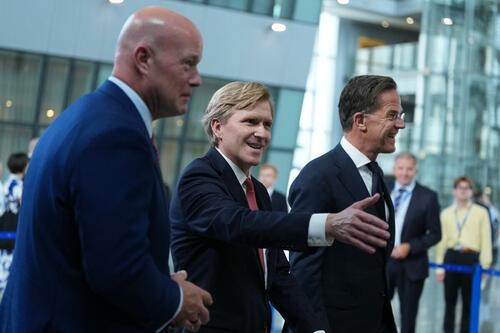
Poland and the US are discussing permanent American military bases in Poland, focusing on defense capabilities rather than troop numbers. Nuclear warheads are not part of the plans.
Taxpayers Lost $65B to Obamacare Fraud in 2024; Feds Crack Down
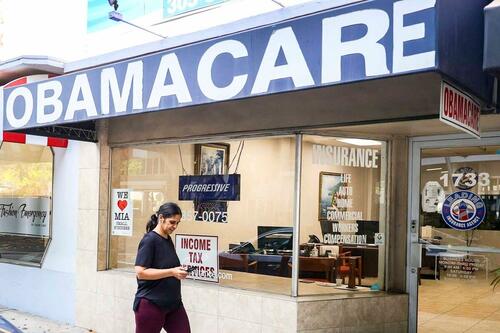
A Paragon Health Institute report reveals $65 billion in taxpayer losses due to Obamacare and Medicaid fraud in 2024, with improper enrollments rising in 2025.
El Niño Delaying 2026 Atlantic Hurricane Season as Dolly Nears Florida
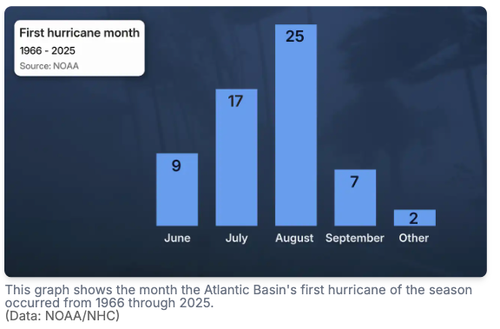
El Niño's wind shear suppresses 2026 Atlantic hurricane activity, delaying first hurricane as Tropical Storm Dolly's remnants approach Florida and the Caribbean.

Mumbai’s Vile Parle Cypher is giving unheard rappers a voice

Enrich and Ultimo impress

Karnataka CM Signals Review of 5% Park Land Amendment Bill in Assembly

