The Bond Market Is Finally Functioning Again, after 14 Years of Financial Repression
The U.S. Treasury market, valued at $32 trillion in publicly traded debt, is signaling a return to normal functioning after 14 years of financial repression under the Federal Reserve’s quantitative easing (QE) policies. Recent interventions by the U.S. Treasury, including currency interventions and expanded bond buyback programs, have failed to suppress long-term Treasury yields, underscoring the market’s growing resistance to manipulation.
Since the Fed’s QE program began in late 2008, the bond market operated as a subdued mechanism, kept artificially low by the Fed’s massive purchases of Treasury securities and mortgage-backed securities. This financial repression allowed the government to accumulate $40 trillion in debt with relative ease, as borrowing costs remained suppressed. However, the era of near-zero yields and Fed intervention appears to be waning.
Recent signals from the bond market suggest a shift. Despite efforts to suppress yields—such as joint U.S.-Japan currency interventions in early August and a doubling of Treasury buybacks announced last week—long-term yields rose again, erasing temporary declines. The message from investors is clear: fiscal discipline is required. The bond market now demands accountability, particularly concerning deficits and inflation, which have remained stubbornly high.
The U.S. government’s reliance on the bond market has grown increasingly precarious. Annual deficits have hovered around 6% of GDP since 2022, with projections indicating little improvement in the coming years. The Congressional Budget Office estimates a 5.8% deficit-to-GDP ratio for fiscal 2026. This sustained borrowing, coupled with inflation that peaked at 9% in 2022, has strained the bond market’s willingness to absorb debt at artificially low yields.
The Fed’s prolonged QE program, which expanded its balance sheet from $900 billion in 2008 to nearly $9 trillion at its peak in 2022, effectively neutralized normal market pricing mechanisms. By mid-2020, Treasury yields had collapsed—10-year yields fell to 0.5%, and 30-year yields hovered just above 1%—raising concerns about negative yields. At such levels, the bond market ceased to function as a risk-pricing mechanism.
However, signs of normalization emerged in late 2020 as yields began to rise despite continued QE. By early 2022, when the Fed ended QE and initiated quantitative tightening (QT), inflation surged, and long-term yields climbed above 5% by October 2023. This shift prompted Treasury Secretary Janet Yellen to introduce bond buybacks in April 2024, a measure intended to stabilize yields but widely seen as a temporary fix.
Despite these interventions, the underlying fiscal imbalances persist. The national debt has ballooned by $17 trillion since January 2020, with another $1 trillion added in the past three months alone. The bond market’s growing resistance reflects broader concerns about sustainability. Investors are increasingly pricing in risk, demanding higher yields to absorb new debt issuance.
Federal Reserve Chair Christopher Waller has indicated a desire to reduce the Fed’s footprint in the bond market, but structural constraints remain. The Fed’s balance sheet, currently at $6.75 trillion, continues to influence market dynamics, though less aggressively than during the peak of QE. Any further reduction requires consensus among Federal Open Market Committee (FOMC) members, a process that will take time.
For Treasury officials like Deputy Secretary Brent Benedict, the bond market’s warnings should not be ignored. Rather than relying on short-term interventions, fiscal consolidation must become a priority. If unchecked, rising deficits and debt levels will lead to higher borrowing costs, increased interest payments, and potential inflationary pressures—until policymakers are compelled to act.
The bond market’s return to function is a necessary corrective measure, but it comes with risks. If fiscal discipline remains elusive, the cost of funding the national debt will continue to rise, ultimately forcing Congress to confront the nation’s long-term financial stability.
Comments (0)
No comments yet — be the first to weigh in.

Free School Uniform Swap Shop Saves Welsh Families £50m Annually
A Cardiff father's school uniform swap shop initiative has grown to 200 schools, helping Welsh families save £50m yearly while promoting sustainability and reducing clothing waste.

Poland, US Explore Permanent Military Bases: Defense Talks Underway
Poland and the US are discussing permanent American military bases in Poland, focusing on defense capabilities rather than troop numbers. Nuclear warheads are not part of the plans.

Taxpayers Lost $65B to Obamacare Fraud in 2024; Feds Crack Down
A Paragon Health Institute report reveals $65 billion in taxpayer losses due to Obamacare and Medicaid fraud in 2024, with improper enrollments rising in 2025.
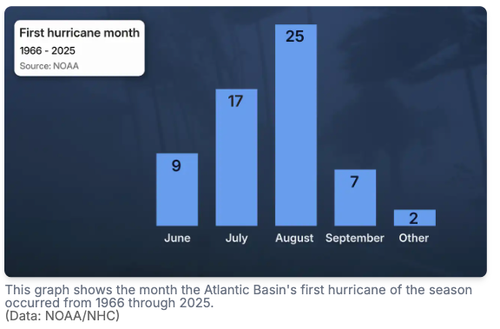
El Niño Delaying 2026 Atlantic Hurricane Season as Dolly Nears Florida
El Niño's wind shear suppresses 2026 Atlantic hurricane activity, delaying first hurricane as Tropical Storm Dolly's remnants approach Florida and the Caribbean.

Mumbai’s Vile Parle Cypher is giving unheard rappers a voice

Enrich and Ultimo impress

Karnataka CM Signals Review of 5% Park Land Amendment Bill in Assembly

