US‑Canada Trade War Deepens as Trump Revives Depression‑Era Trade Tool – What’s at Stake for Consumers and the Midterms
The United States and Canada are edging closer to a full-blown trade war after the Trump administration invoked a Depression-era trade law to impose new tariffs on Canadian goods. The move signals a sharp escalation in cross-border tensions and raises concerns about broader economic fallout ahead of the U.S. midterm elections.
On August 27, 2026, the White House announced the revival of Section 301 of the 1930 Smoot-Hawley Tariff Act, a rarely used trade remedy that allows the president to impose unilateral tariffs on imports deemed harmful to U.S. industries. The administration cited unfair Canadian subsidies to its dairy and lumber sectors as justification for the tariffs, which are expected to take effect within weeks.
Canada immediately responded with retaliatory tariffs on select U.S. products, including agricultural goods and manufactured items. Canadian Prime Minister Justin Trudeau called the move "unnecessary and counterproductive," warning that it would hurt consumers and businesses on both sides of the border. "Trade wars benefit no one," Trudeau stated in a press conference. "We will defend our industries and our workers."
Economists warn that the escalation could disrupt supply chains, raise prices on everyday goods, and dampen economic growth. The U.S. dairy industry, already struggling with oversupply, could face higher costs for imported feed and equipment, while Canadian lumber producers may lose access to a key market. Consumers in both countries could see higher prices for housing materials, food products, and other goods tied to the affected sectors.
The timing of the dispute is politically sensitive, coming just weeks before the U.S. midterm elections. President Trump framed the tariffs as a necessary step to protect American jobs and industries, appealing to his base with a tough-on-trade message. Critics, however, argue that the move is more about political posturing than economic necessity. "This is a classic case of using trade policy as a wedge issue," said Mary Lovely, a senior fellow at the Peterson Institute for International Economics. "The economic costs could outweigh any political gains."
The dispute also threatens to undermine the U.S.-Canada relationship, which has long been one of the most stable trade partnerships in the world. Bilateral trade between the two countries totaled nearly $700 billion in 2025, supporting millions of jobs. Any prolonged disruption could have ripple effects across industries, from automotive manufacturing to energy.
As the rhetoric intensifies, both sides are digging in their heels. The U.S. Trade Representative has indicated that further actions may be taken if Canada does not alter its trade practices. Meanwhile, Canadian officials have vowed to challenge the tariffs at the World Trade Organization and through other international channels.
For consumers and businesses already grappling with inflation and economic uncertainty, the deepening trade war adds another layer of instability. With no clear resolution in sight, the stakes for both economies—and for the political landscape—are rising.
Comments (0)
No comments yet — be the first to weigh in.

Free School Uniform Swap Shop Saves Welsh Families £50m Annually
A Cardiff father's school uniform swap shop initiative has grown to 200 schools, helping Welsh families save £50m yearly while promoting sustainability and reducing clothing waste.

Poland, US Explore Permanent Military Bases: Defense Talks Underway
Poland and the US are discussing permanent American military bases in Poland, focusing on defense capabilities rather than troop numbers. Nuclear warheads are not part of the plans.

Taxpayers Lost $65B to Obamacare Fraud in 2024; Feds Crack Down
A Paragon Health Institute report reveals $65 billion in taxpayer losses due to Obamacare and Medicaid fraud in 2024, with improper enrollments rising in 2025.
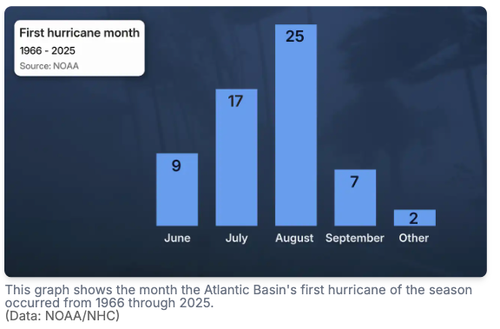
El Niño Delaying 2026 Atlantic Hurricane Season as Dolly Nears Florida
El Niño's wind shear suppresses 2026 Atlantic hurricane activity, delaying first hurricane as Tropical Storm Dolly's remnants approach Florida and the Caribbean.

Mumbai’s Vile Parle Cypher is giving unheard rappers a voice

Enrich and Ultimo impress

Karnataka CM Signals Review of 5% Park Land Amendment Bill in Assembly

