What Happened To The So-Called AI Job Apocalypse?
New data from Stanford University and the Economic Times suggests the feared AI job apocalypse has not materialized as large-scale job destruction, with AI instead fueling record hiring in global capability centers. Stanford’s latest employment report, combined with hiring trends tracked by the Economic Times, shows AI skills now power nearly two-thirds of new hires in Global Capability Centers. While concerns about rapid automation have dominated headlines, the labor market data indicates a more measured transformation—one where disruption is reshaping work, but not erasing it entirely.
AI is accelerating the evolution of the workforce, but this is not unprecedented. Labor markets have long absorbed technological change through job loss and creation cycles. The key difference is timing: when disruption happens too quickly, the shock can overwhelm workers and industries. A review of U.S. Bureau of Labor Statistics and Federal Reserve data over the past two decades reveals a consistent pattern—about 20 million jobs were lost in disrupted sectors, while total payrolls grew by 25.7 million, resulting in roughly 1.3 new jobs for every one eliminated. Sectors like video rental services and word processing saw dramatic declines, yet industries such as data processing and warehousing expanded to support the digital economy.
The speed of disruption determines whether the transition feels like progress or collapse. Historically, most major technological shifts—from the internet to digital photography—have had a “disruption half-life” of about 10 years, meaning it takes roughly a decade for an occupation to lose half its peak employment. This gradual timeline allows older workers to retire and younger ones to retrain, cushioning the impact. Early data on AI-exposed roles like customer service representatives, IT support staff, and telemarketers suggests the current disruption is closer to a typical cycle than a sudden collapse, even after accounting for offshoring and post-pandemic adjustments.
However, beneath the surface stability lies a structural risk: AI is quietly disrupting the traditional pathways for developing experienced workers. Software engineering serves as a key example. While overall employment remains stable—with unemployment at 4.2% in June 2026 according to Yale Budget Lab—entry-level roles are disappearing. Junior developer postings have dropped about 40% over four years, and employment for young computer and math graduates has fallen 8% since 2022, even as demand for senior roles remains strong. The issue is not a lack of jobs, but the erosion of the entry-level pipeline that once allowed newcomers to gain experience.
AI excels at automating routine, well-defined tasks—the very work traditionally assigned to junior employees. It struggles, however, with the judgment and accountability required in complex decision-making. This automation of foundational tasks risks leaving fewer opportunities for new professionals to develop the skills needed for advancement. Yet, despite this challenge, industries continue to grow. The Bureau of Labor Statistics projects software developer and QA analyst roles to expand 15% through 2034. But this growth depends on a steady flow of trained professionals transitioning from entry-level to senior roles—a pipeline now under pressure.
Companies are beginning to adapt. IBM, for example, is tripling entry-level hiring and redesigning these roles around AI oversight and systems thinking rather than eliminating them. The broader business community is recognizing that junior roles are not optional expenses, but capital investments in future expertise. Firms that protect and rebuild these pathways will secure a competitive advantage in the senior labor market of the future.
The coming decade’s challenge is not the end of work, but the preservation of pathways that develop the next generation of experts. AI may be reshaping the labor market, but its breadth also creates opportunity. As a general-purpose technology, AI is seeding new forms of work across every sector. The organizations that understand this—and act accordingly—will not only survive the transition, but lead it.
#AIJobs #LaborMarket #TechnologyDisruption #SoftwareEngineering #WorkforceDevelopment #IBM #StanfordResearch
Comments (0)
No comments yet — be the first to weigh in.

Free School Uniform Swap Shop Saves Welsh Families £50m Annually
A Cardiff father's school uniform swap shop initiative has grown to 200 schools, helping Welsh families save £50m yearly while promoting sustainability and reducing clothing waste.

Poland, US Explore Permanent Military Bases: Defense Talks Underway
Poland and the US are discussing permanent American military bases in Poland, focusing on defense capabilities rather than troop numbers. Nuclear warheads are not part of the plans.

Taxpayers Lost $65B to Obamacare Fraud in 2024; Feds Crack Down
A Paragon Health Institute report reveals $65 billion in taxpayer losses due to Obamacare and Medicaid fraud in 2024, with improper enrollments rising in 2025.
El Niño Delaying 2026 Atlantic Hurricane Season as Dolly Nears Florida
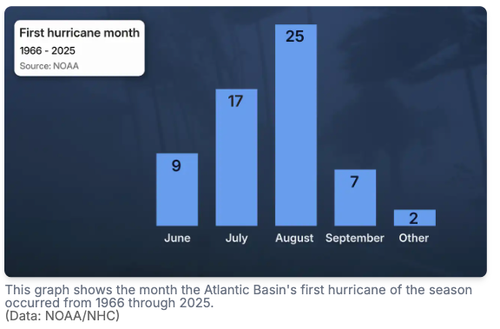
El Niño's wind shear suppresses 2026 Atlantic hurricane activity, delaying first hurricane as Tropical Storm Dolly's remnants approach Florida and the Caribbean.

Mumbai’s Vile Parle Cypher is giving unheard rappers a voice

Enrich and Ultimo impress

Karnataka CM Signals Review of 5% Park Land Amendment Bill in Assembly

