Farewell to Palestinian artist Sliman Mansour in packed Birzeit funeral
Celebrated Palestinian artist Sliman Mansour, known for his vibrant works depicting Palestinian identity and landscape, was laid to rest in a packed church in Birzeit.
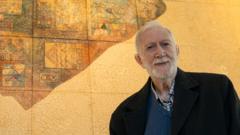
The funeral for prominent Palestinian artist Sliman Mansour was held at a crowded church in Birzeit, near Ramallah in the occupied West Bank, following his death at age 79. Mansour, celebrated for his vibrant paintings of the Palestinian landscape and cultural identity, passed away this week.
Born in Birzeit in 1947 during British Mandate Palestine, Mansour witnessed the 1948 Arab-Israeli War and the Nakba, when over 700,000 Palestinians were displaced. His art often depicted olive groves, citrus trees, and symbols of Palestinian heritage amid the struggle for self-determination. One of his most iconic works, *Camel of Hardship* (1973), portrays an elderly porter carrying the weight of Jerusalem and the Dome of the Rock.
Mansour’s friend and fellow artist Vera Tamari recalled his deep connection to Palestinian identity, saying his work portrayed "Palestine in all its beauty and hope." His paintings frequently featured traditional embroidered dresses (*thobes*) and figures rooted in the land, reinforcing the idea of Palestinian belonging.
After studying fine art in Jerusalem, Mansour developed a distinctive style influenced by Mexican muralist Diego Rivera. He co-founded the League of Palestinian Artists and the International Academy of Art, helping establish local galleries. His art ranged from canvases to cartoons, children’s books, and murals, earning recognition in institutions like the Guggenheim Abu Dhabi and the British Museum.
Unlike many high-profile artists, Mansour supported widespread reproduction of his work, making it accessible to the public. Visual artist Amer Shomali, director of the Palestinian Museum, described him as a unifying figure who "capitalised on reaching the masses," even displaying his art in refugee camps.
Political themes in his work drew scrutiny from Israeli security forces in the West Bank. In the 1970s and 1980s, soldiers confiscated his posters and postcards. When Gallery 79 opened in Ramallah, security forces frequently interrupted exhibitions, leading Mansour to use symbolic imagery to evade censorship.
During the First Intifada (1987), Mansour co-founded the New Vision collective, which boycotted Israeli art supplies in favor of natural materials like clay and henna. His textured works, such as *Orange Fields* (2014), depicted Palestinian women harvesting oranges, symbolizing resilience and connection to the land.
Friends remembered Mansour as humble and soft-spoken, with a talent for simplifying complex ideas. Despite his works selling for hundreds of thousands of dollars, he once requested a fig tree in exchange for a mural at the Palestinian Museum.
#PalestinianArt #SlimanMansour #Birzeit #Ramallah #WestBank #Nakba #PalestinianMuseum #PalestinianArtists
Comments (0)
No comments yet — be the first to weigh in.
Israel's 2.6M Students Return to School Amid Education Reforms and Protests
Israel's 2.6 million students resume classes as the Education Ministry introduces financial literacy and AI reforms, amid teacher shortages and protests over militarization.
Earth's magnetic field can help archaeologists sniff out forged antiquities
Researchers at the University of California San Diego have developed a new method using Earth's magnetic field to help archaeologists distinguish between a...
US, Israel, and Palestine to Hold Three Elections in 32 Days – Global Stakes
Three key elections – U.S., Israel, and Palestine – will take place from Oct. 27 to Nov. 28, shaping domestic politics and international ties.
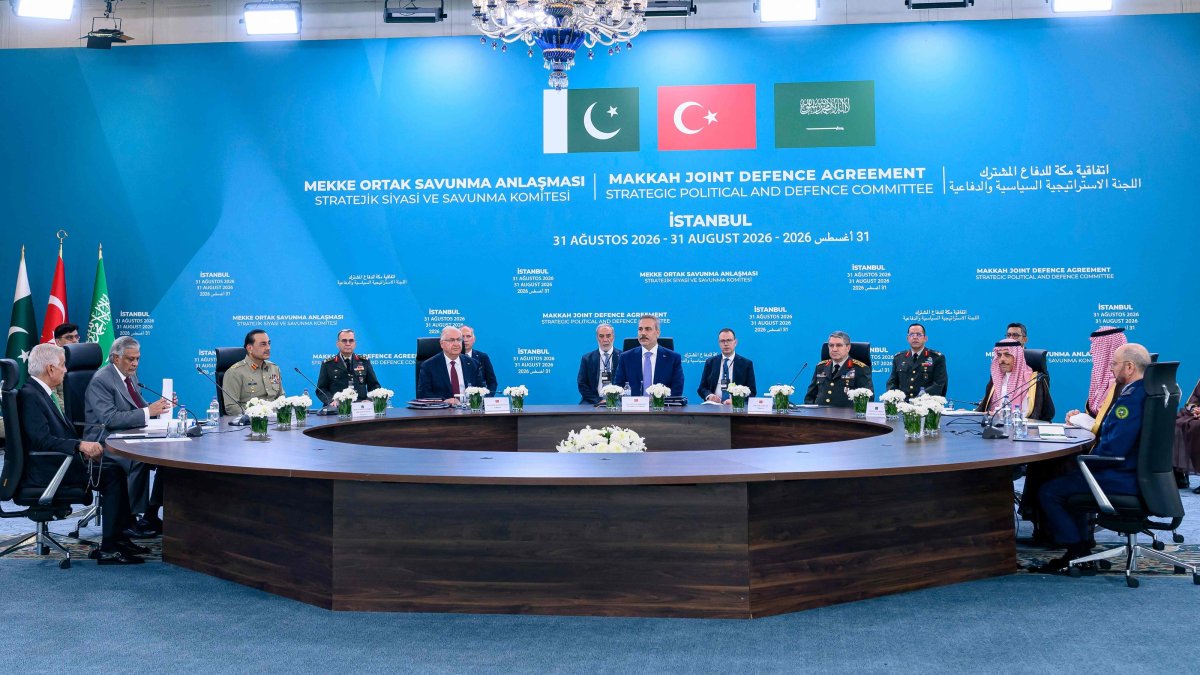
Türkiye, Pakistan, Saudi Arabia deepen joint defense framework
Türkiye, Pakistan and Saudi Arabia have agreed to deepen their defense partnership under the Mecca Agreement, taking new steps to strengthen collective deterren...

Mumbai’s Vile Parle Cypher is giving unheard rappers a voice

Enrich and Ultimo impress

Karnataka CM Signals Review of 5% Park Land Amendment Bill in Assembly

