Global Housing Crisis: How Self‑Built Homes in Santiago Reveal New Lessons
More than 2.8 billion people lack adequate housing. In Santiago, Chile, a self‑built home’s story shows how informal dwellings shape community, resilience, and policy.
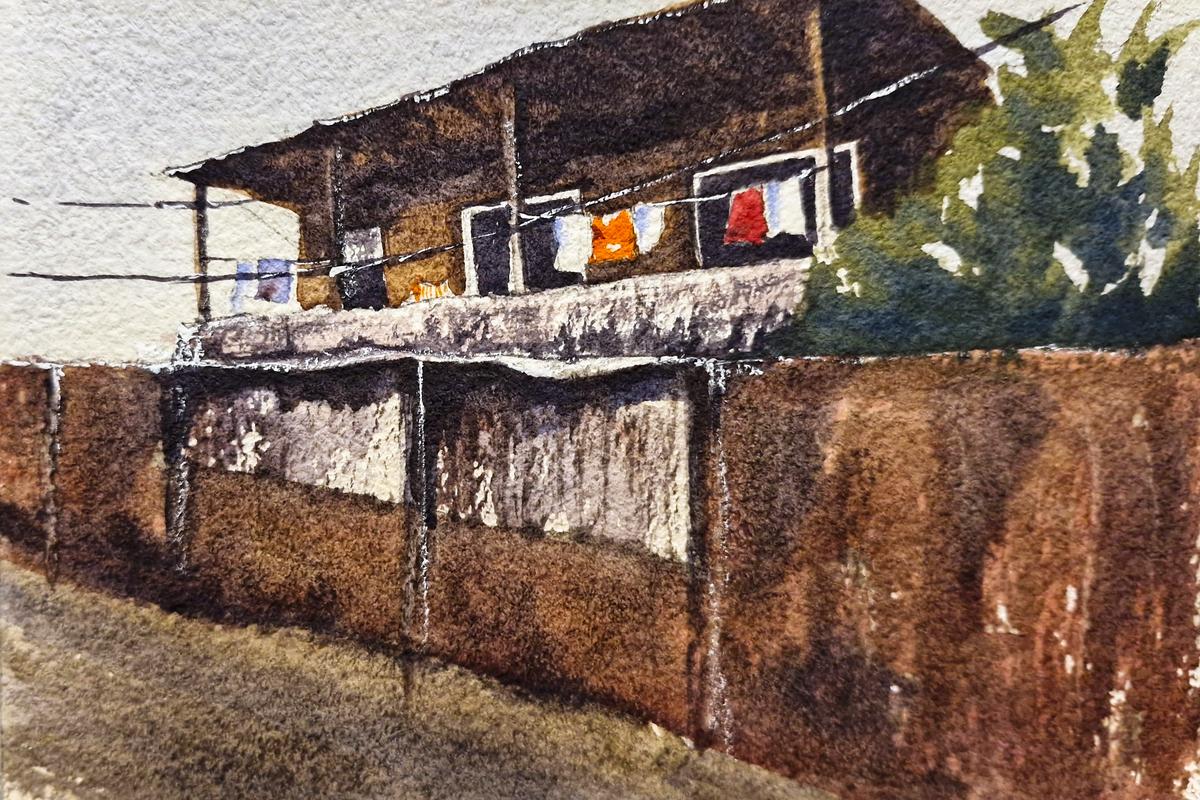
The global housing crisis has intensified in recent decades, with access to affordable, stable housing emerging as one of the most pressing challenges worldwide. According to UN-Habitat, approximately 2.8 billion people—35 percent of the global population—lack adequate housing. Rising rents outpace wage growth, homeownership becomes increasingly unattainable for younger generations, and urban neighborhoods face displacement due to speculation. The issue of who has access to housing and under what conditions remains central to contemporary urban life.
The housing crisis is not a new phenomenon. In *The Housing Question* (1872), Friedrich Engels framed it as an inherent flaw of industrial capitalism, arguing that urbanization overwhelmed market and state capacities to provide shelter. Governments in developed nations later intervened through public housing, subsidies, and mortgage systems, treating housing as a technical and bureaucratic problem to be solved. Yet today, the crisis persists, with housing increasingly entangled in financial speculation.
In many rapidly urbanizing cities across Latin America, Africa, and Asia, however, state-led housing solutions never fully took hold. Instead, millions secured shelter by occupying land and building incrementally, often without formal approval. These self-built neighborhoods, though frequently seen as informal or precarious, reveal deeper truths about how societies provide housing—and what it means to truly dwell somewhere.
Anthropologist [Your Name], who conducted two decades of fieldwork in Santiago, Chile, argues that mainstream debates overlook a fundamental insight: behind every housing crisis lies a more profound "dwelling problem." The assumption that a house is merely an object, commodity, or asset obscures its role in shaping human life. In self-built environments, by contrast, the relationship between building and dwelling remains visible. The incremental, intergenerational process of constructing a home—layer by layer, over years or decades—reveals how shelter is not just a roof over one’s head but a living process intertwined with family, memory, and identity.
The story of Victoria, a retired domestic worker in Santiago, illustrates this point. Over four generations, her family expanded the house step by step—adding rooms, reinforcing walls, and improvising with limited resources. Her meticulous accounts of construction—sacks of cement, metal sheets, layers of flooring—highlight the tangible, material labor behind shelter. Yet her narrative also reveals the emotional and social weight of home. For Victoria, the house was both a refuge and a constraint, a place of both closeness and confinement. Her words—*"crowded together," "you cannot fight for your life"*—capture the tension between familial obligation and personal space.
Victoria’s story underscores a paradox: while self-built housing may seem informal, it embodies a profound understanding of dwelling as an ongoing, collaborative process. In a world where housing is often treated as a financial asset, these incremental, human-scale constructions offer a counterpoint—reminding us that a home is not just a structure, but a living relationship between people and place.
Comments (0)
No comments yet — be the first to weigh in.

NASA Launches Nancy Grace Roman Telescope to Unlock Universe's Mysteries
NASA's new Nancy Grace Roman Space Telescope lifts off from Florida to study dark energy, exoplanets, and cosmic mysteries with unprecedented precision and scope.

Nature reserves spot rare species during heatwaves
Nature reserves in Hertfordshire and Middlesex have documented rare species this summer, with volunteers spotting wildlife not seen in decades and some even for...

Inmates at HMP La Moye craft boxes to save Jersey's hedgehogs
Prisoners at HMP La Moye have crafted nesting and feeding boxes to support Jersey's hedgehog population, boosting rehabilitation and community engagement.
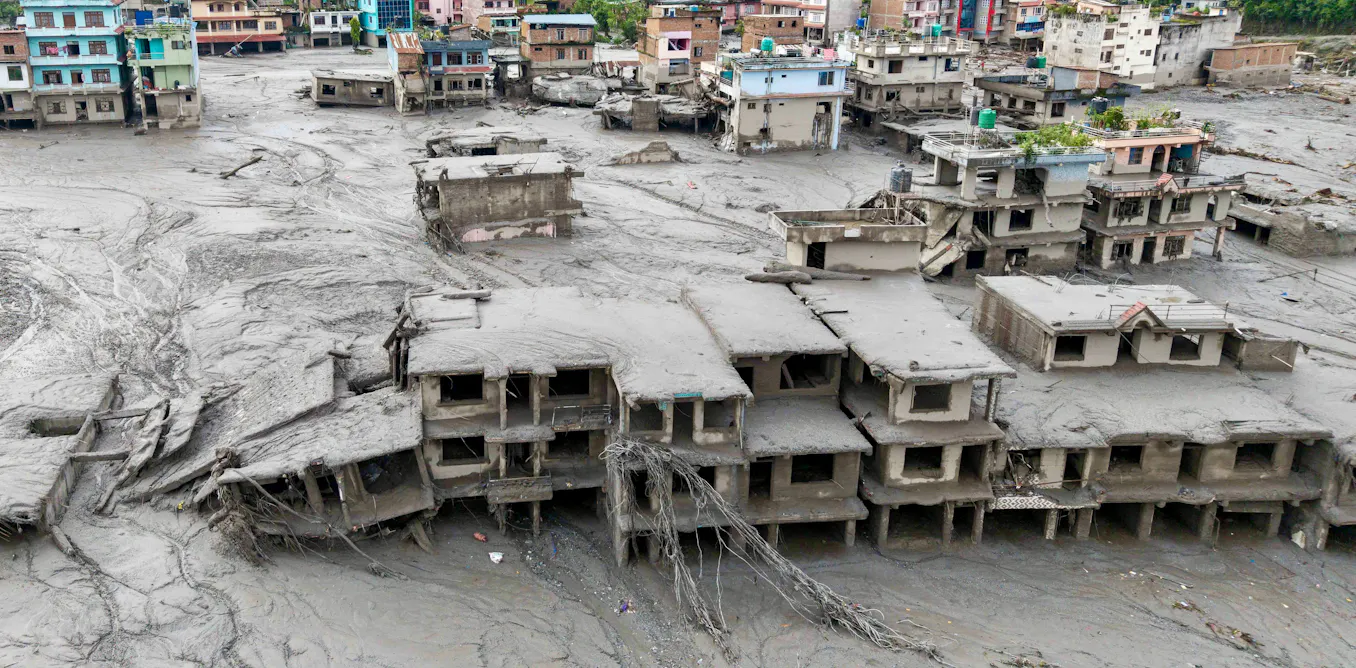
2026 Nepal Flood: Ice‑Rock Avalanche, Glacial Lake Outburst and Climate‑Change Risks
A massive ice‑rock avalanche triggered a catastrophic flood in Nepal on Aug. 26 2026, followed by a glacial lake outburst that devastated towns and hydropower plants. Climate‑change‑driven thawing increased the risk.

Mumbai’s Vile Parle Cypher is giving unheard rappers a voice

Enrich and Ultimo impress

Karnataka CM Signals Review of 5% Park Land Amendment Bill in Assembly

