Global PV additions forecast to reach 638 GW in 2026
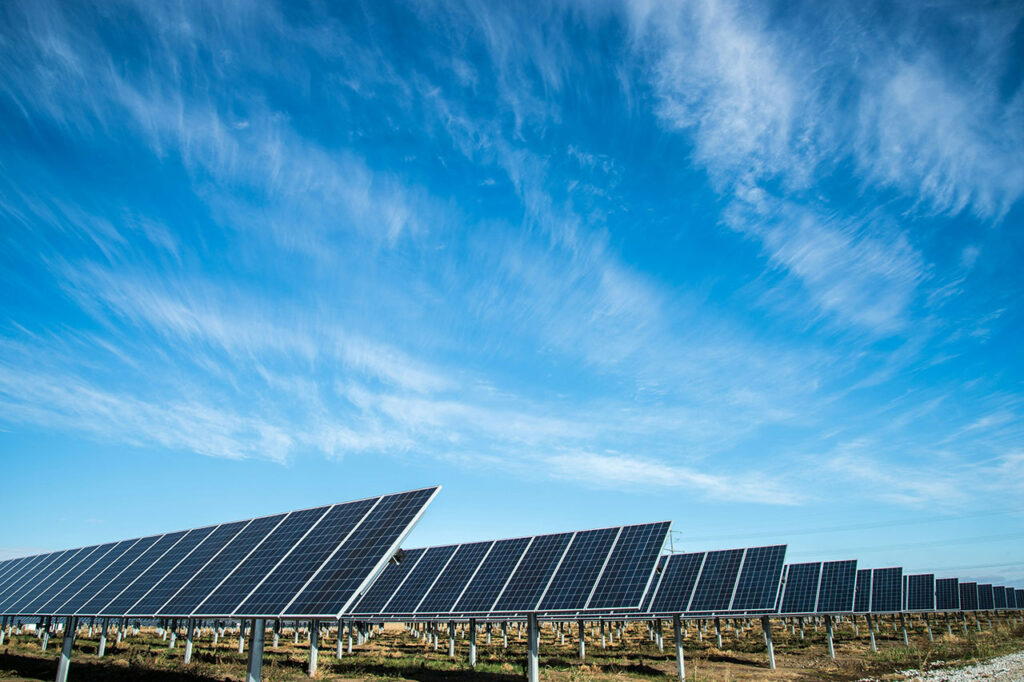
Global solar installations are projected to reach 638 gigawatts in 2026, according to the latest analysis from Intertek CEA, a solar and storage technical advisory firm. The company’s Q2 2026 PV Supply, Technology and Policy Report highlights a temporary decline in installations this year, primarily driven by market stagnation in China, while most other regions continue to see steady or accelerated growth toward 2030.
This year’s dip in global PV installations is largely attributed to challenges in China, where market conditions have slowed growth. However, Intertek CEA forecasts a rebound in the coming years, with solar capacity expected to expand significantly by the end of the decade. The report underscores a persistent structural oversupply across the solar supply chain, with manufacturing capacity far outpacing projected demand for 2026. Polysilicon production capacity, for instance, is estimated at approximately 2,034 gigawatts, while module capacity stands at around 1,908 gigawatts—both significantly exceeding the 638 gigawatts of expected installations.
Chinese module prices are anticipated to rise through 2027 as suppliers seek to expand profit margins and pass on higher material costs. Meanwhile, module prices in the United States are expected to remain elevated amid uncertainty surrounding tariff structures, particularly from the ongoing polysilicon Section 232 investigation. Indian module pricing is also projected to stay closely tied to Chinese input costs over the next two years. However, the report anticipates a decline in prices starting in 2028, driven by market maturity and stabilization of profit margins.
Regional production costs vary widely, ranging from under $0.12 per watt to over $0.37 per watt. In the United States, government manufacturing subsidies are narrowing the cost gap between domestic and non-Chinese production to just $0.01 to $0.03 per watt. The report also suggests that Indian cell and module assembly, as well as module assembly in Southeast Asia, will eventually align closely with Chinese price levels, differing by just $0.01 to $0.03 per watt. However, module assembly in the European Union is not expected to close its price competitiveness gap with other markets in the near term.
The oversupply conditions highlight ongoing challenges in balancing production capacity with actual market demand, which could influence pricing and investment strategies across key solar markets.
#SolarEnergy #Photovoltaic #RenewableEnergy #EnergyForecast #IntertekCEA #ChinaSolar #USMarket #SolarPrices
Comments (0)
No comments yet — be the first to weigh in.

Bentley Torcal: First All-Electric SUV Unveiling & Price Details
Bentley Motors will unveil its first all-electric SUV, the Torcal, on September 23. Discover pricing, features, and how it compares to competitors in the luxury EV market.

How King Harald V of Norway quietly led the world in clean tech adoption
King Harald V of Norway passed away in 2026 after a 35-year reign marked by stealth advocacy for clean technology, particularly electric vehicles, without political interference.

Why Gas Cars Could Be Worth Less Than Zero by 2031 in the US
Analyzing how cheap used EVs may make gasoline cars uneconomical in the US by 2031, with insights from Norway and China's used-car markets.

XPeng Advances AI Tech with VLA 2.0 Upgrade & Robotaxi Progress
XPeng's latest VLA 2.0 upgrade enhances intelligent driving with 4D perception, 20x safety boost, and voice-controlled robotaxis. Discover XPeng's AI advancements.

Mumbai’s Vile Parle Cypher is giving unheard rappers a voice

Enrich and Ultimo impress

Karnataka CM Signals Review of 5% Park Land Amendment Bill in Assembly

