Going with the grain: how restoring biodiversity led one farmer back to heritage wheat
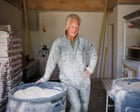
A Cotswolds farmer is demonstrating how transitioning to heritage wheat and regenerative agricultural practices can reverse biodiversity loss while building a viable farm business. Henry Astor, owner of the 490-hectare Bruern Farms in Oxfordshire, has shifted his operations away from conventional arable monoculture toward nature-friendly farming, integrating diverse heritage grain varieties, agroforestry, and extensive wildlife habitats.
The ecological results at Bruern Farms highlight the potential of landscape-scale restoration. Over the past decade, Astor has planted between 30,000 and 40,000 trees, including a 17-hectare agroforestry section combining wheat with traditional apple varieties. The farm now supports 19 red-listed bird species, with recent monitoring recording thriving populations of barn owls, kestrels, goldfinches, and greenfinches. Neighboring properties along the River Evenlode have joined the effort, placing 800 hectares of floodplain meadow under restoration and dedicating 3,000 hectares to regional flood mitigation.
Astor co-founded the North East Cotswold Farmer Cluster, a collaborative initiative involving dozens of local farms working together to rebuild natural habitats. The cluster provides dedicated plots for bird feeding, successfully increasing populations of linnets and chaffinches across participating sites. Tim Field, co-chair of the cluster, noted that aggregated farmer-led groups can drive landscape restoration more effectively than traditional public or environmental NGO schemes.
The decision to transition to heritage grains followed years of minimal profits caused by rising costs for fuel, chemical fertilizers, and machinery. Modern conventional agriculture relies heavily on single-crop dwarf wheat, which requires heavy synthetic inputs and yields low commodity prices. In 2020, Astor began cultivating traditional population wheat varieties, such as red lammas and orange devon. Growing mixed heritage grains builds natural disease and weather resistance through deeper root systems and crop diversity.
To capture greater financial value, Astor established an on-site flour mill to bypass commercial wholesalers and supply bakeries directly. Operating the mill allows him to pay his farm £800 per tonne for heritage grain, compared to £600 on the commodity market. Bruern Farms now supplies flour to more than 40 bakeries, including the Gail's bakery chain. Astor plans to scale production to 500 tonnes of heritage wheat annually by 2028, allowing him to reduce overall cropped acreage while dedicating more land to wildlife.
Restoring soil health remains central to the project. Bruern Farms has eliminated pesticides for 15 years, utilizing wildflower strips to attract natural predators alongside biological soil treatments. Carlos Guerra, a soil expert at the University of Coimbra, confirmed that replacing monocultures with diverse crops and reducing soil disturbance helps rebuild soil structure, microbial communities, and nutrient cycling.
Beyond environmental recovery, Astor aims to recreate the self-sufficient farm community established by his grandfather in 1936. Bruern Farms currently supports several local enterprises, including an integrated market garden, sheep grazing partnerships for natural fertilization, and an on-site farm shop employing 15 people.
#Biodiversity #RegenerativeFarming #Cotswolds #BruernFarms #HenryAstor #Agriculture #SoilHealth
Comments (0)
No comments yet — be the first to weigh in.

Bentley Torcal: First All-Electric SUV Unveiling & Price Details
Bentley Motors will unveil its first all-electric SUV, the Torcal, on September 23. Discover pricing, features, and how it compares to competitors in the luxury EV market.

How King Harald V of Norway quietly led the world in clean tech adoption
King Harald V of Norway passed away in 2026 after a 35-year reign marked by stealth advocacy for clean technology, particularly electric vehicles, without political interference.
Why Gas Cars Could Be Worth Less Than Zero by 2031 in the US
Analyzing how cheap used EVs may make gasoline cars uneconomical in the US by 2031, with insights from Norway and China's used-car markets.

XPeng Advances AI Tech with VLA 2.0 Upgrade & Robotaxi Progress
XPeng's latest VLA 2.0 upgrade enhances intelligent driving with 4D perception, 20x safety boost, and voice-controlled robotaxis. Discover XPeng's AI advancements.

Mumbai’s Vile Parle Cypher is giving unheard rappers a voice

Enrich and Ultimo impress

Karnataka CM Signals Review of 5% Park Land Amendment Bill in Assembly

