Kew Gardens to fell rare trees for Victorian Palm House renovation
Horticulturalists at Kew Gardens must fell rare trees to renovate the rusted Victorian Palm House, moving others to save critically endangered plants ahead of the 2027 project.
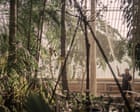
Kew Gardens in southwest London is preparing for a difficult but necessary task as part of its plan to renovate the historic Palm House, a Victorian-era glasshouse housing some of the world’s rarest plants. Horticulturalists at the Royal Botanic Gardens, Kew, will begin relocating and propagating about 1,000 plants from the Palm House, which has suffered from rusted ironwork and warped glass, making it increasingly difficult to maintain the hot, humid conditions required by its delicate specimens. Some of the larger trees, including palm species that reach the greenhouse’s roof, cannot be moved and will have to be felled.
Palm House manager Will Spoelstra acknowledged the emotional toll of the process. “There are some sad moments ahead,” he said, reflecting on the impending loss of plants that have thrived in the iconic structure since it opened in 1848. The renovation, scheduled to begin in 2027, is contingent on securing the necessary funding. Until then, the Palm House will remain open to the public, though its empty beds will serve as a visible reminder of the transition.
The relocation effort involves transferring plants to a behind-the-scenes tropical nursery, where they will acclimate before eventually returning to the renovated Palm House. Many plants, including critically endangered species, are being propagated through seeds and cuttings to ensure their survival. One notable success involves the Ravenea moorei, a palm native to the Comoros Islands near Madagascar. Previously believed to be extinct in the wild, Kew’s single male specimen could not reproduce without a female. Botanists traveled to the Comoros and discovered a wild population, enabling the propagation of ten new plants at Kew. The institution is now assisting local scientists in protecting the species in its natural habitat.
Not all plants are easy to handle. The spiny Aiphanes eggersii, for example, poses a challenge due to its sharp spikes, requiring careful wrapping during transport. Despite these difficulties, the nursery is now home to young plants from this species, marking a first for Kew’s horticulturalists.
The renovation project has also highlighted Kew’s broader conservation mission. Tom Pickering, head of glasshouses at Kew, emphasized the institution’s role in preserving endangered species, both in cultivation and in the wild. One example is the Ramosmania rodriguesii, a flowering tree from Rodrigues, Mauritius, which Kew successfully revived from a single surviving specimen. Young plants from this species have since been reintroduced to the wild, offering hope for its recovery.
Fundraising efforts for the Palm House renovation will begin in October under the campaign “Save London’s Rainforest,” aiming to restore the greenhouse to its original grandeur. The project is expected to span approximately 50 years, ensuring that the propagated plants will remain part of Kew’s collection for decades to come. “It’s nice to think that these plants will be thriving for decades, maybe when I am not here anymore,” Pickering reflected.
For Kew, this renovation represents more than structural repairs; it is an opportunity to advance global plant conservation. By combining horticulture with fieldwork and partnerships worldwide, the institution hopes to set a new standard for botanical preservation.
#KewGardens #PalmHouseRenovation #PlantConservation #VictorianGreenhouse #RarePlants #BotanicalGardens #GlobalConservation #LondonScience
Comments (0)
No comments yet — be the first to weigh in.

Bentley Torcal: First All-Electric SUV Unveiling & Price Details
Bentley Motors will unveil its first all-electric SUV, the Torcal, on September 23. Discover pricing, features, and how it compares to competitors in the luxury EV market.
How King Harald V of Norway quietly led the world in clean tech adoption
King Harald V of Norway passed away in 2026 after a 35-year reign marked by stealth advocacy for clean technology, particularly electric vehicles, without political interference.

Why Gas Cars Could Be Worth Less Than Zero by 2031 in the US
Analyzing how cheap used EVs may make gasoline cars uneconomical in the US by 2031, with insights from Norway and China's used-car markets.

XPeng Advances AI Tech with VLA 2.0 Upgrade & Robotaxi Progress
XPeng's latest VLA 2.0 upgrade enhances intelligent driving with 4D perception, 20x safety boost, and voice-controlled robotaxis. Discover XPeng's AI advancements.

Mumbai’s Vile Parle Cypher is giving unheard rappers a voice

Enrich and Ultimo impress

Karnataka CM Signals Review of 5% Park Land Amendment Bill in Assembly

