Lake Mead and Lake Powell Hit Record-Low Water Levels Amid Climate Crisis
Lake Mead and Lake Powell, the two largest US reservoirs, have reached historic lows due to climate change, population growth, and over-consumption affecting millions.
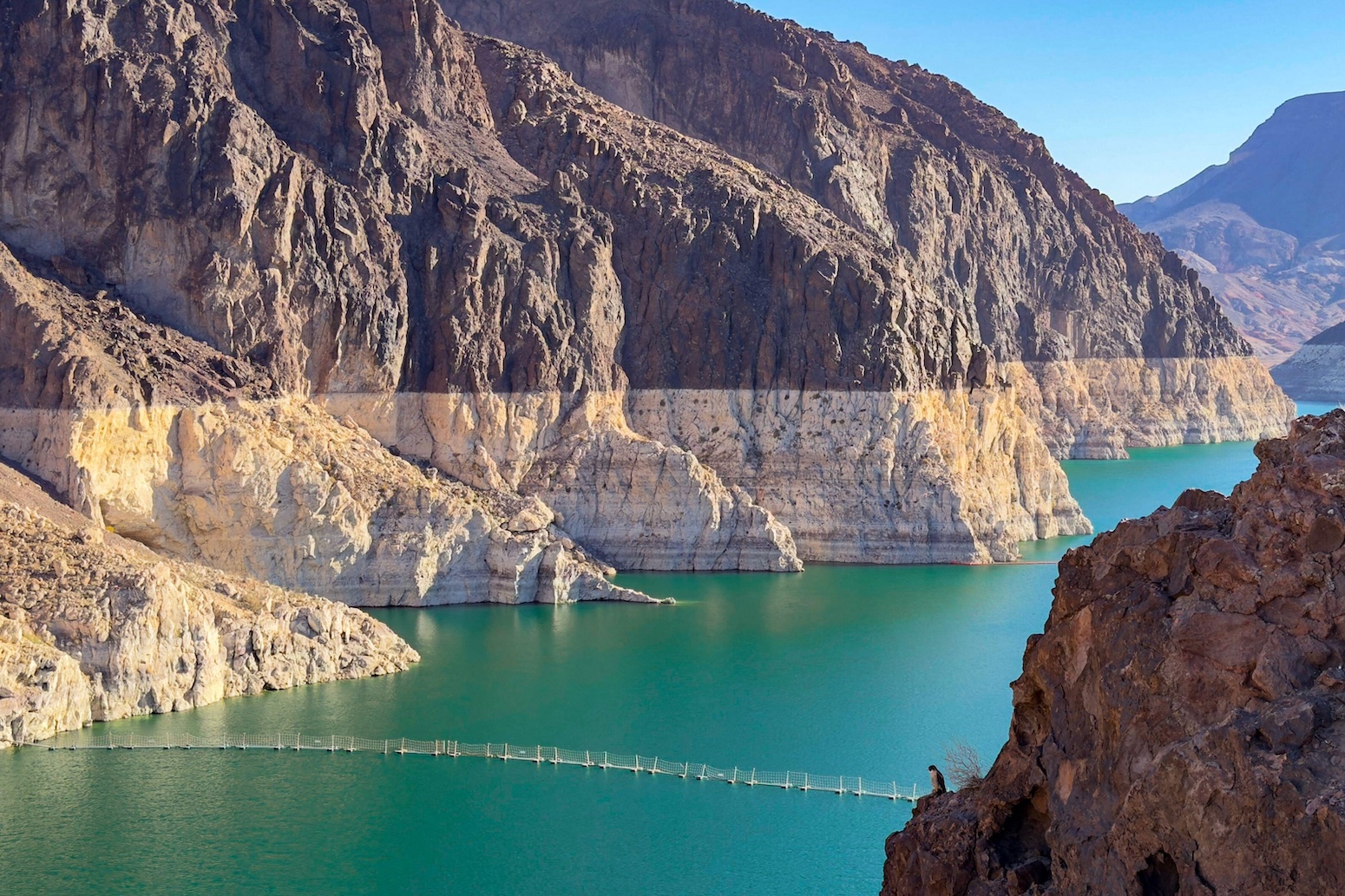
Lake Mead and Lake Powell, the two largest reservoirs in the United States, have reached record-low water levels, underscoring ongoing concerns about water scarcity in the Colorado River Basin. Both reservoirs, critical for water supply to millions, continue to decline amid a prolonged megadrought and increasing demand.
Lake Mead, the largest reservoir in the U.S., hit a record low of 317.11 meters above sea level on August 7, while Lake Powell, the second-largest, reached a new low of 1,072.87 meters on August 15. The reservoirs, formed by the Hoover Dam and Glen Canyon Dam respectively, provide water to approximately 40 million people across seven southwestern states and support 5.5 million acres of farmland in states like Arizona, California, and Colorado. At full capacity, they can hold a combined 68 cubic kilometers of water—enough to supply household consumption in the contiguous U.S. for nearly 1.5 years.
Experts attribute the declining water levels to a combination of factors, including climate change, population growth, and overconsumption. Since the turn of the century, water flow in the Upper Colorado River has decreased by about 20%, with half of that decline linked to climate change. The Upper Colorado River Basin, which supplies most of the river’s streamflow through snowpack, has been experiencing a historic megadrought for over 25 years. Nearly half of the drought’s intensity from 2000 to 2018 is attributed to climate change, according to a 2020 study.
The growing population in the southwestern U.S. has further strained the Colorado River’s water supply. Since 1992, the number of people relying on the river for municipal water has increased by 15 million, or about 60%. Dr. Jack Schmidt, a senior research scientist at Utah State University’s Center for Colorado River Studies, notes that the current water crisis stems from both long-term climate change and slower policy responses to climate variability.
“There’s an ultimate cause of the present water crisis, and there’s a proximate cause,” Schmidt told Carbon Brief. “The ultimate cause is a warming climate, a warming planet and a pretty clear correlation between warming conditions and decreased runoff in the Colorado River Basin. The proximate cause is that in this messy democratic republic of ours, big policy decisions that match the variability of the climate occur painfully slowly—with intense political negotiations—and only incrementally.”
The U.S. Bureau of Reclamation, which manages water resources in the western U.S., released an environmental impact statement on July 31 outlining its proposed post-2026 strategy for managing Lakes Mead and Powell. While the strategy has not yet been finalized, Schmidt suggests it provides flexibility to respond to worsening conditions. However, he cautions that current models predict continued drying trends, making long-term solutions uncertain.
Both reservoirs are expected to continue declining until spring 2024, when snowmelt from the Upper Colorado River Basin may provide some relief. Until then, water managers and policymakers face mounting pressure to address the growing imbalance between supply and demand in one of the country’s most critical water systems.
#WaterScarcity #ColoradoRiver #LakeMead #LakePowell #Megadrought #ClimateChange #WaterManagement #USReclamation
Comments (0)
No comments yet — be the first to weigh in.

Bentley Torcal: First All-Electric SUV Unveiling & Price Details
Bentley Motors will unveil its first all-electric SUV, the Torcal, on September 23. Discover pricing, features, and how it compares to competitors in the luxury EV market.

How King Harald V of Norway quietly led the world in clean tech adoption
King Harald V of Norway passed away in 2026 after a 35-year reign marked by stealth advocacy for clean technology, particularly electric vehicles, without political interference.
Why Gas Cars Could Be Worth Less Than Zero by 2031 in the US
Analyzing how cheap used EVs may make gasoline cars uneconomical in the US by 2031, with insights from Norway and China's used-car markets.

XPeng Advances AI Tech with VLA 2.0 Upgrade & Robotaxi Progress
XPeng's latest VLA 2.0 upgrade enhances intelligent driving with 4D perception, 20x safety boost, and voice-controlled robotaxis. Discover XPeng's AI advancements.

Mumbai’s Vile Parle Cypher is giving unheard rappers a voice

Enrich and Ultimo impress

Karnataka CM Signals Review of 5% Park Land Amendment Bill in Assembly

