Latin America Energy Storage Forecast Jumps to 34 GW by 2035: Wood Mackenzie
Wood Mackenzie’s latest outlook projects Latin America’s energy storage capacity to surge to 34 GW by 2035, driven by regulatory frameworks and renewable integration needs. Key markets include Chile, Brazil, and Mexico.
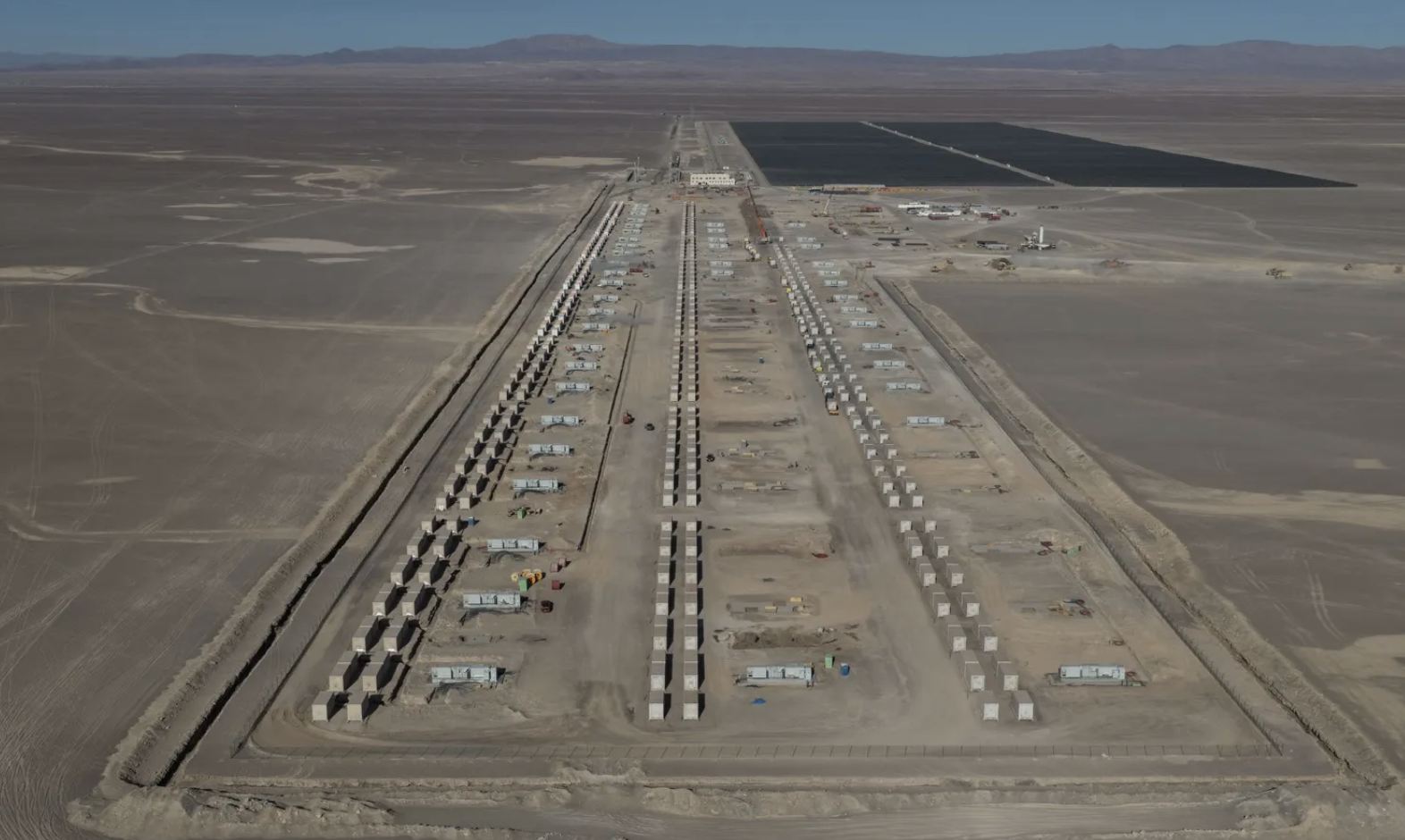
Wood Mackenzie, a global energy research and consultancy firm, has significantly increased its forecast for energy storage capacity in Latin America, projecting that cumulative installations will rise from 2.5 GW in 2025 to 34 GW by 2035. This represents a 13.6-fold increase over a decade, according to the consultancy’s latest "Latin America Energy Storage Outlook 2026" report. The revision marks a substantial upward adjustment from Wood Mackenzie’s previous estimate of 23 GW by 2034, underscoring the rapid acceleration of energy storage deployment across the region.
The growing pipeline of energy storage projects in Latin America reflects a shift from a frontier market to an active one, but experts warn that regulatory frameworks must keep pace to sustain growth. Pamela Morales, an analyst at Wood Mackenzie, emphasized that while project announcements are increasing, deployment often stalls without clear remuneration mechanisms and supportive policies. She noted that countries with well-defined revenue models are more likely to convert project pipelines into operational assets.
Chile remains the regional leader in energy storage, hosting the largest operational battery energy storage system (BESS) projects in Latin America. High levels of renewable energy curtailment in the country continue to drive investment in longer-duration storage solutions. However, Wood Mackenzie highlights a new risk: price cannibalization in northern Chile as battery capacity expands, which could reduce revenues from energy arbitrage.
Mexico is at a critical juncture, driven by shifts in energy policy. Wood Mackenzie estimates that new strategic project mechanisms and joint development schemes with Comisión Federal de Electricidad (CFE) could result in over 3 GW of storage capacity being awarded by 2030. The government’s call for strategic projects in July set an indicative target of 935 MW for standalone energy storage systems, all with three-hour durations, across multiple regions. Additionally, Mexico’s Electricity Sector Development Plan requires storage equivalent to 30% of the capacity of new renewable energy projects.
Brazil is also scaling up its energy storage ambitions, with the country set to hold its first two large-scale battery system auctions on December 2 and 4, 2026. The auctions will include one reserved for projects meeting domestic manufacturing requirements and another open to all systems. Contracts will span 15 years, with supply beginning August 1, 2028. Projects must have at least 30 MW of power capacity and four hours of duration. Wood Mackenzie expects these auctions to boost Brazil’s storage additions from 2028 onward, though financing may remain constrained without clearer remuneration mechanisms.
Argentina has quickly established a standalone energy storage market supported by auctions. Recent awards total around 1.3 GW, with official data indicating 1,413.5 MW in total capacity. The AlmaGBA and AlmaSADI auctions awarded 713 MW and 700.5 MW, respectively, primarily to address grid constraints and provide power and reserve services during transmission upgrades.
The Dominican Republic is highlighted in the report as one of the Caribbean markets with a more advanced regulatory framework. New regulations require renewable energy projects of at least 20 MWac to include storage equivalent to 50% of their capacity, with a minimum duration of four hours. Wood Mackenzie projects the country’s storage target at 500 MW by 2030.
Despite the optimistic outlook, Wood Mackenzie identifies the lack of bankable revenue models as the primary obstacle to growth in Latin America. Many markets still lack defined remuneration for ancillary services, energy arbitrage, or capacity. Financing constraints, permitting delays, and a limited number of buyers capable of supporting long-term contracts further complicate progress.
Morales stressed that Latin America must balance mandates with incentives to foster market development. Countries with clear and predictable remuneration mechanisms will be better positioned to turn announced projects into operational assets over the next decade.
#EnergyStorage #LatinAmerica #RenewableEnergy #WoodMackenzie #Chile #Mexico #Brazil #EnergyPolicy
Comments (0)
No comments yet — be the first to weigh in.

Bentley Torcal: First All-Electric SUV Unveiling & Price Details
Bentley Motors will unveil its first all-electric SUV, the Torcal, on September 23. Discover pricing, features, and how it compares to competitors in the luxury EV market.

How King Harald V of Norway quietly led the world in clean tech adoption
King Harald V of Norway passed away in 2026 after a 35-year reign marked by stealth advocacy for clean technology, particularly electric vehicles, without political interference.
Why Gas Cars Could Be Worth Less Than Zero by 2031 in the US
Analyzing how cheap used EVs may make gasoline cars uneconomical in the US by 2031, with insights from Norway and China's used-car markets.

XPeng Advances AI Tech with VLA 2.0 Upgrade & Robotaxi Progress
XPeng's latest VLA 2.0 upgrade enhances intelligent driving with 4D perception, 20x safety boost, and voice-controlled robotaxis. Discover XPeng's AI advancements.

Mumbai’s Vile Parle Cypher is giving unheard rappers a voice

Enrich and Ultimo impress

Karnataka CM Signals Review of 5% Park Land Amendment Bill in Assembly

