Machine Learning Boosts Irradiance Prediction for Bifacial Solar Panels
Research from Selçuk University compares machine learning models to improve plane-of-array irradiance predictions for bifacial photovoltaic systems using NREL field data.
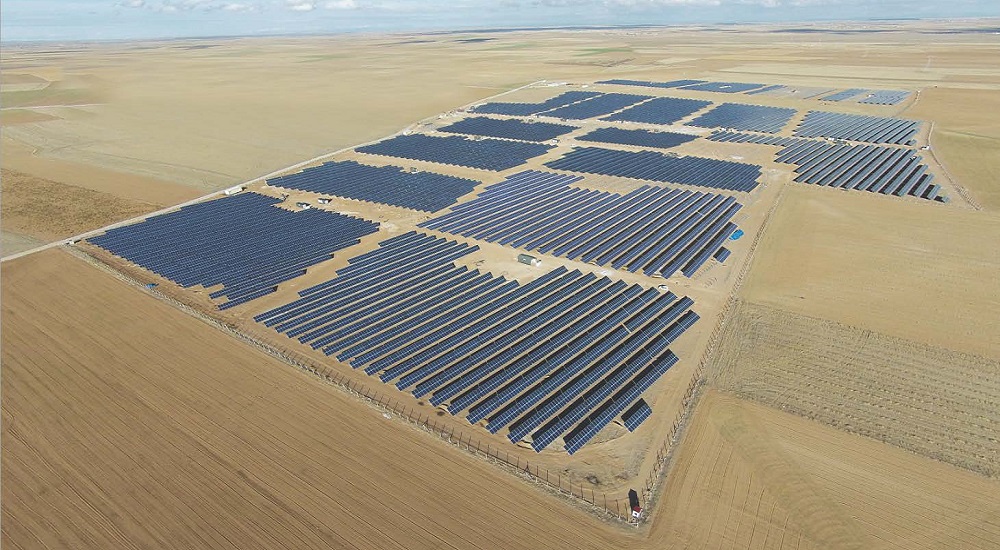
A researcher from Turkey's Selçuk University has developed a machine learning framework to improve the prediction of plane-of-array (PoA) irradiance for both front and rear sides of bifacial photovoltaic (PV) panels. The study, published in Energy Reports, evaluates six regression algorithms to enhance the accuracy of irradiance forecasts using standard meteorological and surface-related data. The research utilized synchronized field measurements from a vertical bifacial PV testbed operated by the U.S. Department of Energy’s National Renewable Energy Laboratory (NREL) in Golden, Colorado, collected between November 17, 2023, and May 29, 2024.
The dataset included key variables such as global horizontal irradiance (GHI), diffuse horizontal irradiance (DHI), ambient temperature, wind speed, testbed albedo, and a binary reflector variable. Hourly solar cycle indicators, represented as hour_sin and hour_cos, were also incorporated. Data preprocessing involved removing implausible zero values, sensor faults, and inconsistent records to ensure model reliability.
Researcher Ayşegül Toprak assessed six machine learning models: linear regression, k-nearest neighbors (KNN), support vector regression (SVR) with a radial basis function kernel, random forest (RF), extreme gradient boosting (XGBoost), and a feedforward multilayer perceptron (MLP). Each model was trained separately for front and rear PoA irradiance using identical input variables and five-fold cross-validation in MATLAB. Performance was measured using root mean square error (RMSE), mean absolute error (MAE), and the Pearson correlation coefficient (r).
Nonlinear models outperformed linear regression in predicting both front- and rear-side irradiance. Random forest achieved the highest accuracy for front PoA irradiance, with an RMSE of 0.188, an MAE of 0.061, and a correlation coefficient of 0.982. Multilayer perceptron, XGBoost, and SVR also performed strongly, each recording correlation coefficients above 0.97.
Predicting rear PoA irradiance proved more challenging, with random forest still leading at an RMSE of 0.236, an MAE of 0.080, and an r value of 0.973. The MLP model matched the RMSE but had a slightly higher MAE of 0.086. Linear regression ranked lowest for both targets, with RMSE values of 0.682 for front PoA irradiance and 0.593 for rear PoA irradiance.
Toprak’s findings suggest that front-side irradiance is primarily influenced by global irradiance and solar geometry, while rear-side irradiance depends more on surface-related factors like ground albedo and reflective ground cover. The study highlights the conditional and interaction-driven nature of rear-side irradiance in bifacial PV systems.
#MachineLearning #BifacialPV #RenewableEnergy #NREL #SolarEnergy #Photovoltaics #EnergyResearch #SelcukUniversity
Comments (0)
No comments yet — be the first to weigh in.
Bentley Torcal: First All-Electric SUV Unveiling & Price Details
Bentley Motors will unveil its first all-electric SUV, the Torcal, on September 23. Discover pricing, features, and how it compares to competitors in the luxury EV market.

How King Harald V of Norway quietly led the world in clean tech adoption
King Harald V of Norway passed away in 2026 after a 35-year reign marked by stealth advocacy for clean technology, particularly electric vehicles, without political interference.
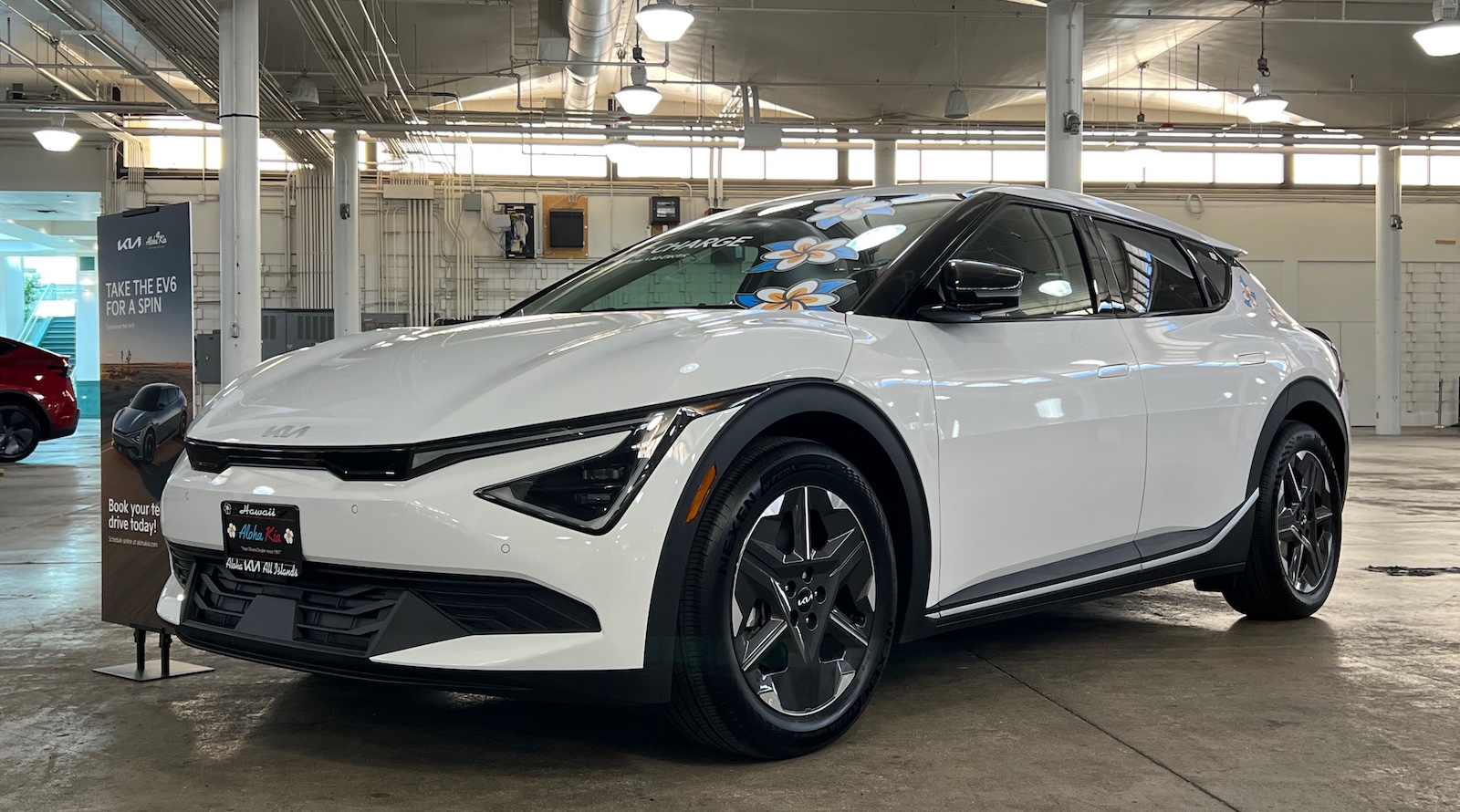
Why Gas Cars Could Be Worth Less Than Zero by 2031 in the US
Analyzing how cheap used EVs may make gasoline cars uneconomical in the US by 2031, with insights from Norway and China's used-car markets.

XPeng Advances AI Tech with VLA 2.0 Upgrade & Robotaxi Progress
XPeng's latest VLA 2.0 upgrade enhances intelligent driving with 4D perception, 20x safety boost, and voice-controlled robotaxis. Discover XPeng's AI advancements.

Mumbai’s Vile Parle Cypher is giving unheard rappers a voice

Enrich and Ultimo impress

Karnataka CM Signals Review of 5% Park Land Amendment Bill in Assembly

