Mecca's Sacred Pilgrimage vs Modern Commercialism: A Personal Reflection
During Ramadan, a pilgrim reflects on Mecca’s spiritual depth amid glittering malls and modern billboards, questioning the clash between faith and consumerism.
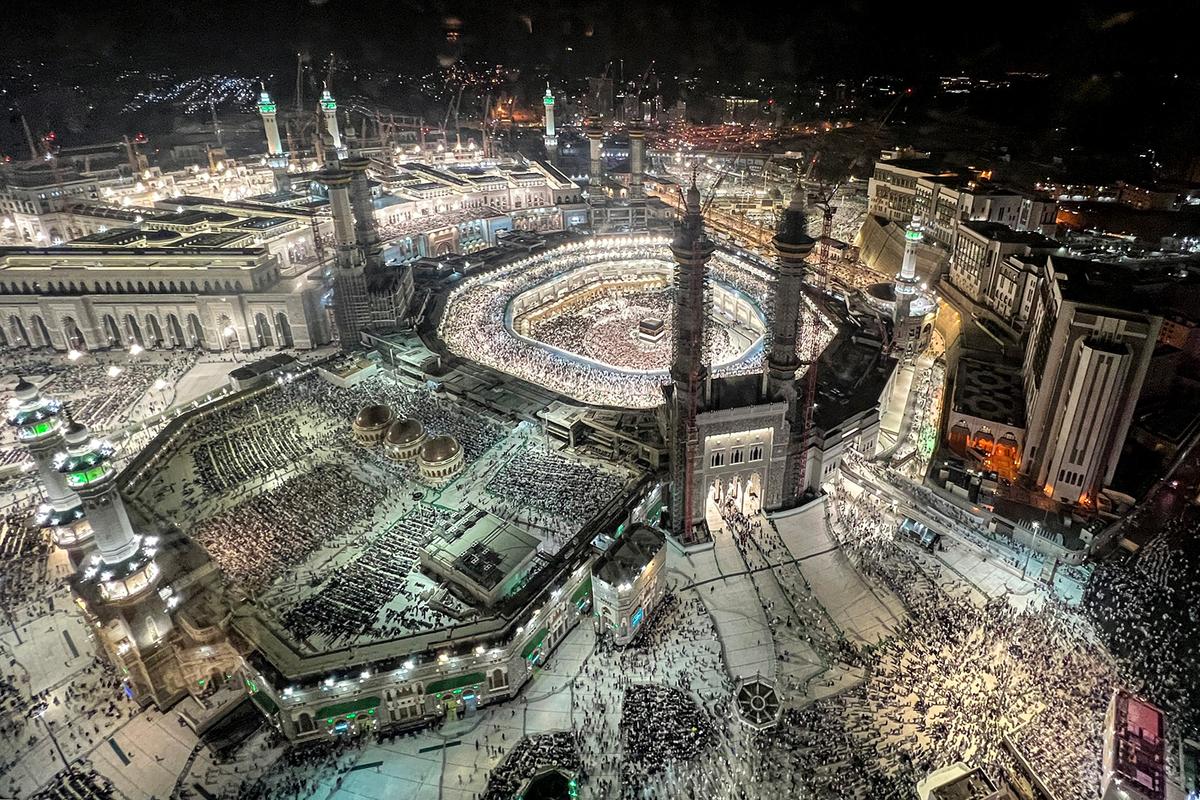
It is Ramadan, the holiest month of the Islamic calendar, and I am sitting in a rooftop café in Mecca, the holiest city of the religion. The sun has gone down, and an array of glittering shops and hotels lights up the urban expanse below me.
At the heart of this ancient city, the foremost site of Muslim worship, guarded with fortress-like marble walls, is the Masjid al-haram complex—the largest mosque in the world. I had just completed my own pilgrimage to the holy site, and I was struggling to name the discomfort I was feeling.
The juxtaposition was stark. After undergoing one of the most spiritually intense experiences of my life, I found myself surrounded by commercial establishments—Joe & The Juice, Sephora, Dunkin’ Donuts, and Times Square-style billboards. The contrast between the sacred and the profane felt jarring. The city, fueled by petrodollars, no longer resembled the sanctified land I had imagined as a child, steeped in religious lore and visions of a divine metropolis.
I had come to Mecca seeking respite from the existential dread of my daily life—the endless cycle of job applications, first dates that led nowhere, and the hollow pursuit of love on algorithms designed for disappointment. There was the mindless scrolling, the dopamine-driven trap of social media, and the paralysis of staring at a blank laptop screen, waiting for inspiration that never came. Turning 30 loomed over me, and I felt the weight of squandered potential pressing down.
My faith had always been a source of comfort. A verse from the Quran, in which Moses pleads for divine assistance—*"My Lord, indeed I am in absolute need of whatever good You send down"*—had long reassured me that a higher power was looking after me, something beyond the constraints of time and space yet closer than my own jugular vein.
The pilgrimage was my attempt to find clarity in a chaotic world. I hoped that my devotion would impress the divine, that some intervention would set my worldly affairs right. Though I felt renewed in my faith after completing the rituals, the break I sought never materialized.
Islam is not an ascetic faith—monasticism is forbidden—and yet the state of being a pilgrim comes closest to forsaking the material world. Before entering Mecca, dressed in a simple white abaya with a prayer book hanging from my neck, I had entered the state of *ihram*, a heightened spiritual purity.
The word *ihram* shares roots with *haraam*, meaning "to forbid." Pilgrims in this state abstain from worldly indulgences—no sexual relations, no hunting, no cutting hair or nails, no perfumes. Men wear only two unstitched cloths; women dress modestly without adornment. The purpose is to strip away social identities, creating a temporary egalitarian space, a state anthropologists like Victor and Edith Turner called *communitas*.
There are two types of pilgrimages in Islam: the *umrah*, which takes hours and can be performed anytime, and the *Hajj*, a five-day ritual reserved for the month of Dhul-Hijjah. Both require the same conditions of *ihram*.
I began my *umrah* with a shuttle ride to the mosque, its interior adorned with an electronic sign welcoming "Guests of Ar Rahman"—guests of the Most Merciful. Pilgrims, regardless of status, are equal before God. Some prayed quietly on the bus, others recited verses from Quran apps or clutched prayer books like mine. As we neared the Great Mosque, the rhythmic chanting of thousands rose in unison: *"Labbaik Allahumma Labbaik"* ("Here I am, my Lord! I have answered Your call").
The first sensation upon entering the Great Mosque is the scent of oud and rosewater. Many believers believe their first sight of the Kaaba will determine the acceptance of their prayers, so they keep their eyes lowered or tightly shut as they are guided in. When they finally look up, the sight is surreal—an ocean of white-clad pilgrims circling the Kaaba, swallows darting against the sky, while modern distractions—malls, drones, armed guards—compete for attention.
Yet, despite everything, it is impossible to look away from the Kaaba, the *axis mundi*, the "navel of the Earth" as religious historian Mircea Eliade described it. In Islamic belief, Mecca is the primordial city, the Kaaba the first building on Earth, rebuilt by Abraham and his son Ishmael after the flood. Since the Prophet Muhammad’s conquest of Mecca in 630 CE, the Kaaba has oriented all Muslim life—prayers, burials—toward it.
The rituals of the *umrah* unfold in sequence: circling the Kaaba, praying near the Maqam-e-Ibrahim (the Station of Abraham), and traversing the hills of Safa and Marwa seven times. Once complete, men shave their heads and women trim their hair, ending the state of *ihram*.
For Eliade, sacred space represents a rupture from the mundane. It is a divine anchor, allowing believers to access a primordial state of being. In *ihram*, with eyes still lowered from that first glimpse of the Kaaba, the boundary between the sacred and the secular begins to blur—and the discomfort returns.
Comments (0)
No comments yet — be the first to weigh in.

NASA Launches Nancy Grace Roman Telescope to Unlock Universe's Mysteries
NASA's new Nancy Grace Roman Space Telescope lifts off from Florida to study dark energy, exoplanets, and cosmic mysteries with unprecedented precision and scope.

Nature reserves spot rare species during heatwaves
Nature reserves in Hertfordshire and Middlesex have documented rare species this summer, with volunteers spotting wildlife not seen in decades and some even for...

Inmates at HMP La Moye craft boxes to save Jersey's hedgehogs
Prisoners at HMP La Moye have crafted nesting and feeding boxes to support Jersey's hedgehog population, boosting rehabilitation and community engagement.
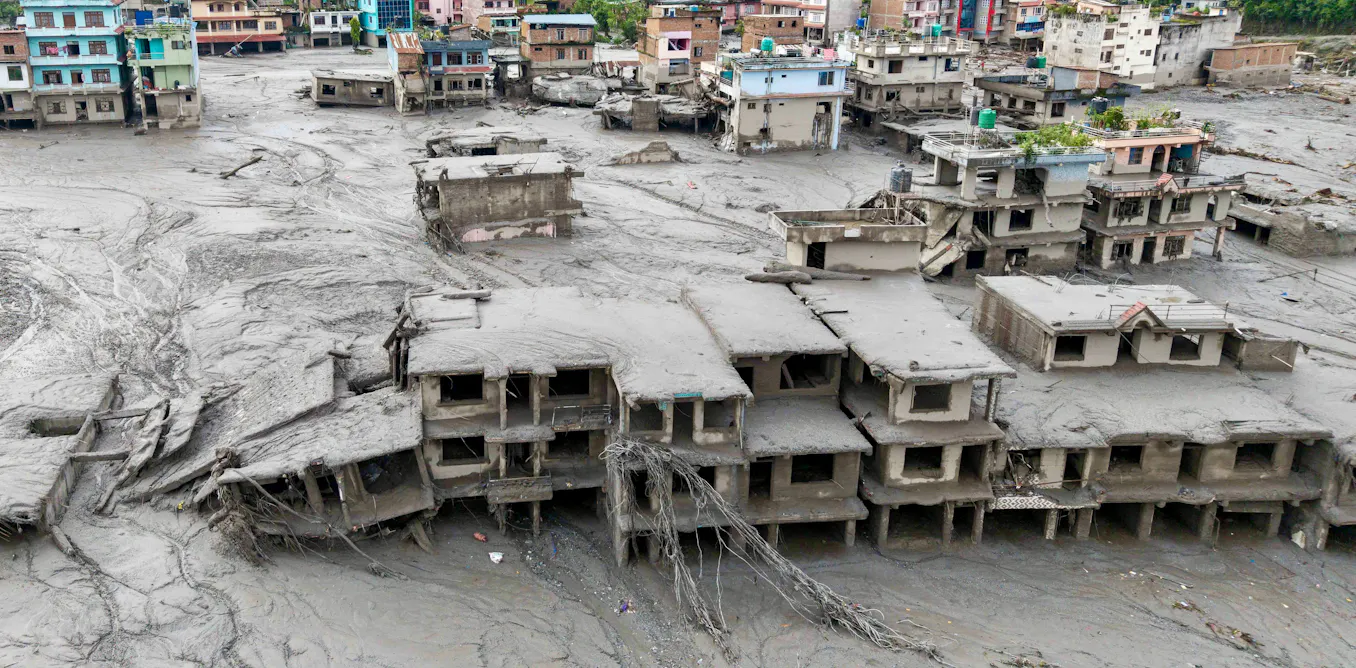
2026 Nepal Flood: Ice‑Rock Avalanche, Glacial Lake Outburst and Climate‑Change Risks
A massive ice‑rock avalanche triggered a catastrophic flood in Nepal on Aug. 26 2026, followed by a glacial lake outburst that devastated towns and hydropower plants. Climate‑change‑driven thawing increased the risk.

Mumbai’s Vile Parle Cypher is giving unheard rappers a voice

Enrich and Ultimo impress

Karnataka CM Signals Review of 5% Park Land Amendment Bill in Assembly

