Polar Bear Meets Seal in Stunning Underwater Photo – Wildlife Photographer of the Year 2026
A Norwegian photographer captures a polar bear peering into a seal’s underwater view, earning a highly commended spot in the 2026 Wildlife Photographer of the Year competition.
LONDON — Organizers of the Wildlife Photographer of the Year 2026 competition have unveiled a shortlist of highly commended entries, showcasing extraordinary animal behavior and natural landscapes from across the globe.
The overall competition winners will be officially announced on Tuesday, Oct. 13, 2026. Following the announcement, an exhibition displaying the winning and commended images will open to the public at the Natural History Museum in London on Friday, Oct. 16, 2026.
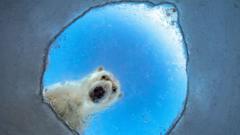
Among the standout entries is an image titled Icy Window, which was highly commended in the Animal Portraits category. Taken by Norwegian wildlife photographer Audun Rikardsen, the photograph offers a seal's perspective of a female polar bear peering down a breathing hole in the Arctic ice. Rikardsen set up an underwater camera equipped with a motion sensor beneath the hole and waited eight hours for the bear to clear the area before retrieving the equipment. Upon reviewing the captured image, Rikardsen recalled being so extremely happy that he was screaming, joking that he probably woke up all the polar bears for miles. Rikardsen previously won competition categories in 2019 and 2025.
The shortlisted images span several categories, capturing complex animal interactions and rare moments in nature. In Norway, photographer Vegard Byrkjeland Aasen used a drone operating for the Norwegian Orca Survey to record an adult killer whale repeatedly carrying a deceased calf to the water's surface in a fjord. Researchers suggest such behavior may represent an attempt to revive or carry the calf, a practice recent studies indicate may be more widespread among the species than previously understood.
Other mammalian highlights include Allegra Hutton's photo of a young leopard stranded in a tree after an unsuccessful squirrel hunt in Botswana's Okavango Delta. In the Central Kalahari Game Reserve, German photographer Jens Cullmann documented an African bullfrog lunging for, and narrowly missing, a babul butterfly.
The collection also highlights urban adaptability and macro photography. In Tokyo, youth entry photographer Sora Miyazawa captured an Eastern Japanese toad navigating a city street after rain, illustrating how the species has adapted to human environments. In Costa Rica, French photographers Andrea and Maceo Grammatico utilized intricate focus-stacking techniques to photograph a mosquito resting on the head of a highly venomous fer-de-lance viper.
Avian photography features prominently on the shortlist as well. Hungarian photographer Bence Máté captured tens of thousands of red-billed queleas descending upon a watering hole in Kenya, while South African photographer Ernest Porter documented a red-billed oxpecker feeding on insects atop a white rhinoceros.
In the Animals in Their Environment category, South African photographer Dewald Tromp captured a Namaqua chameleon braving a sudden sandstorm in Namibia's Namib Desert, highlighting the reptile's specialized adaptations for surviving extreme desert conditions.
Comments (0)
No comments yet — be the first to weigh in.

NASA Launches Nancy Grace Roman Telescope to Unlock Universe's Mysteries
NASA's new Nancy Grace Roman Space Telescope lifts off from Florida to study dark energy, exoplanets, and cosmic mysteries with unprecedented precision and scope.

Nature reserves spot rare species during heatwaves
Nature reserves in Hertfordshire and Middlesex have documented rare species this summer, with volunteers spotting wildlife not seen in decades and some even for...

Inmates at HMP La Moye craft boxes to save Jersey's hedgehogs
Prisoners at HMP La Moye have crafted nesting and feeding boxes to support Jersey's hedgehog population, boosting rehabilitation and community engagement.
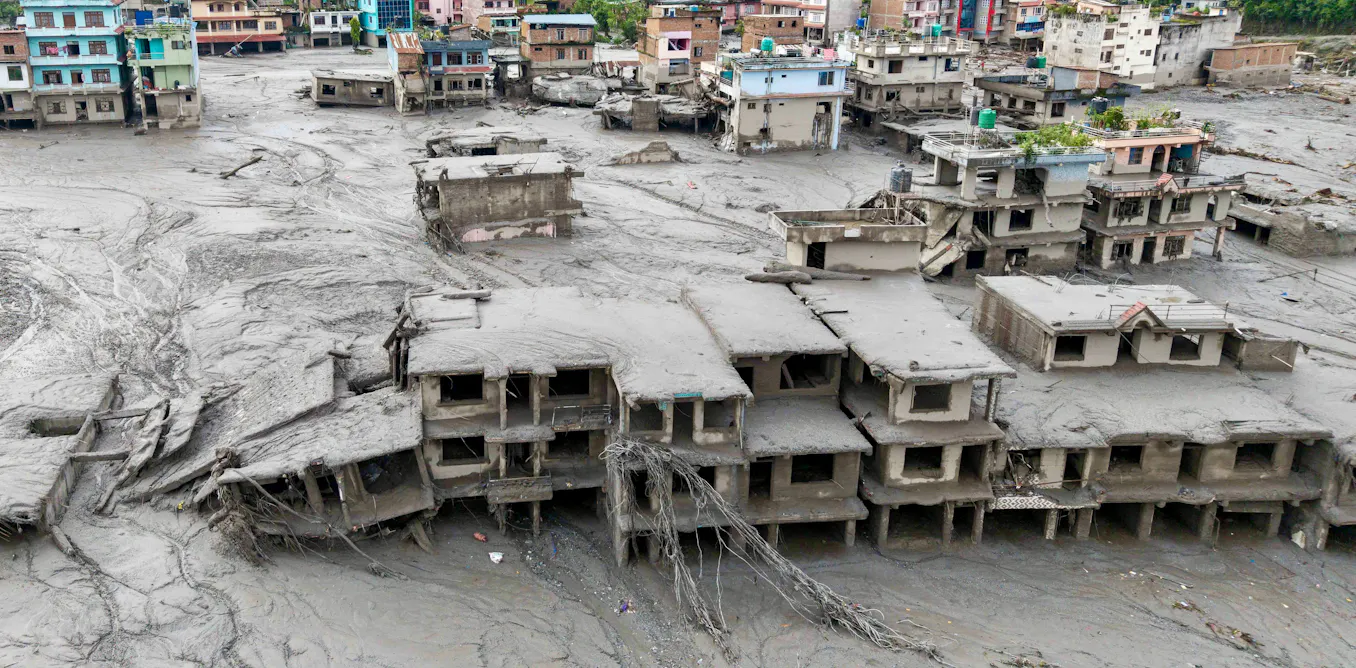
2026 Nepal Flood: Ice‑Rock Avalanche, Glacial Lake Outburst and Climate‑Change Risks
A massive ice‑rock avalanche triggered a catastrophic flood in Nepal on Aug. 26 2026, followed by a glacial lake outburst that devastated towns and hydropower plants. Climate‑change‑driven thawing increased the risk.

Mumbai’s Vile Parle Cypher is giving unheard rappers a voice

Enrich and Ultimo impress

Karnataka CM Signals Review of 5% Park Land Amendment Bill in Assembly

