Where the earth meets the sky
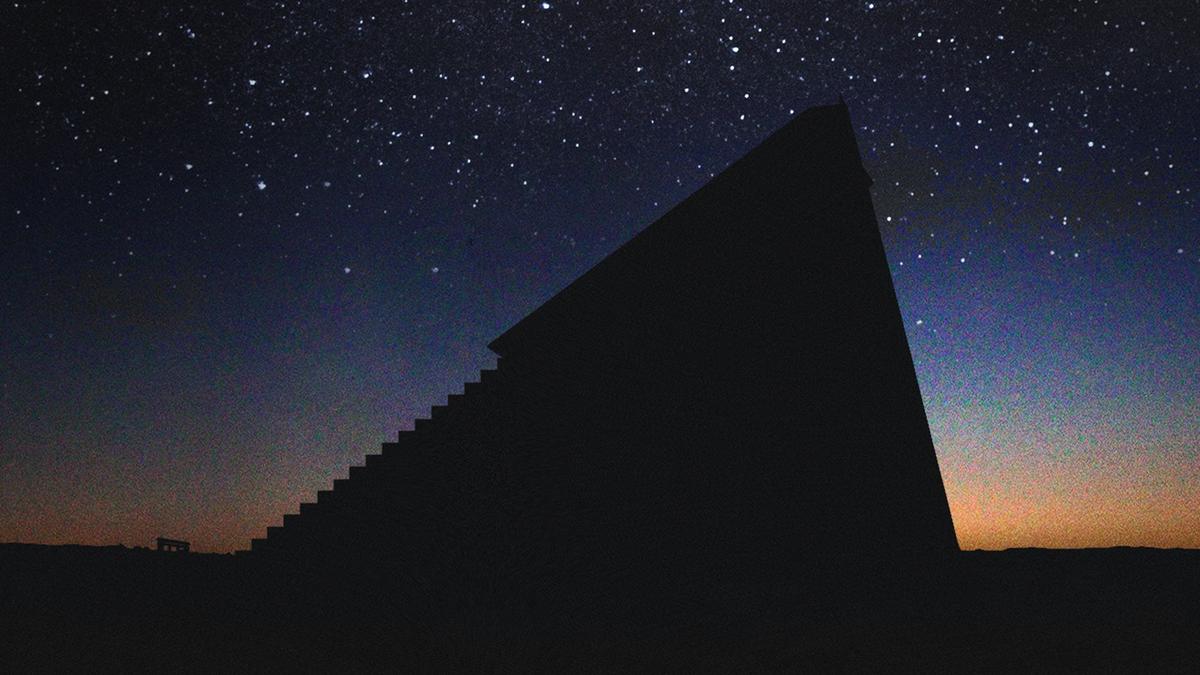
Star Axis, a monumental land art project in the New Mexico desert, nears completion after nearly 50 years of construction by artist Charles Ross, now 88 years old. The structure, often described as a granite pyramid, functions as a celestial observatory designed to track 26,000 years of astronomical movement. According to Ross, who began sketches for the project in 1971, the installation allows observers to witness the shifting position of Polaris—historically the North Star—as it gradually moves away from its current alignment over millennia.
A short documentary, *Where the Earth Meets the Sky*, directed by Rafael Salazar Moreno, documents the final stages of Star Axis. The 24-minute film incorporates archival footage from the late Wendy Apple, the original filmmaker assigned to the project in the early 2000s. Apple died in 2017 without seeing the work completed or her own documentary finished. Moreno’s film, therefore, serves as both a tribute to Ross’s lifelong endeavor and a contemplation of humanity’s relationship with cosmic time.
Star Axis is built into the landscape near the remote town of Abiquiú, New Mexico. The structure consists of a 10-story-high, stepped stone pyramid aligned with the Earth’s axis. At its center is a 165-foot-long tunnel, known as the Solar Pyramid, which captures sunlight during solstices and equinoxes, projecting precise beams onto interior surfaces. A separate Earth Star Chamber allows visitors to observe the celestial pole shifting over thousands of years, illustrating how Earth’s axial precession changes the apparent position of stars.
The documentary does not include interviews with Ross but relies on observational footage and archival materials. It emphasizes the scale of the project and the intersection of art, astronomy, and deep time. The film deliberately avoids narration, allowing the visual and structural elements of Star Axis to convey its conceptual weight.
Art historians and critics have noted that Star Axis challenges conventional definitions of land art by incorporating precise astronomical calculations into its design. Unlike other desert installations, such as those by Michael Heizer or Nancy Holt, Ross’s work is not static; it evolves with celestial cycles, inviting viewers to consider their place within a much larger temporal framework.
With construction nearing completion, Star Axis will remain one of the most ambitious and enduring examples of site-specific art, linking human creation with the imperceptibly slow movements of the cosmos.
Comments (0)
No comments yet — be the first to weigh in.

NASA Launches Nancy Grace Roman Telescope to Unlock Universe's Mysteries
NASA's new Nancy Grace Roman Space Telescope lifts off from Florida to study dark energy, exoplanets, and cosmic mysteries with unprecedented precision and scope.

Nature reserves spot rare species during heatwaves
Nature reserves in Hertfordshire and Middlesex have documented rare species this summer, with volunteers spotting wildlife not seen in decades and some even for...

Inmates at HMP La Moye craft boxes to save Jersey's hedgehogs
Prisoners at HMP La Moye have crafted nesting and feeding boxes to support Jersey's hedgehog population, boosting rehabilitation and community engagement.

2026 Nepal Flood: Ice‑Rock Avalanche, Glacial Lake Outburst and Climate‑Change Risks
A massive ice‑rock avalanche triggered a catastrophic flood in Nepal on Aug. 26 2026, followed by a glacial lake outburst that devastated towns and hydropower plants. Climate‑change‑driven thawing increased the risk.

Mumbai’s Vile Parle Cypher is giving unheard rappers a voice

Enrich and Ultimo impress

Karnataka CM Signals Review of 5% Park Land Amendment Bill in Assembly

