Charles Percy Snow’s 'Two Cultures' Lecture: Bridging Science and Humanities
In 1959, Charles Percy Snow delivered his Cambridge Rede Lecture, coining the term 'two cultures' to describe the divide between science and humanities, sparking a heated debate with F.R. Leavis and reshaping how the world views interdisciplinary dialogue.
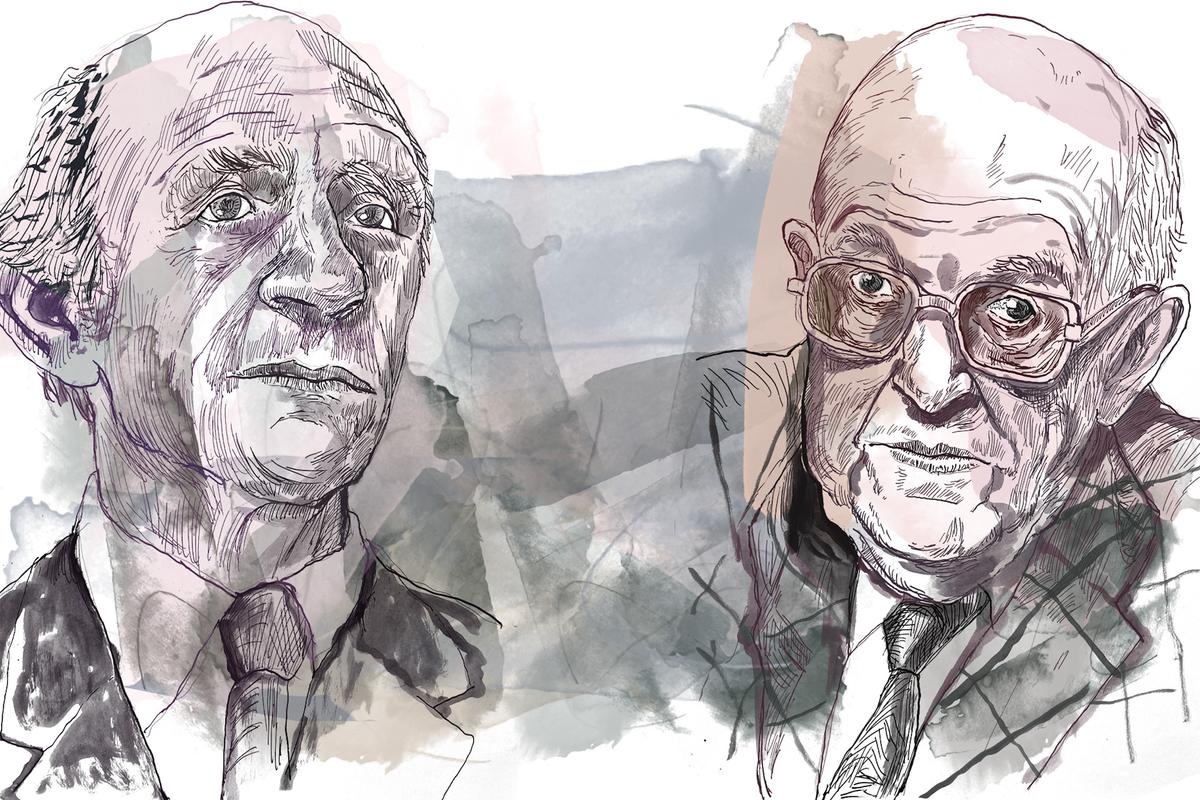
Charles Percy Snow, a British scientist and novelist, delivered the 1959 Rede Lecture at the University of Cambridge with an argument that would spark one of the most enduring intellectual debates of the 20th century. Known for his acclaimed Strangers and Brothers novel series and his later knighthood, Snow introduced the concept of "the two cultures," a phrase that would outlive both its originator and the controversy it ignited. Though often reduced to a simplistic contrast between science and the humanities, Snow’s thesis probed deeper into the philosophical and moral divide between those who seek to improve human life through scientific progress and those who, in his view, remain detached in their contemplation of human tragedy.
Snow, who was knighted by Queen Elizabeth II in 1957, had moved from a working-class upbringing in Leicester to the intellectual elite of London, where he lived in a red-brick building on Eaton Terrace. By 1959, he was a well-established figure in British cultural life, balancing his scientific background with a successful literary career. In his lecture titled “The Two Cultures and the Scientific Revolution,” delivered at Senate House in Cambridge, Snow argued that Western society was fractured between scientists—who were actively engaged in shaping a better future—and literary intellectuals, whom he believed were more concerned with aesthetic and moral reflection than with tangible human progress.
The lecture, initially met with little fanfare when published in *New Statesman* two years earlier, gained sudden prominence. Snow’s core claim was that scientists and literary intellectuals had ceased to communicate meaningfully. Scientists, he observed, viewed literature as esoteric and irrelevant, while intellectuals lacked even basic scientific literacy, such as understanding the Second Law of Thermodynamics—a deficiency Snow compared to never having read Shakespeare. He lamented that the two groups, once separated by polite indifference, now openly scorned one another.
The most provocative element of Snow’s argument was not the observation of division, but his moral judgment of it. He framed the conflict in existential terms: life is short, brutal, and solitary, and humans must choose between passive acceptance and active struggle. Scientists, in his view, chose the latter, dedicating themselves to alleviating suffering and advancing society. Literary intellectuals, however, he accused of complacency, content to dwell in tragic contemplation without contributing to material improvement. In a controversial aside, he even suggested that intellectual complacency bore some responsibility for the horrors of Auschwitz, though he did not develop this line of argument further.
Snow’s lecture was met with immediate and fierce criticism, most notably from F. R. Leavis, a prominent Cambridge literary critic. In a scathing 1962 response, Leavis dismissed Snow as a “preposterous and menacing absurdity,” accusing him of reducing culture to a utilitarian project and overlooking the moral and aesthetic depth of literature. The exchange highlighted a broader tension in postwar Britain: the rising prestige of science and technology versus the enduring value placed on humanistic inquiry.
Despite the controversy, the phrase “the two cultures” entered public discourse, often stripped of its original complexity. Snow himself later reflected that he had not anticipated such a reaction, nor the longevity of the term. His argument, though flawed and partisan, touched a nerve in an era of rapid scientific advancement and lingering class divisions. Whether one agrees with Snow’s diagnosis or Leavis’s rebuttal, the debate he sparked endures as a reminder of the enduring divide—and occasional collision—between ways of knowing the world.
#TwoCultures #CharlesPercySnow #FRSnow #CambridgeUniversity #RedeLecture #ScienceVsHumanities #StrangersAndBrothers #IntellectualHistory
Comments (0)
No comments yet — be the first to weigh in.

NASA Launches Nancy Grace Roman Telescope to Unlock Universe's Mysteries
NASA's new Nancy Grace Roman Space Telescope lifts off from Florida to study dark energy, exoplanets, and cosmic mysteries with unprecedented precision and scope.

Nature reserves spot rare species during heatwaves
Nature reserves in Hertfordshire and Middlesex have documented rare species this summer, with volunteers spotting wildlife not seen in decades and some even for...

Inmates at HMP La Moye craft boxes to save Jersey's hedgehogs
Prisoners at HMP La Moye have crafted nesting and feeding boxes to support Jersey's hedgehog population, boosting rehabilitation and community engagement.

2026 Nepal Flood: Ice‑Rock Avalanche, Glacial Lake Outburst and Climate‑Change Risks
A massive ice‑rock avalanche triggered a catastrophic flood in Nepal on Aug. 26 2026, followed by a glacial lake outburst that devastated towns and hydropower plants. Climate‑change‑driven thawing increased the risk.

Mumbai’s Vile Parle Cypher is giving unheard rappers a voice

Enrich and Ultimo impress

Karnataka CM Signals Review of 5% Park Land Amendment Bill in Assembly

