How Immigration Enforcement Feeds Rural Prison Economies: A Historical Perspective
Rural communities have long profited from incarcerating prisoners, and immigration detention is reviving this model, filling empty jail cells for economic gain.
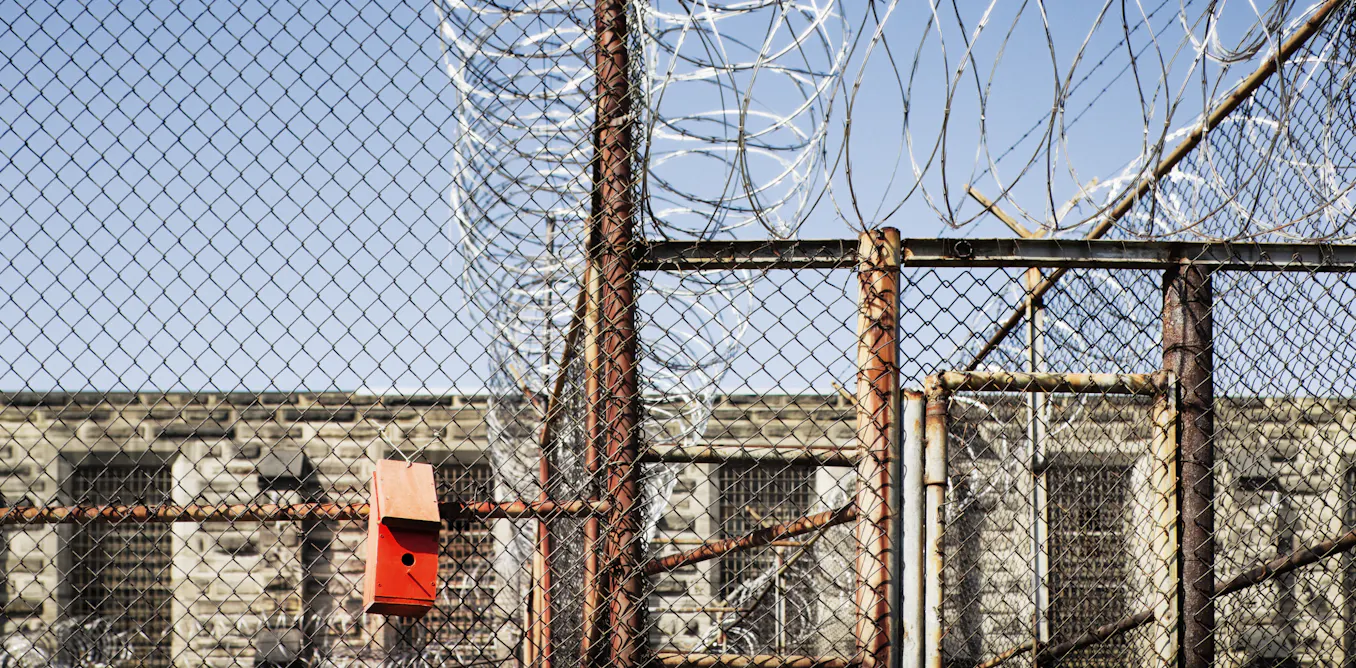
Immigration enforcement is creating a new economic market for prisons, reviving a historical practice of rural areas profiting from housing federal detainees.
In January 2026, Immigration and Customs Enforcement (ICE) and state and local law enforcement detained roughly 600 immigrants across West Virginia during Operation Country Roads. Many were held in the state’s already overpopulated jail system, which until this spring was part of a national network of immigrant detention centers.
ICE pays hundreds of facilities a per-day rate for housing detainees, often in rural communities where federal funding cuts have reduced social services. These areas, desperate for economic relief, have long relied on carceral systems to bolster local economies.
Historical parallels
More than a century before ICE’s establishment, West Virginia was housing out-of-state federal prisoners to generate revenue. From 1876 to 1908, the state received prisoners from major cities, driving a sevenfold increase in its prison population—from about 160 to more than 1,200. By 1908, revenue from housing federal prisoners reached $77,000 over two years, equivalent to $2.8 million today.
This practice ended when federal prisons opened in Atlanta and Leavenworth in 1908, reducing West Virginia’s role in the federal prison system. However, a similar model has resurfaced through immigration detention.
Economic reliance on detention
While the national incarceration rate has declined since 2010, jail stays—particularly in rural and suburban areas—have increased. Many of these facilities rent beds to outside entities, including state correction departments and federal immigration authorities.
Rural communities have long sought prisons for economic benefits, treating them as a form of state-sponsored public works. Sociologist John Eason describes these facilities as creating “perverse economic incentives for prison proliferation.”
Immigration detention is now filling cells that would otherwise be empty. Between 2025 and 2026, the number of people detained by ICE rose by 58%—more than 25,000 individuals—according to the Prison Policy Initiative. The group’s March 2026 report states that expanded immigration detention “accounts for virtually all of the growth in mass incarceration” since its last assessment.
Case studies of reliance
Indiana’s Miami Correctional Facility in Bunker Hill, with 1,000 beds, struggled to staff the facility due to budget constraints. The state now rents those beds to ICE for $291 per detainee per day.
In Baldwin, Michigan, a closed prison reopened as an ICE facility, expected to become the area’s largest employer and taxpayer. Similarly, a long-closed private prison in rural Minnesota will reopen as an ICE detention center, bringing 450 new jobs to Swift County, according to state Sen. Torrey Westrom.
West Virginia’s evolving role
West Virginia, which once profited from housing federal prisoners, now collaborates with ICE for financial gain. The state receives $90 per detainee per day and hosts an expanded Customs and Border Protection training center. It also participates in the federal 287(g) program, through which local law enforcement agencies are paid to assist with immigration enforcement.
Despite federal court orders in early 2026 to release immigrants held in the state’s jails due to due process violations, West Virginia has continued its partnership with immigration enforcement.
As long as states view immigration detention as a revenue stream, this historical practice of profiting from incarceration appears likely to persist.
Comments (0)
No comments yet — be the first to weigh in.

NASA Launches Nancy Grace Roman Telescope to Unlock Universe's Mysteries
NASA's new Nancy Grace Roman Space Telescope lifts off from Florida to study dark energy, exoplanets, and cosmic mysteries with unprecedented precision and scope.

Nature reserves spot rare species during heatwaves
Nature reserves in Hertfordshire and Middlesex have documented rare species this summer, with volunteers spotting wildlife not seen in decades and some even for...

Inmates at HMP La Moye craft boxes to save Jersey's hedgehogs
Prisoners at HMP La Moye have crafted nesting and feeding boxes to support Jersey's hedgehog population, boosting rehabilitation and community engagement.

2026 Nepal Flood: Ice‑Rock Avalanche, Glacial Lake Outburst and Climate‑Change Risks
A massive ice‑rock avalanche triggered a catastrophic flood in Nepal on Aug. 26 2026, followed by a glacial lake outburst that devastated towns and hydropower plants. Climate‑change‑driven thawing increased the risk.

Mumbai’s Vile Parle Cypher is giving unheard rappers a voice

Enrich and Ultimo impress

Karnataka CM Signals Review of 5% Park Land Amendment Bill in Assembly

