How Shere Hite's 1976 Feminist Sex Research Sparked a Revolution
Shere Hite's groundbreaking 1976 study revealed widespread female sexual dissatisfaction, challenging norms and reshaping feminist discourse on intimacy and equality.
In the early 1970s, Shere Hite, a feminist sex researcher and former Playboy model, conducted groundbreaking research on female sexuality that challenged long-held norms and reshaped public conversations about women’s sexual health and autonomy. Her landmark 1976 book, *The Hite Report: A Nationwide Study of Female Sexuality*, became one of the bestselling works of the 20th century—selling over 50 million copies—by centering women’s own voices and experiences rather than prescribing what they should feel. The study emerged amid a cultural shift often called the sexual revolution, when premarital sex became more common, contraception like the birth control pill was widely available, and legal changes such as no-fault divorce in California gave women greater freedom from unsatisfying marriages.
Hite’s research was revolutionary because it listened to women directly. Using a 58-question survey, she asked intimate questions: “Could you describe what an orgasm feels like to you?”; “Do you feel free to do all the things you would like in sex?”; and “Do you think sex is in any way political?” Her findings revealed widespread dissatisfaction: about 70 percent of American women reported they could not orgasm through penetrative sex alone and required clitoral stimulation, while many admitted to faking orgasms. Hite’s work exposed the gap between the ideals of the sexual revolution—more sex for women—and the reality: sex was still often scripted around male pleasure, with penetration treated as the ultimate goal. As one respondent described, encounters followed a predictable pattern: “a little kiss, a little feel, a finger for arousal, a touch of breast and he’s on top, wham it’s over.”
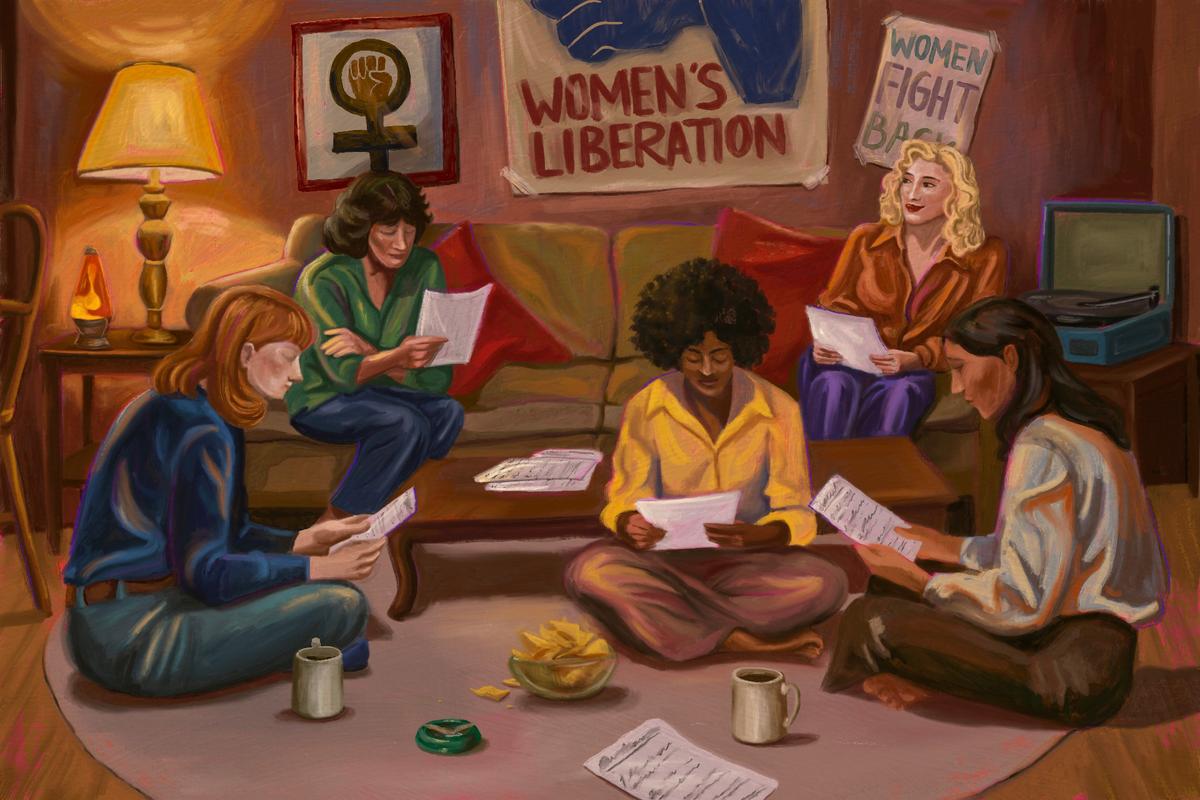
Hite’s journey to feminism began unexpectedly. While pursuing a PhD at Columbia University in New York, she worked as a model—sometimes in fashion, sometimes in adult entertainment—including a notable ad for Olivetti typewriters. But when the ad appeared with the caption “The typewriter is so smart that she doesn’t have to be,” the New York chapter of the National Organization for Women (NOW) organized a protest march, chanting “Don’t Drown In The Olivetti Typing Pool.” Inspired by the support, Hite joined NOW and became active in consciousness-raising (CR) groups, where women gathered to discuss how sexism shaped their lives.
In these groups, women shared experiences about housework, aging, and inequality—except when it came to sex. Hite noticed that even in spaces meant to challenge oppression, women hesitated to speak openly about their sexual lives. To break this silence, she designed an anonymous survey in 1972 and distributed it across the country. The questionnaire traveled far beyond feminist circles: abortion rights groups, magazines like Brides and Mademoiselle, and even the adult magazine *Oui* published it. Women passed the survey to friends, mothers to daughters, teachers to students. The responses revealed a surprising influence on women’s sexual lives: Sigmund Freud’s psychoanalytic theories, which had long framed female sexual maturity as vaginal rather than clitoral. Freud’s 1905 essay *Three Essays on the Theory of Sexuality* claimed that mature women should orgasm vaginally, while clitoral pleasure was seen as immature. Women who couldn’t orgasm vaginally were, in Freud’s view, psychologically troubled and in need of treatment.
Hite’s findings offered a counter-narrative, showing that most women needed clitoral stimulation to climax. Her work helped dismantle the idea that vaginal orgasm was the only “mature” form of female pleasure and highlighted the political nature of sexual pleasure and inequality. Though *The Hite Report* remains one of the most influential books of the 20th century, Hite and her legacy have faded from public memory. Yet her message—that women’s sexual satisfaction matters and should be defined on their own terms—continues to resonate in ongoing debates about gender, power, and intimacy.
#SexualRevolution #Feminism #ShereHite #TheHiteReport #FemaleSexuality #Psychology #NOW #ColumbiaUniversity
Comments (0)
No comments yet — be the first to weigh in.

NASA Launches Nancy Grace Roman Telescope to Unlock Universe's Mysteries
NASA's new Nancy Grace Roman Space Telescope lifts off from Florida to study dark energy, exoplanets, and cosmic mysteries with unprecedented precision and scope.

Nature reserves spot rare species during heatwaves
Nature reserves in Hertfordshire and Middlesex have documented rare species this summer, with volunteers spotting wildlife not seen in decades and some even for...

Inmates at HMP La Moye craft boxes to save Jersey's hedgehogs
Prisoners at HMP La Moye have crafted nesting and feeding boxes to support Jersey's hedgehog population, boosting rehabilitation and community engagement.

2026 Nepal Flood: Ice‑Rock Avalanche, Glacial Lake Outburst and Climate‑Change Risks
A massive ice‑rock avalanche triggered a catastrophic flood in Nepal on Aug. 26 2026, followed by a glacial lake outburst that devastated towns and hydropower plants. Climate‑change‑driven thawing increased the risk.

Mumbai’s Vile Parle Cypher is giving unheard rappers a voice

Enrich and Ultimo impress

Karnataka CM Signals Review of 5% Park Land Amendment Bill in Assembly

