Mars rovers give scientists a ground-level view of the red planet – peek inside their NASA control room
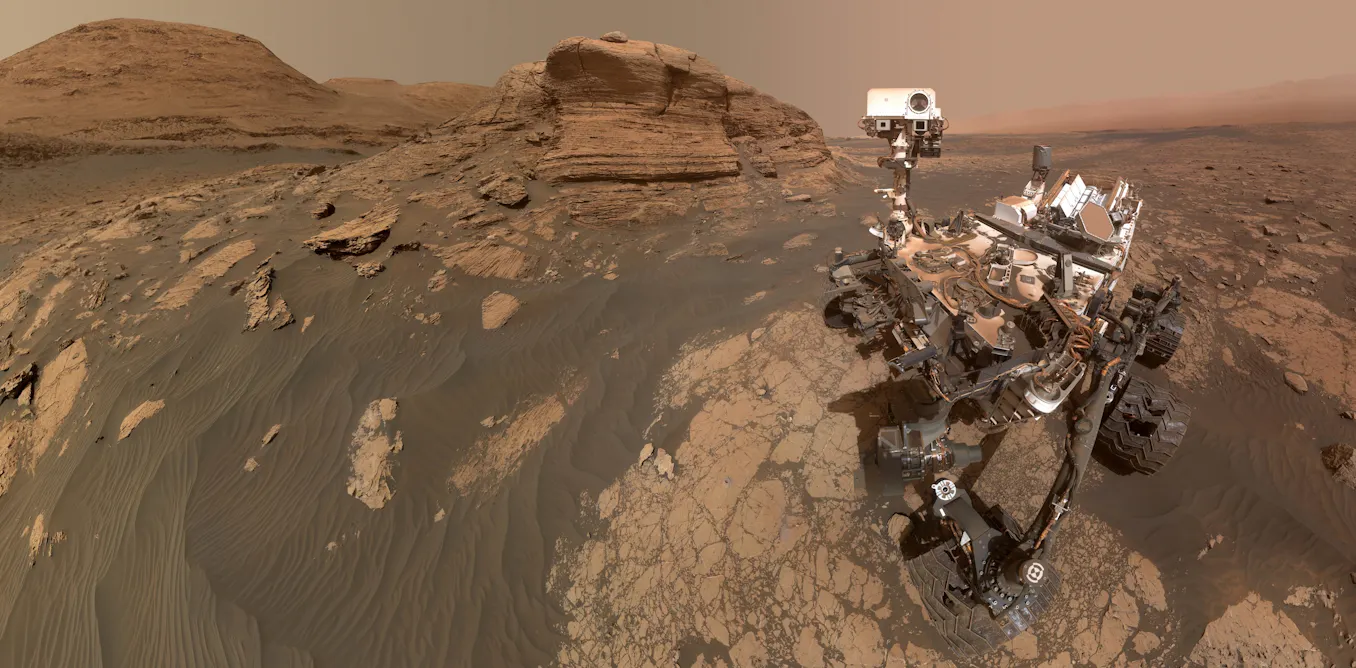
NASA's Jet Propulsion Laboratory in Pasadena, California, houses the Rover Operations Center where scientists and engineers control the Curiosity rover on Mars. At 7:30 a.m., the first person arrives to begin the day's operations. The rover has already sent its latest data back to Earth via a Mars orbiter, which is now waiting on servers at JPL and partner institutions.
Starting at 8:15 a.m., a team of engineers and scientists has just three hours to check the rover's health, analyze new data, and plan the next set of activities. They then spend another four hours turning these plans into commands for the rover, ensuring they are safe and fit within the rover's available time and energy. This process is repeated daily, with Curiosity's project scientist overseeing that the measurements align with the mission's science objectives.
Curiosity, a car-sized rover equipped with a drill and scientific instruments, was sent to Mars' Gale Crater to search for evidence of ancient habitable environments. The rover has been climbing Aeolis Mons, a mountain with sedimentary rock layers that hold a record of environmental conditions from about 3.5 billion years ago. Curiosity has found clay-rich layers that give way to younger sandstones full of salty minerals, suggesting that lakes persisted for millions of years before the climate became arid.
Samples drilled from lake sediments contain small organic molecules, the raw materials for potential life. The team concluded that conditions in Gale Crater were once capable of supporting life, although determining if life actually took hold will require bringing such rocks back to Earth.
During a recent shift, the team planned Curiosity's route into an area that appears smooth and flat from orbit. However, images from the rover revealed a textured surface with small polygons, suggesting ancient water activity. The science team debated which targets to observe, with the goal of distinguishing how the polygons formed.
In an adjacent room, engineers visualized Curiosity's arm movements and planned the rover's next drive, navigating around rock obstacles. By noon, the science team's role was done, but engineers continued converting the day's requests into commands for NASA's Deep Space Network.
Curiosity's operations are a testament to the team's efficiency and expertise, with the rover working weekends and the team repeating this process over a thousand times since Curiosity landed in 2012.
#MarsRovers #NASAJPL #CuriosityRover #MarsExploration #GaleCrater #AeolisMons #SpaceScience #RedPlanet
Comments (0)
No comments yet — be the first to weigh in.

NASA Launches Nancy Grace Roman Telescope to Unlock Universe's Mysteries
NASA's new Nancy Grace Roman Space Telescope lifts off from Florida to study dark energy, exoplanets, and cosmic mysteries with unprecedented precision and scope.

Nature reserves spot rare species during heatwaves
Nature reserves in Hertfordshire and Middlesex have documented rare species this summer, with volunteers spotting wildlife not seen in decades and some even for...

Inmates at HMP La Moye craft boxes to save Jersey's hedgehogs
Prisoners at HMP La Moye have crafted nesting and feeding boxes to support Jersey's hedgehog population, boosting rehabilitation and community engagement.

2026 Nepal Flood: Ice‑Rock Avalanche, Glacial Lake Outburst and Climate‑Change Risks
A massive ice‑rock avalanche triggered a catastrophic flood in Nepal on Aug. 26 2026, followed by a glacial lake outburst that devastated towns and hydropower plants. Climate‑change‑driven thawing increased the risk.

Mumbai’s Vile Parle Cypher is giving unheard rappers a voice

Enrich and Ultimo impress

Karnataka CM Signals Review of 5% Park Land Amendment Bill in Assembly

