





















California Voters Head to Polls in Crowded Primary Election Race
Voters in California went to the polls on June 2, 2026, for a crowded primary election to replace Governor Gavin Newsom and decide other key races.
- Voters in California went to the polls on June 2, 2026, for a crowded primary election to replace Governor Gavin Newsom and decide other key races.
- Category: U.S. News
- Published: Jun 2, 2026
California Voters Head to Polls in Crowded Primary Election Race
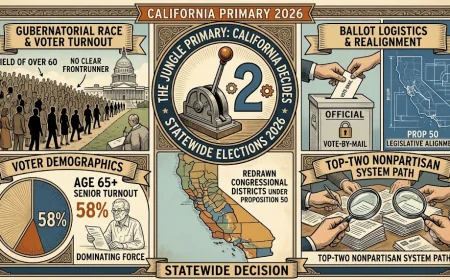
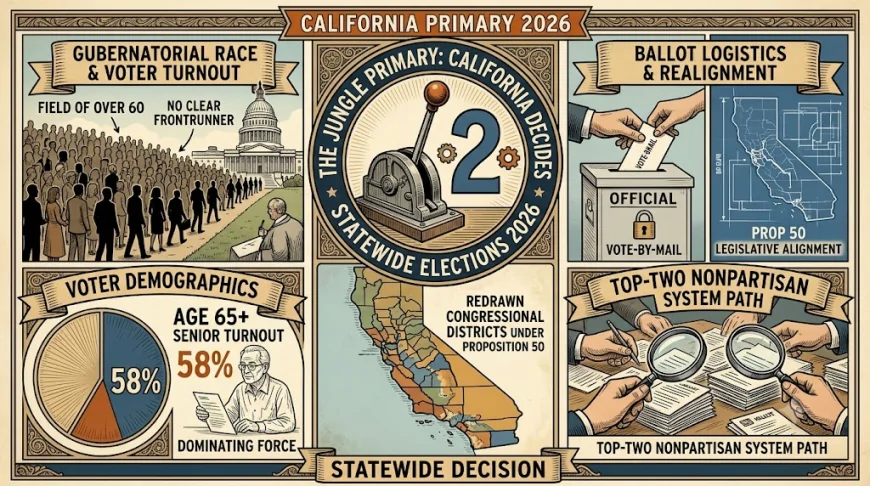
Voters across California went to the polls on June 2, 2026, for a primary election that will determine the contenders to replace outgoing Governor Gavin Newsom and decide the fate of Los Angeles Mayor Karen Bass. Under the state's "jungle primary" system, the two candidates who receive the most votes advance to the general election regardless of party affiliation. The crowded field for governor and the competitive mayoral race in Los Angeles have drawn national attention, with high stakes for both the Democratic and Republican parties ahead of the November midterms.
The race to succeed Newsom, who is term-limited, features a crowded field of candidates from both major parties. Democrats include Lieutenant Governor Eleni Kounalakis, Attorney General Rob Bonta, and former Los Angeles Mayor Antonio Villaraigosa. Republicans have rallied behind former state senator Brian Dahle and businessman John Cox, who previously ran for governor in 2022. Polls suggest that no candidate is likely to win outright, setting up a competitive general election in November. The outcome could signal whether California remains a solidly Democratic state or if Republican messaging on crime and homelessness is gaining traction.
In Los Angeles, Mayor Karen Bass faces a tough re-election challenge. Thirteen candidates are looking to unseat the incumbent, who has struggled to address the city's homelessness crisis and public safety concerns. Polls show Bass in a close race with City Councilmember Nithya Raman and reality television personality Spencer Pratt. Pratt's candidacy, initially dismissed as a publicity stunt, has gained unexpected momentum through a savvy social media campaign that has attracted young voters disillusioned with traditional politics. The LA race has become a proxy for broader debates about urban governance in America's second-largest city.
National Implications for 2026 Midterms
The California primary is being watched closely as a bellwether for the November midterm elections. Democrats hold a supermajority in the state legislature and all statewide offices, but Republicans have targeted several congressional districts that could flip. The governor's race will have significant implications for redistricting and policy direction in the nation's most populous state. A Republican victory, while unlikely, would send shockwaves through national politics and potentially embolden GOP efforts in other Democratic strongholds.
The primary also tests the strength of progressive politics in California. Newsom has been one of the most visible progressive governors in the country, championing policies on climate change, healthcare, and immigration. His successor will inherit both his policy legacy and his political liabilities, including criticism over the state's handling of homelessness and crime. According to Dr. Thad Kousser, a political scientist at UC San Diego, "California is the laboratory for progressive policy. If voters reject that direction, it will have national implications for the Democratic Party's agenda."
Turnout has been a concern for election officials. California has struggled with low primary turnout in recent years, with only 33% of registered voters participating in the 2022 primary. The state has implemented several measures to boost participation, including universal vote-by-mail and extended early voting periods. However, voter apathy remains a challenge, particularly among young voters and communities of color. The competitiveness of the LA mayoral race may help drive turnout in the state's largest county, but statewide races have generated less enthusiasm.
Background & Context
California's jungle primary system, enacted in 2010, was designed to reduce partisan polarization by allowing all voters to participate in a single primary election. The system has produced mixed results. In some races, it has led to general elections between two candidates from the same party, effectively disenfranchising voters from the other party. In others, it has produced more moderate candidates who can appeal to a broader electorate. According to a 2025 study from the Public Policy Institute of California, the jungle primary has increased the number of competitive general elections but has not significantly reduced partisan polarization in the legislature.
Gavin Newsom's tenure as governor has been marked by both progressive achievements and persistent challenges. He expanded Medi-Cal to undocumented immigrants, signed aggressive climate legislation, and implemented a $20 minimum wage for fast-food workers. However, the state's homelessness crisis has worsened on his watch, with an estimated 180,000 unhoused residents in 2025. Crime rates in major cities have also increased, fueling Republican attacks. Newsom's approval rating stood at 48% in a May 2026 poll, down from 62% in 2022. His successor will inherit these challenges and the political baggage that comes with them.
Frequently Asked Questions
What happened?
California held primary elections on June 2, 2026, for governor, Los Angeles mayor, and other key races under the jungle primary system.
Why does this matter?
The results will determine the contenders for governor and signal whether progressive politics retains its grip on America's most populous state.
Who is affected?
California voters, statewide candidates, LA residents choosing their mayor, and national parties watching the midterm bellwether.
What happens next?
The top two candidates in each race advance to the November general election, with results expected within days as mail-in ballots are counted.