










































Bank of Canada Cuts Rate to 2.25%, Signals End to Easing Cycle
The Bank of Canada cut its key interest rate to 2.25% but signaled a potential end to its easing cycle, citing concerns over US trade policy and domestic growth.
- The Bank of Canada cut its key interest rate to 2.25% but signaled a potential end to its easing cycle, citing concerns over US trade policy and domestic growth.
- Category: How-To & Tips
- Published: Feb 26, 2026
Central Bank Trims Again but Strikes Cautious Tone on Future Moves
The Bank of Canada reduced its benchmark overnight interest rate by 25 basis points to 2.25% today, a move widely anticipated by markets. However, in a surprise twist, Governor Tiff Macklem signaled that this may be the last cut for the foreseeable future. The accompanying monetary policy report slashed growth forecasts for 2025 and 2026, explicitly citing the \"negative effects\" of US trade policy and the threat of new tariffs as a primary drag on the Canadian economy.
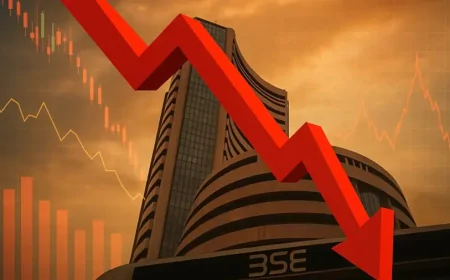
The Canadian dollar initially weakened on the rate cut but then rebounded sharply as traders digested the hawkish signal that the easing cycle is likely over. Bond yields rose across the curve, reflecting the market's revised view that the central bank will now hold steady for an extended period. The decision was not unanimous, with the bank's governing council debating the balance between supporting a slowing economy and watching the impact of past cuts.
In his opening statement, Macklem stressed that while inflation is moving back to the 2% target, the economic outlook has darkened considerably due to external factors. \"Monetary policy cannot offset the effects of a prolonged trade conflict,\" he said. \"Our role is to provide stability and ensure inflation remains low and stable while the economy adjusts.\" The language marks a significant departure from previous statements that focused on the need to stimulate growth.
US Trade Policy Casts a Long Shadow Over Canadian Economy
The central bank's revised forecasts make for grim reading. GDP growth for 2025 was slashed to just 1.2%, down from a previous estimate of 1.8%, with a similar downgrade for 2026. The bank explicitly linked this weakness to \"the persistence and potential escalation of US trade restrictions,\" a clear reference to the Trump administration's tariff policies and the ongoing renegotiation of the USMCA trade deal.
Business investment in Canada has already begun to freeze, according to the bank's own surveys. Companies are delaying capital expenditure plans, unsure whether they will have guaranteed access to the US market. The energy sector, a key driver of the Canadian economy, is particularly vulnerable, with new pipeline capacity coming online just as the threat of US tariffs on energy exports looms larger.
According to Avery Shenfeld, Chief Economist at CIBC Capital Markets, \"The Bank of Canada is boxed in by Washington. They can't cut rates aggressively to support growth because that would tank the Canadian dollar and potentially reignite inflation through higher import costs. But if they don't cut, the economy slows. They've chosen a middle ground, signaling a pause, but this is a wait-and-see game dictated by the White House.\" The bank's projections assume a resolution to trade tensions; if tariffs are actually imposed, the outlook would be far worse.
What a Pause Means for Borrowers and the Housing Market
For Canadian households, the signal that rates have likely peaked brings a degree of certainty. Variable-rate mortgage holders, who have suffered through a series of hikes and then cuts, can now plan with more confidence. However, with rates still at 2.25%, borrowing costs remain significantly higher than the near-zero levels seen just a few years ago. The housing market, which had shown signs of life as cuts began, may now stabilize rather than surge.
The central bank's move also widens the interest rate differential with the US Federal Reserve. If the Fed continues to cut while the BoC pauses, the Canadian dollar could strengthen, further hurting exporters. This is a delicate balancing act. Macklem acknowledged this risk, stating that the bank would be \"vigilant\" about the exchange rate's impact on the economy. For now, the message to Canadians is clear: the era of rapid rate changes is over, but don't expect cheap money to return anytime soon. The economy must now navigate the turbulent waters of trade war uncertainty on its own.