






































Two Killed in Kenya Protests Against US Ebola Quarantine Facility
Two people were killed in protests on June 2, 2026, against a proposed Ebola quarantine facility for US citizens at Laikipia Air Base outside Nanyuki, Kenya.
- Two people were killed in protests on June 2, 2026, against a proposed Ebola quarantine facility for US citizens at Laikipia Air Base outside Nanyuki, Kenya.
- Category: vaccines
- Published: Jun 2, 2026
Two Killed in Kenya Protests Against US Ebola Quarantine Facility
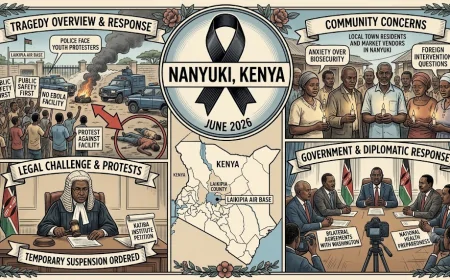
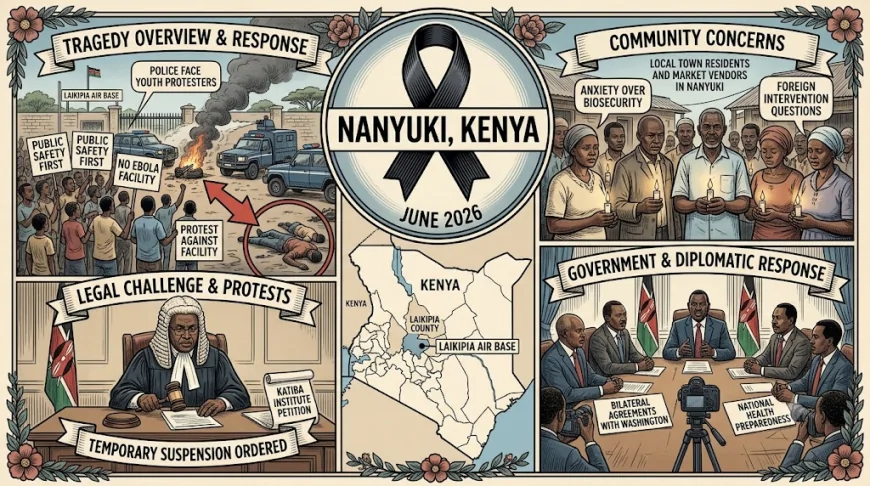
Two people were killed in protests on June 2, 2026, against a proposed Ebola quarantine facility for US citizens at Laikipia Air Base outside Nanyuki, Kenya. The demonstrations erupted after local residents learned that the United States military was planning to use the base to isolate American personnel returning from the Ebola outbreak zone in the Democratic Republic of Congo. Kenyan police opened fire on the protesters, killing two and injuring several others. The incident has sparked outrage across Kenya and raised questions about the sovereignty implications of foreign military quarantine facilities.
The protests began peacefully in the morning but turned violent by midday. Hundreds of residents from Nanyuki and surrounding communities gathered at the gates of Laikipia Air Base, chanting slogans and waving placards. Some protesters expressed fear that the quarantine facility would bring the Ebola virus into their community. Others objected to the use of Kenyan territory for what they saw as a US problem. "We don't want American Ebola in our backyard," one protester told local media. The situation escalated when some demonstrators attempted to breach the base perimeter.
Kenyan police responded with tear gas and live ammunition. The two fatalities, both male residents of Nanyuki, were pronounced dead at a local hospital. Several other protesters sustained gunshot wounds and were receiving treatment. The Kenya National Commission on Human Rights condemned the police response as "disproportionate and unlawful." The commission has called for an independent investigation into the shootings. The US Embassy in Nairobi issued a statement expressing "deep regret" over the loss of life but defended the quarantine facility as necessary for protecting American personnel.
US Military Quarantine Plans and Local Opposition
The proposed quarantine facility at Laikipia Air Base is part of a broader US strategy to manage the risk of Ebola importation. The base, which is used jointly by the Kenyan and US militaries, was selected because of its isolation and existing security infrastructure. Under the plan, US citizens returning from the DRC outbreak zone would be quarantined for 21 days at the facility before being allowed to travel to the United States. The US military has used similar quarantine protocols for personnel returning from other disease outbreaks, including previous Ebola epidemics.
Local opposition to the facility has been building for weeks. Community leaders in Nanyuki have raised concerns about the environmental impact, the risk of virus escape, and the lack of consultation with local residents. The Laikipia County government has also objected, arguing that the facility should be located on US territory rather than Kenyan soil. According to Dr. Mwangi Kimemia, a public health expert at the University of Nairobi, "The scientific risk of Ebola spreading from a well-managed quarantine facility is very low. But the political and social risks of imposing it without community consent are significant."
The incident has strained US-Kenya relations at a sensitive moment. Kenya is a key ally in the US counterterrorism strategy in East Africa, and the two countries have a long-standing military cooperation agreement. However, the Ebola quarantine controversy has tapped into broader anti-colonial sentiment in Kenya. Some opposition politicians have seized on the issue, framing it as an example of US imperialism. Raila Odinga, the leader of the Azimio la Umoja coalition, called for the immediate cancellation of the quarantine facility plan. The Kenyan government has not yet announced a final decision.
Background & Context
Laikipia Air Base has been a site of US military presence in Kenya since the early 2000s. The base is used for training, surveillance, and logistics support for operations across East Africa. It has also been the subject of controversy, with local residents periodically protesting the US presence and alleged environmental damage. According to a 2024 report from the International Peace Institute, the base hosts approximately 300 US military personnel at any given time.
The use of foreign military bases for disease quarantine is not unprecedented. During the 2014 Ebola outbreak, the US military established quarantine facilities at several overseas bases for personnel returning from West Africa. Those facilities operated without major incidents but were criticized for their cost and the psychological toll on quarantined personnel. The current plan for Laikipia differs in that it would quarantine civilians as well as military personnel, a more complex logistical and legal challenge. According to a 2025 report from the Center for Strategic and International Studies, the US military has identified 18 overseas bases as potential quarantine sites for future disease outbreaks.
Frequently Asked Questions
What happened?
Two protesters were killed in Kenya on June 2, 2026, during demonstrations against a proposed US Ebola quarantine facility at Laikipia Air Base.
Why does this matter?
The deaths highlight tensions over foreign military quarantine facilities and raise questions about sovereignty and community consent in global health response.
Who is affected?
Nanyuki residents, Kenyan-US diplomatic relations, US citizens returning from the DRC, and local communities near military bases worldwide.
What happens next?
Kenya's government will face pressure to cancel the facility plan, while the US may seek alternative quarantine arrangements in the region.