















































Hong Kong and Kazakhstan Sign 43 Agreements to Deepen Economic Ties
Hong Kong and Kazakhstan signed 43 memoranda of understanding on June 2, 2026, including direct flights and financial market connectivity agreements.
- Hong Kong and Kazakhstan signed 43 memoranda of understanding on June 2, 2026, including direct flights and financial market connectivity agreements.
- Category: South Asia
- Published: Jun 2, 2026

Hong Kong and Kazakhstan Sign 43 Agreements to Deepen Economic Ties
Hong Kong and Kazakhstan signed 43 memoranda of understanding and cooperation agreements on June 2, 2026, as Chief Executive John Lee Ka-chiu continued his official visit to the Central Asian nation. The agreements cover trade, finance, education, and infrastructure, and include an arrangement for a Hong Kong airline to launch direct flights to Almaty in the first quarter of 2027. The deals represent Hong Kong's most significant economic diplomacy initiative in Central Asia and signal a strategic pivot toward diversifying the territory's international relationships beyond mainland China and traditional Western partners.
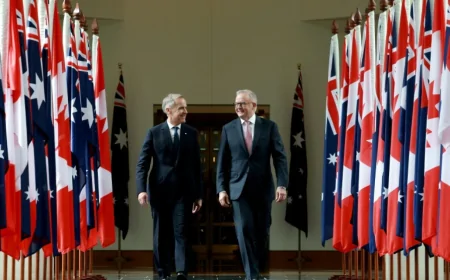
The agreements were signed during a ceremony in Astana attended by Lee and Kazakh Prime Minister Olzhas Bektenov. The most consequential deals involve financial market connectivity. Hong Kong Exchanges and Clearing signed two memorandums of understanding with the Astana International Exchange and the Astana International Financial Centre Authority. The agreements aim to facilitate cross-listing of securities, sharing of market data, and joint development of financial products. HKEX CEO Bonnie Chan described the deals as "a bridge between East and Central Asia that will unlock new capital flows."
The aviation agreement has drawn particular attention. Currently, travelers between Hong Kong and Kazakhstan must connect through hubs in Dubai, Istanbul, or Beijing. The direct flight route will cut travel time from approximately 14 hours to 8 hours and is expected to boost tourism and business travel. Hong Kong's Cathay Pacific Airways will operate the route initially with three weekly flights. The airline has been expanding its Central Asian network as part of a broader strategy to reduce dependence on routes to mainland China and North America, which have been affected by geopolitical tensions.
Strategic Shift for Hong Kong's Economy
The Kazakhstan agreements reflect Hong Kong's urgent need to diversify its economic partnerships. The territory has been hit hard by US-China tensions, with American sanctions on several Hong Kong officials and the suspension of extradition treaties affecting business confidence. At the same time, Hong Kong's role as a gateway to mainland China has been complicated by Beijing's tightening control over the territory's political and legal systems. Chief Executive Lee has made "connecting with the world" a priority, with Central Asia, the Middle East, and Southeast Asia identified as key target regions.
Kazakhstan offers a compelling opportunity. The country is the largest economy in Central Asia, with significant oil, gas, and mineral reserves. It has also been seeking to reduce its economic dependence on Russia and China, making it receptive to partnerships with alternative partners. The Astana International Financial Centre, established in 2018, has been positioning itself as a regional hub for Islamic finance and fintech. According to Dr. Nurlan Aldabergenov, an economist at Nazarbayev University, "Kazakhstan needs Hong Kong's financial expertise, and Hong Kong needs Kazakhstan's resources and market access. It's a natural match."
The deals are not without risks. Central Asia remains a volatile region, with Kazakhstan experiencing political unrest as recently as 2022. The country's proximity to Russia and China also raises questions about whether Hong Kong can maintain its neutrality in great-power competition. Some Western analysts have warned that deeper Hong Kong-Kazakhstan ties could be used by Beijing to extend its influence into Central Asia through a proxy. Hong Kong officials have rejected these concerns, emphasizing that the agreements are commercial, not political.
Background & Context
Hong Kong's economic diplomacy has evolved significantly since the 2019 protests and the 2020 National Security Law. The territory has faced sanctions from the United States, the United Kingdom, and the European Union, limiting its access to certain technologies and financial services. In response, the Hong Kong government has launched a series of initiatives to build new international partnerships. The "Belt and Road" office, established in 2016, has been reinvigorated, with Central Asia identified as a priority region. According to a 2025 report from the Hong Kong Trade Development Council, the territory's exports to Central Asia grew by 45% in 2024, albeit from a low base.
Kazakhstan's economic strategy has also shifted. President Kassym-Jomart Tokayev, who took office in 2019, has pursued a "multi-vector" foreign policy that seeks to balance relations with Russia, China, and the West. The Astana International Financial Centre is a key component of this strategy, offering a Western-style legal framework and tax incentives to attract international business. According to a 2025 report from the Economist Intelligence Unit, Kazakhstan has attracted $12 billion in foreign direct investment annually, with financial services representing one of the fastest-growing sectors. The partnership with Hong Kong could accelerate that trend.
Frequently Asked Questions
What happened?
Hong Kong and Kazakhstan signed 43 cooperation agreements on June 2, 2026, covering trade, finance, and direct flights.
Why does this matter?
The deals represent Hong Kong's pivot toward Central Asia and Kazakhstan's effort to diversify beyond Russia and China.
Who is affected?
Hong Kong businesses seeking Central Asian markets, Kazakh companies needing financial services, and travelers on the new direct flight route.
What happens next?
Implementation teams will negotiate technical details, with the first direct flights scheduled for early 2027 and financial products launching by year-end.