










































Nvidia CEO Jensen Huang Urges Companies to Pay Workers More
Nvidia CEO Jensen Huang said companies should pay workers as much as possible ahead of a trip to South Korea where Samsung recently averted a strike.
- Nvidia CEO Jensen Huang said companies should pay workers as much as possible ahead of a trip to South Korea where Samsung recently averted a strike.
- Category: Technology
- Published: Jun 2, 2026
Nvidia CEO Jensen Huang Urges Companies to Pay Workers More
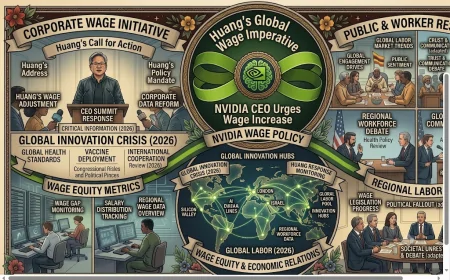
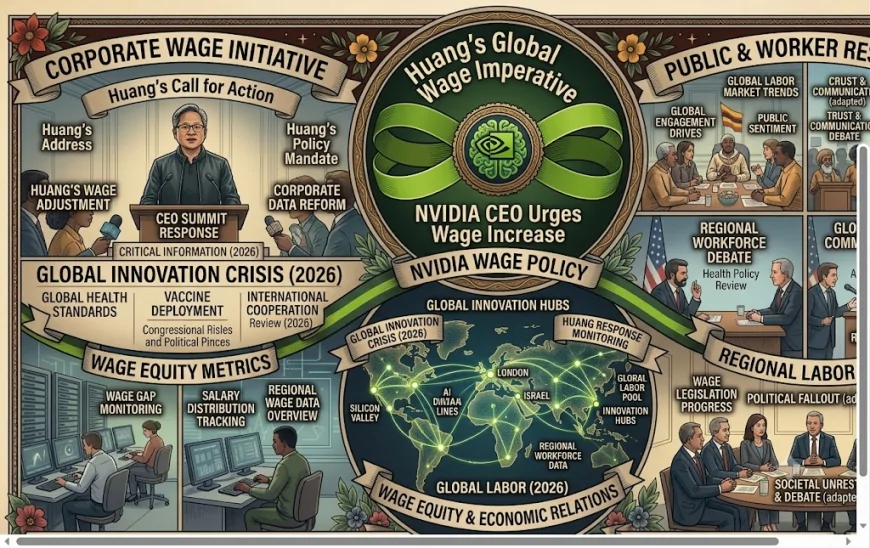
Nvidia CEO Jensen Huang made an unusual appeal to corporate leaders on June 2, 2026, stating that companies should pay workers "as much as possible." The comments came ahead of Huang's trip to South Korea, where Samsung Electronics recently averted a potentially devastating strike by reaching a bonus agreement with its union. Huang's statement stands out in an era of tech industry cost-cutting and layoffs, and it reflects the growing tension between companies desperate for AI talent and workers demanding fair compensation.
Huang's remarks were delivered during a press briefing in Taipei before his departure for Seoul. "Companies should pay workers as much as possible," Huang said, according to multiple news outlets. He did not elaborate on specific wage targets or policies, but his message was clear: in the race for AI dominance, talent is the scarcest resource, and underpaying workers is a false economy. The statement carries particular weight given Nvidia's position as the world's most valuable semiconductor company, with a market capitalization exceeding $3 trillion.
The timing of Huang's comments is significant. Samsung Electronics, South Korea's largest company and a key Nvidia supplier, narrowly avoided a strike in late May 2026 by agreeing to a substantial bonus package for its workers. The deal came after months of tense negotiations between Samsung management and the National Samsung Electronics Union, which represents approximately 20,000 workers. The union had threatened to walk out during the peak production season for Nvidia's next-generation AI chips, a move that could have disrupted the global supply chain for AI hardware.
The AI Talent War Intensifies
Huang's statement highlights the fierce competition for AI talent. Nvidia, which designs the graphics processing units that power most AI systems, has been hiring aggressively. The company added 8,000 employees in 2025, bringing its total workforce to over 36,000. Salaries for AI researchers and chip designers at Nvidia have reached extraordinary levels, with senior engineers reportedly earning total compensation packages exceeding $1 million annually. The talent war has spilled over into academia, with top AI professors leaving universities for industry positions at rates that threaten research programs.
The competition is not limited to Nvidia. Google, Microsoft, Meta, and Amazon have all engaged in bidding wars for top AI talent. In 2025, Microsoft poached Mustafa Suleyman, a co-founder of DeepMind, with a compensation package reportedly worth $50 million annually. OpenAI has offered some researchers stock options valued at tens of millions of dollars. According to a 2026 report from the recruiting firm Heidrick & Struggles, the average salary for a senior AI engineer in Silicon Valley has risen to $485,000, up from $320,000 in 2023. The wage inflation is creating a two-tier system within tech companies, with AI workers earning multiples of their colleagues in other divisions.
Not everyone in the industry shares Huang's generosity. Several major tech companies have implemented layoffs and hiring freezes in non-AI divisions to fund their AI investments. Meta cut 5,000 jobs in its reality labs division in early 2026. Google laid off 1,200 workers in its cloud sales organization. Amazon reduced its corporate workforce by 2% in 2025. These cuts have created a stark contrast between the haves and have-nots in the tech industry. According to Dr. Daron Acemoglu, an economist at MIT, "The AI boom is creating enormous wealth for a small number of workers and companies, while many others are being left behind."
Background & Context
Nvidia's dominance in the AI chip market has made it one of the most consequential companies in the global economy. The company's H100 and H200 GPUs are the standard hardware for training large language models, and its upcoming Blackwell architecture promises even greater performance. According to a 2026 report from Omdia, Nvidia controls approximately 85% of the market for AI training chips. This dominance has translated into extraordinary financial results. Nvidia's revenue reached $120 billion in fiscal year 2026, up from $60 billion in 2025. Net income exceeded $65 billion, giving the company ample resources to invest in talent.
Huang's advocacy for higher wages also reflects his personal philosophy. The Nvidia CEO, who immigrated from Taiwan as a child and worked as a dishwasher before attending college, has often spoken about the dignity of work. In his 2025 commencement address at Stanford University, Huang told graduates, "No one should have to choose between doing meaningful work and earning a living wage." His recent comments extend that philosophy to the corporate boardroom. Whether other CEOs will follow his lead remains doubtful, but the pressure to compete for AI talent may force their hand.
Frequently Asked Questions
What happened?
Nvidia CEO Jensen Huang said on June 2, 2026, that companies should pay workers "as much as possible" before his trip to South Korea.
Why does this matter?
The statement highlights the intense competition for AI talent and challenges the cost-cutting narrative dominating much of the tech industry.
Who is affected?
Tech workers in AI and chip design, Samsung employees who won bonus concessions, and companies competing for scarce engineering talent.
What happens next?
Huang will meet Samsung executives in Seoul, where wage and production discussions will likely dominate the agenda.