





































Hong Kong Stocks Surge Past 26,000 as Tencent Rallies on AI Agent News
Hong Kong's benchmark Hang Seng Index broke through the 26,000-point mark on June 2, 2026, led by a 10% surge in Tencent shares on reports of a new WeChat AI agent.
- Hong Kong's benchmark Hang Seng Index broke through the 26,000-point mark on June 2, 2026, led by a 10% surge in Tencent shares on reports of a new WeChat AI agent.
- Category: Business
- Published: Jun 2, 2026
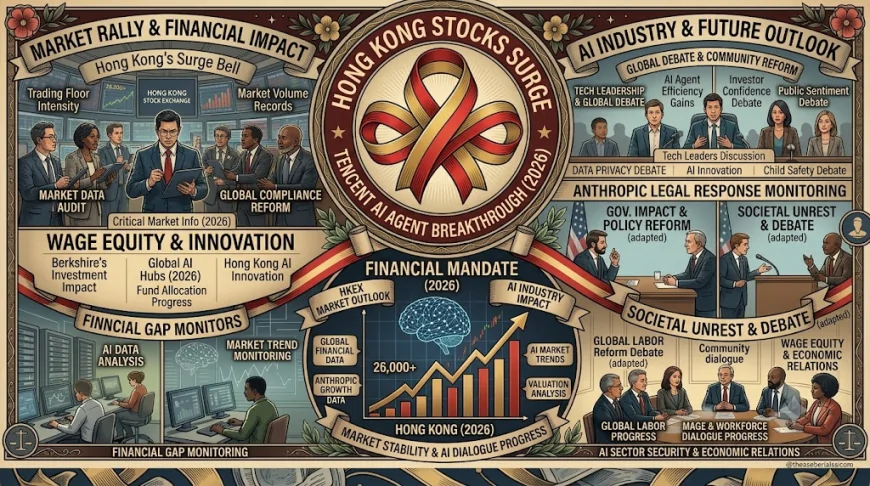
Hong Kong Stocks Surge Past 26,000 as Tencent Rallies on AI Agent News
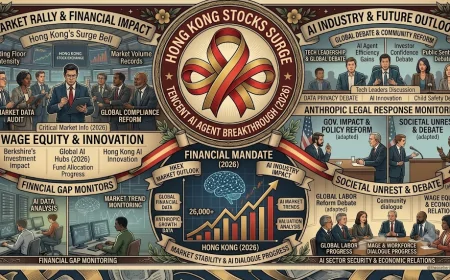
Hong Kong's benchmark Hang Seng Index broke through the 26,000-point threshold on June 2, 2026, marking its highest level in months. The rally was led by technology shares, with Tencent Holdings surging 10% on reports that the company is developing an advanced AI agent for its WeChat messaging platform. The gains extended a 12-month winning streak for Hong Kong's retail sector and signaled renewed investor confidence in the territory's technology ecosystem.
Tencent's spike came after Bloomberg reported that the company plans to integrate a generative AI agent into WeChat, which has over 1.3 billion monthly active users. The agent would allow users to perform complex tasks such as booking flights, making restaurant reservations, and managing personal finances through natural language commands. Analysts at Goldman Sachs estimated that the AI integration could generate an additional $2 billion in annual revenue for Tencent within three years. The news triggered a broader rally in Chinese tech stocks listed in Hong Kong.
The Hang Seng Tech Index, which tracks the 30 largest technology companies listed in Hong Kong, gained 4.2% on the day. Alibaba rose 3.8%, Meituan advanced 2.9%, and Baidu climbed 2.4%. The rally was supported by strong retail sales data released earlier in the week. Hong Kong's retail sales extended gains for the 12th consecutive month in April, reaching HK$31.4 billion in value, though the year-over-year growth rate narrowed to 8.6%. The data suggested that consumer spending remains resilient despite ongoing economic headwinds.
Property Market Recovery and Investor Sentiment
The stock market rally coincided with renewed optimism in Hong Kong's property sector. Henderson Land Development's chairman, Martin Lee Ka-shing, predicted that property prices would rise 5% to 10% this year following a steady recovery. Lee denied concerns about market overheating, citing strong demand from mainland Chinese buyers and limited new supply. Henderson Land's shares rose 2.1% on the news. The property market has been a key driver of Hong Kong's economy, accounting for approximately 20% of GDP.
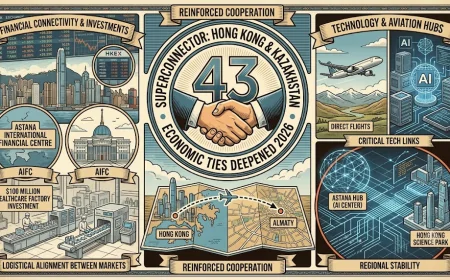
Investor sentiment has also been buoyed by Hong Kong's deepening ties with Central Asia. On June 2, Hong Kong Exchanges and Clearing signed two memorandums of understanding with the Astana International Exchange and the Astana International Financial Centre Authority. The agreements aim to strengthen capital markets connectivity between Hong Kong and Kazakhstan. Chief Executive John Lee Ka-chiu, who is visiting Kazakhstan, announced that a Hong Kong airline would launch direct flights to Almaty in the first quarter of 2027. The move is part of a broader strategy to diversify Hong Kong's economic relationships beyond mainland China.
However, risks remain. The US Federal Reserve's interest rate policy continues to cast a shadow over Hong Kong's monetary environment. As a pegged currency, Hong Kong must follow US rate decisions, which could tighten financial conditions if the Fed resumes hiking. Additionally, geopolitical tensions between the US and China could resurface, potentially triggering sanctions that affect Hong Kong's financial sector. According to Dr. Alicia Garcia-Herrero, chief economist for Asia Pacific at Natixis, "The rally is welcome, but it's built on sand if the fundamentals don't hold."
Background & Context
Hong Kong's stock market has experienced a volatile decade. The Hang Seng Index peaked at 33,484 in January 2018 before collapsing during the 2019 protests and the COVID-19 pandemic. It bottomed out at 14,597 in October 2022, losing more than half its value. The recovery since then has been driven by China's reopening from pandemic restrictions and a series of stimulus measures from Beijing. According to the Hong Kong Monetary Authority, foreign portfolio inflows reached $12 billion in the first quarter of 2026, the highest level since 2021.
Tencent's AI ambitions represent a strategic pivot for the company. Once known primarily as a gaming and social media giant, Tencent has invested heavily in artificial intelligence research through its AI Lab and Tencent Cloud. The company has developed its own large language model, Hunyuan, which competes with offerings from Baidu and Alibaba. According to a 2025 report from McKinsey & Company, China's AI market is projected to reach $70 billion by 2028, with Tencent well-positioned to capture a significant share. The WeChat AI agent could be the company's most consequential product launch since the mini-programs feature in 2017.
Frequently Asked Questions
What happened?
Hong Kong's Hang Seng Index broke 26,000 on June 2, 2026, led by a 10% surge in Tencent shares on WeChat AI agent news.
Why does this matter?
The rally signals renewed confidence in Hong Kong's tech sector and could attract further foreign investment into Chinese equities.
Who is affected?
Hong Kong investors, Tencent shareholders, mainland Chinese tech companies, and the territory's property market all benefit from the surge.
What happens next?
Tencent will likely unveil the WeChat AI agent at its annual developer conference, while the Hang Seng tests resistance at 27,000.