
















































EU Advances Sweeping Migration Overhaul Targeting Deportation Scale-Up
The EU advanced a sweeping migration overhaul on June 2 focused on scaling up deportations and funding offshore detention centres in third countries.
- The EU advanced a sweeping migration overhaul on June 2 focused on scaling up deportations and funding offshore detention centres in third countries.
- Category: Europe
- Published: Jun 2, 2026

EU Pushes Through Migration Overhaul With Deportation and Offshore Detention at Its Core
The European Union moved forward on June 2 with a comprehensive overhaul of its migration policy, advancing regulations designed to dramatically increase deportation rates and establish detention centres in countries outside the EU's borders. The package, described by EU officials as a necessary modernisation of a system that has been overwhelmed by irregular migration flows, has drawn fierce criticism from human rights organisations who have compared its core elements to the immigration strategy of the Trump administration in the United States.
The overhaul builds on the EU Pact on Migration and Asylum adopted in 2024, which itself represented a significant rightward shift in European migration governance. The new measures go further: they establish accelerated border processing procedures that critics say effectively strip asylum seekers of meaningful due process, create financial mechanisms to fund detention infrastructure in third countries willing to accept returned migrants, and impose burden-sharing obligations on member states that have previously resisted receiving relocated asylum seekers.
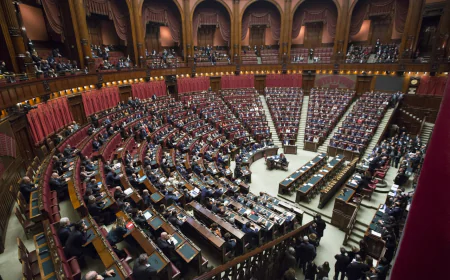
The package cleared a qualified majority vote in the European Council, with Hungary, Poland, and Slovakia voting against and several other member states abstaining. Germany, France, Italy, and Spain — collectively representing the largest shares of irregular arrivals — voted in favour.
The Offshore Detention Controversy
The most contested element of the package is the provision authorising the EU to fund and operate or support detention facilities for migrants and asylum seekers in third countries — a model drawn from the United Kingdom's now-defunct Rwanda deportation scheme and Australia's offshore processing system, both of which faced sustained legal and humanitarian challenges.
Human rights organisations including Amnesty International, Human Rights Watch, and UNHCR have issued joint statements condemning the offshore detention provisions as incompatible with the 1951 Refugee Convention and the European Convention on Human Rights. They argue that placing asylum seekers in facilities outside EU jurisdiction effectively removes them from the protection of EU fundamental rights law — which was precisely the legal problem that courts identified in the UK Rwanda scheme.
According to Judith Sunderland, associate Europe and Central Asia director at Human Rights Watch, "The EU has watched the UK Rwanda scheme fail in court and Australia's offshore system produce documented abuse and indefinite detention, and decided to try the same approach with a different legal framing. The human rights record of this model is clear. The political calculation to adopt it anyway is a choice that European leaders are making with open eyes." The EU's 2024 Migration and Asylum Pact represented the bloc's most significant migration governance shift in a decade, establishing the legal architecture that this new package builds upon and extends.
Member State Politics Behind the Push
The political impetus for the migration overhaul is straightforward. Far-right parties have made historic gains across EU member states in recent elections by centring anti-migration messaging. Mainstream centre-right parties have responded by adopting increasingly restrictive migration positions in order to compete. The result is a European political centre of gravity on migration that is substantially to the right of where it sat a decade ago.
Italy's government, led by Prime Minister Giorgia Meloni, has been the most vocal advocate for the offshore detention provisions, pointing to the country's position as a primary entry point for Mediterranean crossing migrants as justification for externalising processing. Germany's coalition government, managing its own right-wing electoral pressure, has supported measures that would have been politically unacceptable to its own coalition partners five years ago.
The package's implementation will take 18 to 24 months. Member states must transpose the new regulations into national law, establish administrative infrastructure for the accelerated border processing system, and negotiate bilateral agreements with third countries willing to host detention facilities — a process that will involve significant financial transfers and diplomatic complexity.
Background and Context
The EU has been grappling with irregular migration governance since the 2015-2016 refugee crisis, when over one million people arrived in Europe primarily via the eastern Mediterranean route from Turkey. That crisis fractured EU unity, empowered far-right populist movements, and created lasting political scars that still shape the continent's migration debate a decade later.
According to Frontex's 2025 annual risk analysis, irregular border crossings into the EU totalled approximately 280,000 in 2024 — significantly lower than the 2015 peak of over one million but substantially higher than the pre-2015 baseline. The Iran war has created additional displacement from the broader Middle East region that has added to migration pressures on the eastern and central Mediterranean routes. The political salience of migration in European elections has increased even as the absolute numbers have declined, reflecting a broader shift in how voters weight the issue relative to economic and social concerns.
Whether the EU's new migration overhaul succeeds in reducing irregular arrivals and increasing deportation rates — or whether it becomes mired in legal challenges and third-country negotiation failures as similar schemes have elsewhere — will be one of the defining governance tests of this European Commission's mandate.
Frequently Asked Questions
What happened?
The EU advanced a sweeping migration policy overhaul on June 2, 2026, passing regulations to dramatically scale up deportations and fund offshore detention facilities in third countries, drawing comparisons to US, UK, and Australian immigration enforcement models.
Why does this matter?
The overhaul represents the most significant rightward shift in EU migration governance since the 2015 refugee crisis. Offshore detention provisions face immediate legal challenges under international refugee law and the European Convention on Human Rights.
Who is affected?
Asylum seekers arriving at EU borders face dramatically reduced due process protections. Third countries hosting offshore facilities will receive EU funding in exchange. Member states must implement new administrative infrastructure within 18-24 months. Human rights organisations are preparing legal challenges.
What happens next?
Member states begin transposing regulations into national law. Bilateral negotiations with potential offshore detention host countries start immediately. Legal challenges from human rights organisations are expected at the European Court of Human Rights and the Court of Justice of the EU within months of implementation beginning.